What to Expect From Storm and Water Damage Electrical Repairs
A storm damage electrical repair electrician checks water entry, wiring, panels, meters, and safety risks. The process starts with an emergency check and power shutoff. It may include moisture tests, part tests, temporary power, repairs, and final checks. Small repairs may take a few hours. Major storm or water damage may take several days. Utility crews or insurers may also need to help. Costs depend on access, damage, emergency work, code rules, and needed equipment. Earth Electric Florida helps property owners choose a safe path.
Get a Free Estimate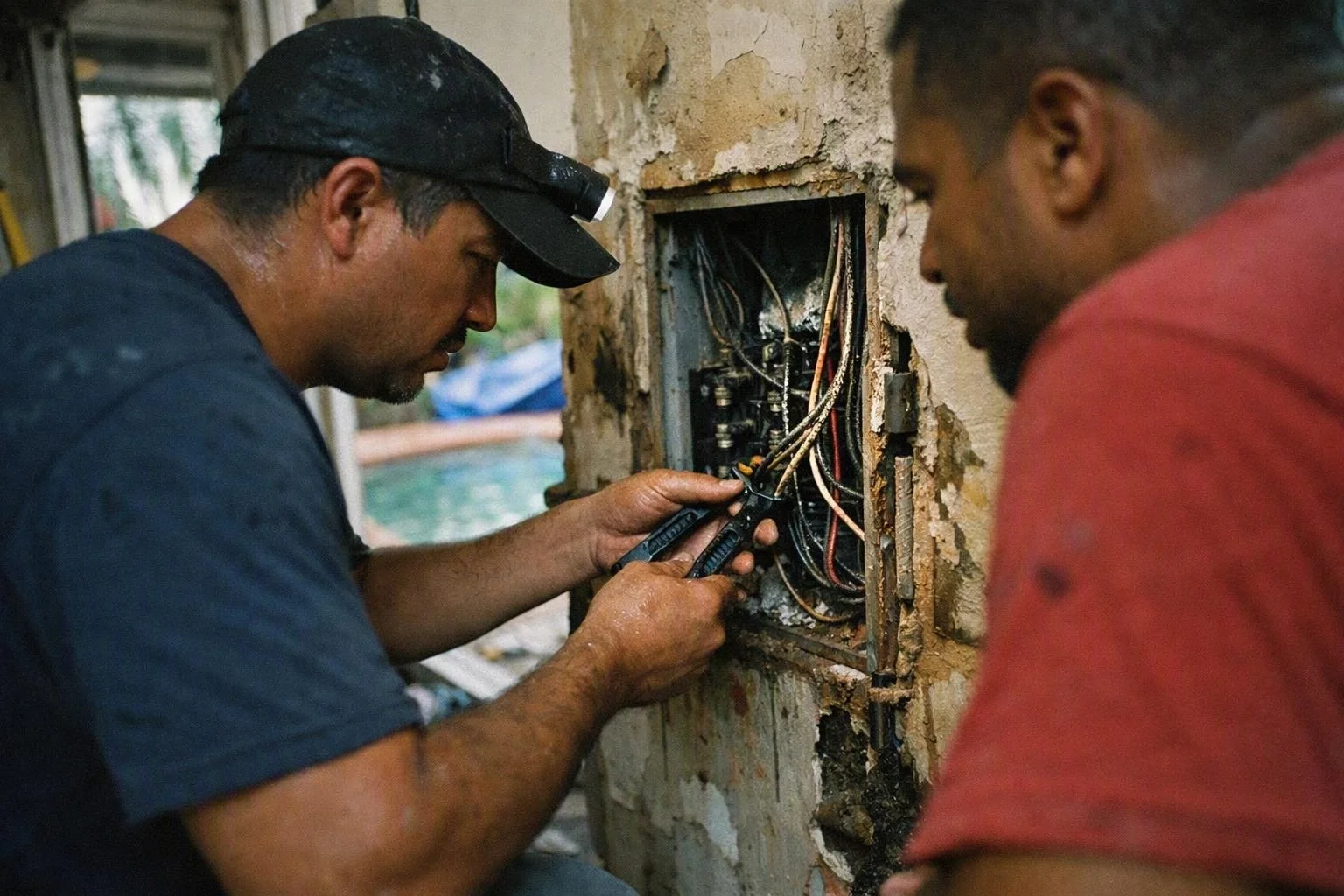
Storm And Water Damage Electrical Repairs start with safety. They don't start with a breaker reset. Our team checks the building and shuts off unsafe circuits. We explain what can be dried, tested, fixed, or replaced. Water may hide inside walls or devices. Don't use the system until final tests are complete.
What Should You Do About Water-Damaged Electrical Wiring?
Water-damaged electrical wiring should stay off until an electrician checks it. Keep away from wet outlets, switches, panels, and appliances. Don't reset breakers or power flooded circuits. If you can do so safely, shut off power from a dry place. Then arrange an emergency electrical inspection before cleanup or repairs.
Standing water can cause a serious shock. Wet walls and floors can also carry power. The danger may remain after visible water leaves. Moisture can hide inside cables, boxes, outlets, appliances, and walls. A breaker trip doesn't prove the full circuit is safe. Don't touch a wet panel or pull a plug from standing water.
Dirty floodwater creates more risk. Mud, sewage, salt, and chemicals can damage wire covers. They can also leave behind material that carries power. Saltwater causes metal parts to rust faster. Humid air can harm equipment that wasn't fully underwater. Hidden moisture may cause heat or a fault after power returns.
If the shutoff is dry and easy to reach, turn it off. Don't enter water or touch wet surfaces. Leave the area if the shutoff isn't safe. Call an emergency electrician or the utility company. Share details about the water and storm. Mention lightning, fire, burning smells, sparks, or breaker trips.
Our crews may work with water cleanup teams. Electrical equipment should be checked before cleanup moves around it. Don't cut wires, remove outlets, or power home circuits with a generator. The safest plan is to shut off power, record damage, and test everything.
How Does an Electrician Inspect Storm Electrical Damage?
An electrician inspects storm electrical damage by making the area safe first. The electrician then traces circuits and checks the panel and service entry. Wiring, grounding, and water damage also need tests. The electrician records unsafe parts and explains the repair plan.
An emergency electrical inspection follows a careful order. The order may change with water, fire, or building damage. A typical inspection includes these steps:
We give special care to the grounding system. Storms can harm its wires, rods, links, and bonds. Lightning can damage parts without leaving clear marks. A tripped breaker doesn't prove the system is safe. A working light doesn't prove it either.
The utility may keep power off during repairs. This can happen when the meter box or service entry is damaged. We explain which work belongs to the owner or utility. We also explain who must act before power returns. Safe work matters more than a rushed restart.
What the Inspection Report Should Explain?
An inspection report should list the damage, affected circuits, repairs, replacements, and needed tests. It should link each finding to a clear next step. A broad note like “storm damage” isn't enough.
Good records may include photos and room locations. They may show labels, water lines, rust, and heat marks. The report should state how the damage happened. It should note water, dirt, impact, or a power surge. Hidden areas should be marked as possible damage.
Circuit details help prevent mistakes during repairs. The report can list panel spots, rooms, outlets, appliances, and disconnects. It should show which circuits must stay off. It should also explain the work. This may include new outlets, new wiring, new breakers, panel work, or service repairs.
The report should explain why a part needs replacement. Reasons may include rust, dirt, heat, failed tests, or damaged insulation. Parts may also lack safe replacement options. This detail helps with insurance records. It doesn't promise that an insurer will pay. Managers can use the report to plan access and tenant notices.
How Much Does Storm Damage Electrical Repair Cost?
Storm damage electrical repair cost depends on the damaged equipment and water exposure. Access, emergency service, testing, and parts also affect the price. Wiring, panels, meter boxes, and service parts may need replacement. A good estimate separates inspection, temporary power, repair, replacement, and testing costs.
The price may change after walls, panels, or boxes open. Water cleanup can also affect the cost and schedule. Circuits may need to stay off while materials dry. Dirty parts may need removal. A simple outlet issue can hide wider damage.
Labor depends on safe access and the time needed to find the fault. Emergency work and cleanup can add time. Other trades may also need to help. Materials may include wire, boxes, outlets, breakers, panels, and grounding parts. Some wet parts can't be reused, even when they look clean.
Panel and meter box work needs more planning than one outlet repair. The service may need to shut off first. New equipment must match the current system. Utility reconnection may also be needed. Permits and inspections can affect the price and schedule. The electrician should explain these needs first.
Many small home repairs involve one or several parts. Major flooding may affect many circuits and service equipment. These examples aren't quotes. The final price depends on test results. Hidden wiring, wall access, or utility equipment may also add work.
Ask for an itemized scope. It should list the inspection, cleanup help, temporary power, repairs, parts, permits, utility work, and final tests. Clear line items make estimates easier to compare. They also help with insurance records.
How Long Does Storm Damage Electrical Repair Take?
Storm damage electrical repair may take a few hours for one easy-to-reach fault. Several circuits may take one to several days. Major water damage may take longer. Drying, testing, parts, utility work, permits, and temporary power affect the timeline.
| Project size | Typical duration | Common scope | Main variables |
|---|---|---|---|
| Small | A few hours to one day | One circuit, outlet, switch, or accessible connection | Safety isolation, parts availability, testing |
| Average | One to several days | Multiple circuits, panel work, localized water intrusion, or meter equipment | Drying, component replacement, utility coordination |
| Large | Several days or longer | Extensive flood exposure, service equipment, widespread wiring, or temporary power | Remediation, concealed damage, inspections, replacement lead times |
Most small repairs take a few hours to one day. This assumes easy access and available parts. Average storm repairs may take one to several days. Crews may need to replace parts and repeat tests. Large water losses can take longer when walls must open or dry.
Parts can cause delays. A matching panel, breaker, meter box, or disconnect may need ordering. Utility reconnection adds time after service damage. Permits, inspections, and cleanup teams can also change the schedule.
Can an Electrician Set Up Temporary Power After Storm Damage?
An electrician can set up temporary power after storm damage when the source and connection are safe. The setup may use a temporary panel, generator connection, or transfer switch. It must prevent overloads and backfeed. Temporary power ends after permanent circuits pass tests and inspection.
Temporary power starts with a load check. Our team finds the most important needs. These may include food storage, lights, phones, security, or limited cooling. The generator or power source must support those loads. Wet areas also need safe placement and protection.
A portable generator must run outdoors. Keep it away from doors, windows, and vents. Never connect it through a dryer outlet or wall outlet. Don't use an unsafe cord. Generator backfeed can power utility lines. It can badly hurt workers or neighbors. A transfer switch keeps both power sources apart.
Extension cords must match the load and setting. Keep them away from standing water and damage. Don't overload cords or join power strips. A cord can heat before a breaker trips. Never use a damaged cord.
A qualified electrician should connect a temporary generator. The setup may include a transfer switch, temporary panel, and ground-fault protection. It may also need weather covers and clear labels. We explain which loads can run. Other loads must stay off.
Temporary power helps people use a building safely. It doesn't make damaged wiring safe. Each permanent circuit still needs repair or replacement. It also needs moisture checks and final tests. Storm And Water Damage Electrical Repairs in Miami may need utility and water cleanup support.
Which Electrical Components Are Repaired or Replaced After a Storm?
Storm-damaged parts may be repaired when tests show they are safe. Wet, rusty, burned, or broken parts often need replacement. Common parts include wiring, outlets, breakers, panels, meter boxes, disconnects, and service wires. The damage and test results guide each choice.
Panel repair depends on where the damage is. A dry panel with one easy repair may need only a new part. Water, rust, heat, dirt, or failed tests may call for a new panel. A breaker may fail after water or a surge. Its clean appearance doesn't prove it can be reused.
Meter box installation or meter box replacement may need utility help. The box, socket, links, and service wires must fit the system. They must also handle outdoor weather. The electrician may repair owner equipment. The utility controls its own meter and wires.
Flooded outlets and switches often need replacement. Water and dirt can enter their small inner parts. A disconnect may need replacement after rust or contact damage. Service wires may also need replacement. This applies when covers are cut, hot, dirty, or wet for too long.
Storm surges can harm electronics, appliances, lights, and garage-door equipment. A damaged item may still turn on. Hidden damage can remain inside. We use tests and maker guidance when available. Cleaning alone may not restore safe use.
Repair or replacement depends on safety and test results. Dirt, rust, age, damage, parts, and code rules also matter. When a part can't be checked safely, replacement may be best. Our team records the reason for each choice.
How Can You Prepare for Safe Electrical Restoration?
Safe electrical restoration starts by keeping people away from wet equipment. Save damage records when it is safe. An electrician must decide when power can return. Avoid quick fixes, generator backfeed, and breaker resets after flooding. Repaired and replaced equipment needs written test results.
Property managers should plan access and tenant notices. They should also list essential loads and isolated circuits. Don't tell occupants that power is safe because lights work. Safe restoration needs inspection, repairs, and final tests.
Questions About Emergency Electrician
What Should I Do About Water-Damaged Electrical Wiring?
Stay away from wet wiring, outlets, switches, appliances, and panels. Don't reset the breaker or power a flooded circuit. If safe, shut off power from a dry place. Then call for an emergency electrical inspection. An electrician must test the wiring before repairs or normal use.
How Much Does Storm Damage Electrical Repair Cost?
Costs vary with the damaged circuits, water, access, labor, parts, tests, permits, and utility work. A small outlet repair may cost less. Panel, meter box, service wire, hidden wiring, cleanup, or temporary power can add work. Request separate costs for inspection, repair, replacement, temporary power, and final testing.
How Does an Electrician Inspect Storm Electrical Damage?
The electrician first makes the area safe and shuts off power. Next, the electrician checks circuits, the service entry, panel, meter box, disconnects, wiring, and grounding. The electrician looks for water, rust, heat, and surge damage. Tests may check insulation, flow, wire order, grounding, and ground-fault protection. The results guide the repair plan.
How Long Does Storm Damage Electrical Repair Take?
One easy-to-reach fault may take a few hours to one day. Several circuits, panel work, water entry, or meter equipment may take one to several days. Major flooding, hidden moisture, service damage, parts, permits, cleanup, and utility work may take longer.
Can an Electrician Set Up Temporary Power After Storm Damage?
Yes, when the source and connection can be made safe. An electrician may install temporary power equipment, a generator connection, or a transfer switch. The setup must prevent overloads and backfeed. Generators must stay outdoors in a safe place. Temporary power doesn't replace permanent repairs or final tests.
Our team can review your storm-related electrical needs. We can explain the next safe step. Contact us through our contact page to discuss your property.
Related Resources
Burning Smell From Outlets or Wiring in Miami, FL: When to Call an Emergency Electrician
burning smell from electrical outlet when to call electrician
When You Need ItFlickering and Dimming Lights: Signs of a Dangerous Electrical Problem in Miami, FL
flickering lights when to call an electrician miami
When You Need ItPartial Power Outage in Miami, FL: How to Know When You Need an Emergency Electrician
partial power outage in house when to call electrician
When You Need ItSigns Storm or Water Damage Has Created an Electrical Hazard
signs of water damage to electrical wiring when to call electrician