When to Call an Electrician for a Partial Power Outage in Miami, FL
A partial power outage affects only part of your home. Call an electrician when rooms, outlets, or appliances lose power. Get help if a breaker won't reset or lights keep flickering. Burning smells, buzzing sounds, or a hot panel need urgent attention. Check nearby homes for power first. Call the utility if the whole area is out. Don't remove the panel cover or touch damaged wires. Miami, FL storms, humidity, rust, and water can make faults worse. Earth Electric Florida can check the outage safely. Our team can inspect the panel, breakers, meter box, and wiring.
Get a Free EstimateWhat Does a Partial Power Outage Mean in a Miami Home?
Partial power outage means some home areas still have power. Other rooms, circuits, outlets, or appliances lose power. A tripped breaker may cause the problem, so may damaged wires, a bad meter, or a utility fault.
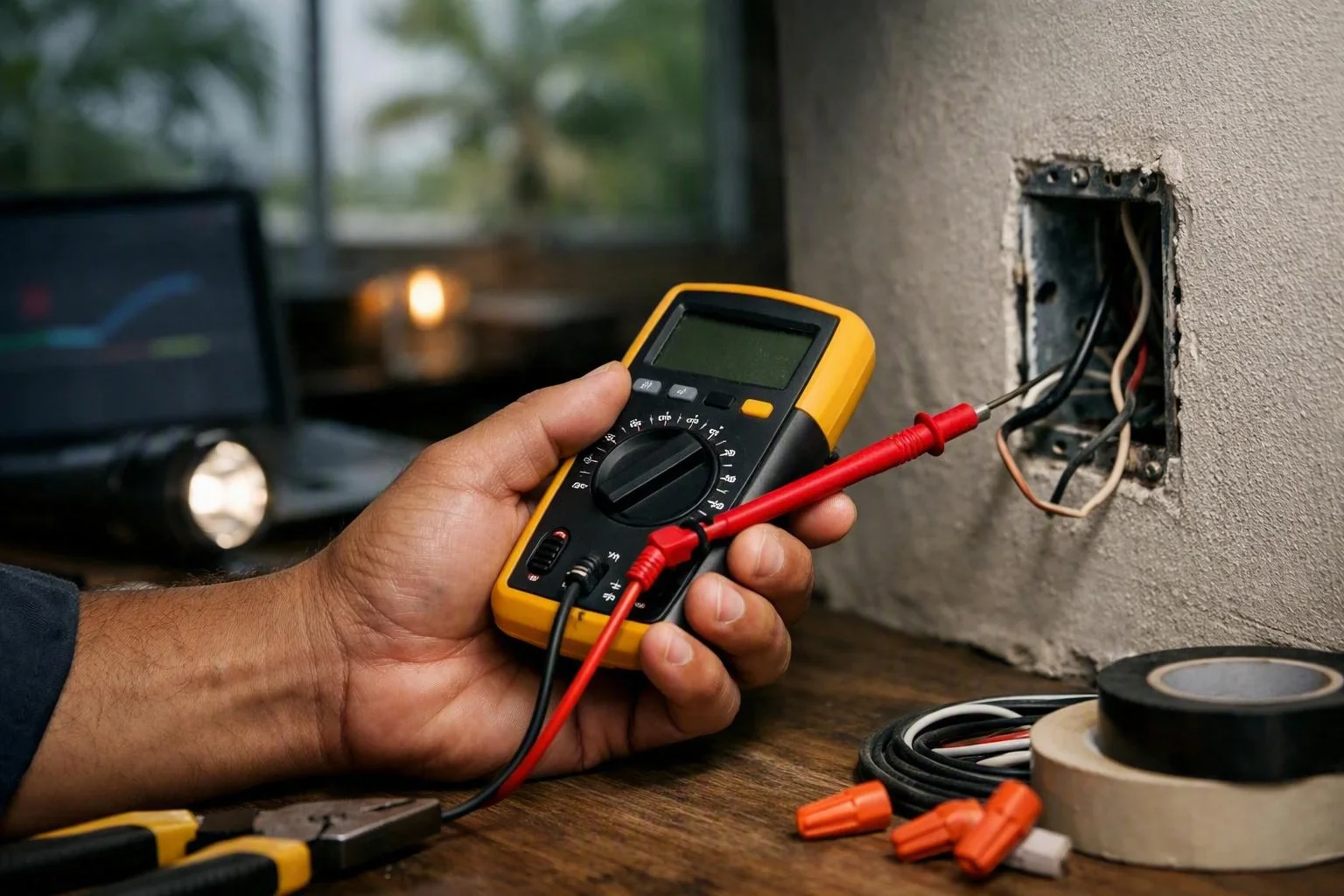
A partial outage differs from a total power failure. Lights may work in one room while other areas stay dark. A bedroom, kitchen, air conditioner, or outlets may stop working. This pattern can point to one circuit. It doesn't prove the fault is inside your home.
Start by checking outside safely. Are nearby homes, streetlights, or traffic signals also dark? A utility outage may be the cause. Check the utility outage map. Report the outage to the utility. If only your home is affected, the fault may be inside your system.
MiamiFL weather can raise the risk. Storms, hurricanes, lightning, and wind can damage outside equipment. Humidity and salty air can cause rust at outdoor connections. Heavy rain, flooding, and water entry can make panels unsafe. Some damage may not be easy to see.
Warning Signs You Need an Emergency Electrician
Emergency electrician warning signs include smoke, sparks, burning smells, buzzing, or a hot panel. Repeated breaker trips and exposed wires also need prompt help. These signs may show overheating, a short, or a bad connection. Turn off power only when it's safe. Keep away from the area. Request an urgent inspection.
Miami weather matters after a storm. Lightning and wind can damage utility equipment. Flooding can reach a meter box, panel, or wire. If the outage began after rain, treat the equipment as unsafe. Don't assume it's turned off.
Check These Safe Basics Before You Call
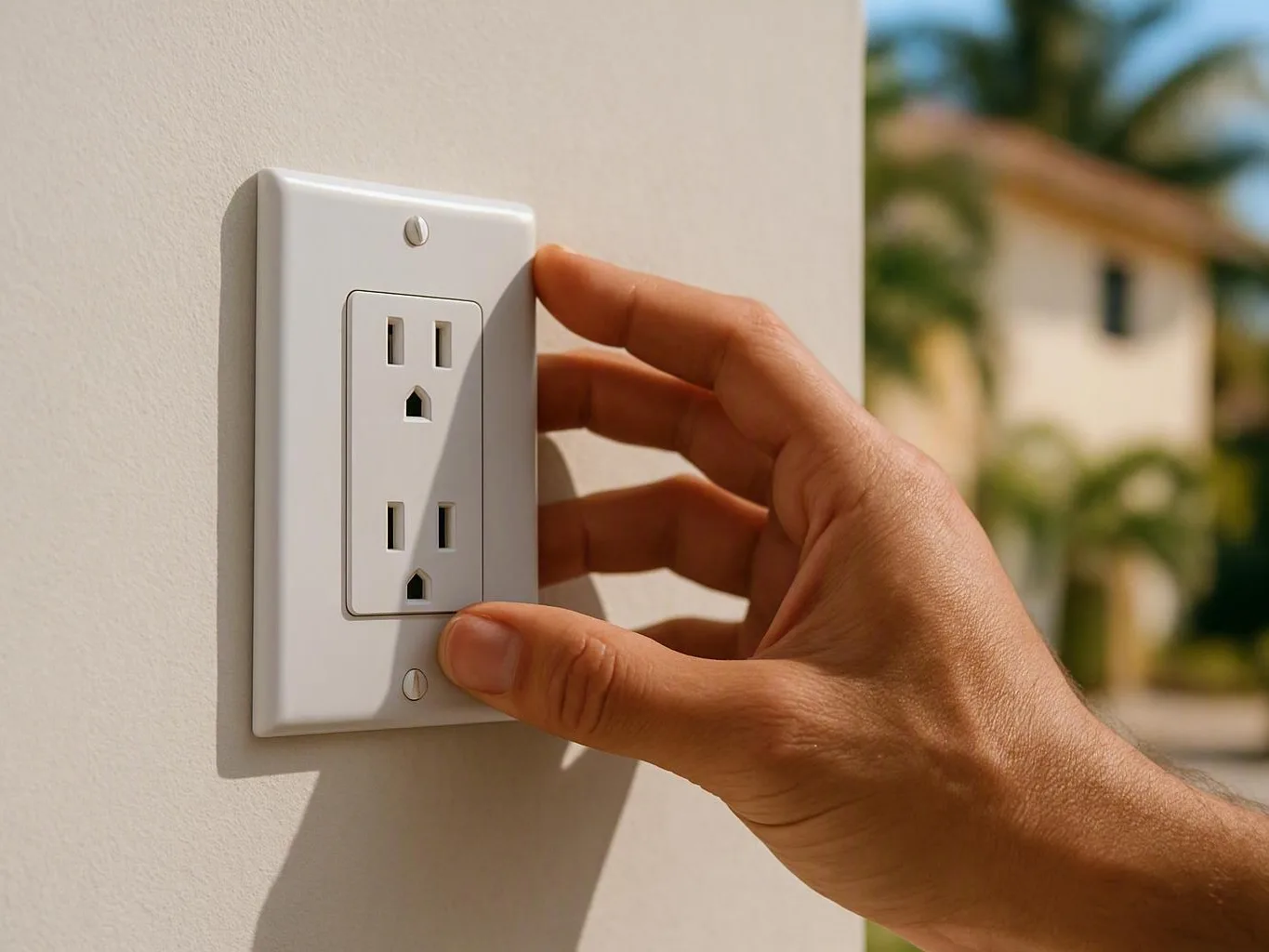
You can safely check nearby homes for power. You can also look at the breaker panel without removing its cover. Reset a tripped breaker once. Press the reset button on an easy-to-reach GFCI outlet. Stop if the breaker trips again. Also stop if the panel feels hot or water is present. Leave if you smell smoke or see sparks.
Use dry hands. Stand on a dry floor. Look for a breaker between the on and off positions. Move it fully off, then back on once. A GFCI outlet may be in a bathroom, kitchen, garage, or laundry area. It may control outlets in another room.
Check the main breaker only from outside the enclosure. Don't open the panel or test live parts. Don't remove fuses or inspect the meter box. If the utility map shows a local outage, report it. If other homes have power, arrange professional help.
A basic service visit may include several checks. The electrician may inspect circuits and service points. Job time depends on access and storm damage. It also depends on who owns the faulty equipment.
Common Causes of Power Loss in Only Part of a House
The common causes include tripped breakers and overloaded circuits. Short circuits, loose connections, and bad panel parts can also cause outages, so can damaged service wires, meter-box problems, and utility faults. An electrician must trace the affected circuit. Replacing a breaker alone may leave the danger in place.
An overloaded circuit loses power when too many devices share one path. A short circuit or ground fault can trip the breaker fast. A loose connection may cause heat or flickering first. The circuit may then stop working.
The electrical panel may be the fault point. It sends power through several breakers. A bad bus connection, breaker, or hot terminal can affect many rooms. Don't assume the breaker is the only problem.
Outside, a damaged service entrance can stop part of the power supply. Rusty connections and damaged meter boxes can do the same. Miami's humidity, salty air, rain, and storms may worsen damage. Rust isn't always the cause. The utility may need to check its equipment first.
Our team checks where the utility's duty ends. We then check the affected circuits and home equipment. This helps us find the unsafe point. It also prevents a quick reset from hiding a larger problem.
DIY Checks vs Professional Electrical Troubleshooting
DIY checks should stay simple. Watch the outage and check the utility map. You may reset an easy-to-reach breaker or GFCI once. Conditions must be dry and normal. Get professional help for heat, noise, damage, or repeated trips. Panel, meter, and wire work also need a trained electrician.
| Factor | DIY | Professional |
|---|---|---|
| Home electrical safety | Watch conditions and keep the area dry. | Check hazards and shut off unsafe equipment. |
| Circuit breaker reset | Reset once if the panel is cool and dry. | Find why the breaker trips before replacing it. |
| Voltage testing | Don't test live electrical parts. | Use safe tests to find the fault. |
| Electrical panel repair | Don't remove the cover or touch wires. | Repair or replace damaged parts safely. |
| Emergency response | Leave if smoke, fire, water, or sparks appear. | Provide urgent checks and work with the utility. |
These limits help protect people and property. A meter box or service entrance may stay live. Interior circuits may still be off. Only trained professionals should test voltage or repair panels.
How Earth Electric Florida Restores Power Safely?
Power Outage Troubleshooting And Restoration starts with the affected circuits. We check the panel and service parts. We look for unsafe connections. We find out if the fault is inside or outside. Service may include power restoration, breaker replacement, panel repair, or meter-box work.
Our team starts with the signs you noticed. We ask which rooms work and which outlets are dead. We ask when the outage began. We also ask about storms, lightning, rain, and flooding. Then we check safe, reachable equipment.
When the panel has a fault, Electrical Panel Repair And Replacement may solve the issue. The fix may involve a bad breaker or damaged connection. A damaged enclosure may also need work. If the panel isn't safe to repair, replacement may be best. Breaker work should fix the cause, not just restore power.
Our crews can check the meter box and service entrance. Meter box installation and replacement need utility coordination. This equipment links your home to the utility supply. Rust, moisture, storm damage, and broken covers need an expert check. Don't clean or open this equipment yourself.
Customers who need Power Outage Troubleshooting And Restoration in Miami can call our team. We separate utility work from home work. We explain what our checks find. Then we share the safest next step.
Most jobs include several checks. These may cover the panel, circuit, GFCI devices, service entrance, and meter area. Access and damage affect the work time. We base the repair on what we find.
What to Do Until an Electrician Arrives?
Keep people away from damaged equipment. Unplug electronics only when the area is dry and safe. Never use a generator indoors. Don't touch wet panels, fallen wires, or open conductors. Leave if smoke, fire, or serious danger is present. Contact emergency services.
Follow utility directions during a storm outage. Pay attention to emergency alerts. Use temporary power only as directed. Never connect it to home wiring with an improvised cord.
When it's safe, tell our team what stopped working. Share whether the breaker moved. Also mention any visible water or storm damage. This information can help with the first check.
Questions About Emergency Electrician
Why Does Only Part of My House Have Power?
Possible causes include a tripped breaker or overloaded circuit. A short, loose connection, or panel fault may also cause it. Meter damage, service trouble, and utility faults are possible too. Check nearby homes for power. Call a professional if only your home is affected or the problem returns.
Is a Partial Power Outage an Emergency?
It can be an emergency when you smell burning or see smoke. Heat, buzzing, sparks, exposed wires, and water damage also need urgent help. A breaker that won't reset needs attention. Keep away from the equipment. Leave and call emergency services if fire or danger is present.
What Should I Do if a Breaker Keeps Tripping?
Stop resetting the breaker again and again. Unplug devices only when it's safe and dry. Then arrange professional troubleshooting. Repeated trips may show an overload, short, ground fault, damaged wire, or bad breaker.
Can a Bad Electrical Panel Cause a Partial Power Outage?
Yes. A bad breaker, hot terminal, or failed bus connection can stop several circuits. Other panel problems can do the same. Don't remove the cover. A qualified electrician should inspect the panel before repair or replacement.
Who Do I Call When Some Outlets Have No Power?
Check the utility outage map first. The electrician can inspect the circuit, breaker, GFCI outlet, panel, service entrance, or meter equipment. Don't touch wet, damaged, or exposed wires.
Don't wait when power loss includes heat, burning smells, sparks, water, or repeated trips. Our team can find the fault. We can also explain the safest repair or restoration option.
Contact our electrical team to request service for an urgent electrical problem.
Get a Free EstimateRelated Resources
Circuit Breaker Repair and Replacement: Costs, Options, and Timing
circuit breaker replacement cost Miami
What It CostsEmergency Electrical Inspections: Cost, Process, and Results
emergency electrical inspection cost
What It CostsEV Charger Installation: Cost, Electrical Requirements, and Timing
EV charger installation cost Miami
How It WorksWhat an Electrician Does During a Power Outage
power outage troubleshooting electrician