How to Spot Electrical Hazards After Storm or Water Damage
Water can make electrical wiring unsafe. It may cause shorts, rust, weak insulation, and shock risks. Warning signs include flickering lights, tripped breakers, burning smells, buzzing outlets, and warm receptacles. Discolored outlets, sparks, and dead outlets can also signal trouble. Turn off power only when the panel stays dry and easy to reach. Never touch wet electrical equipment. Keep people away from the damaged area. A trained electrician can check damaged wiring before power returns.
Get a Free Estimate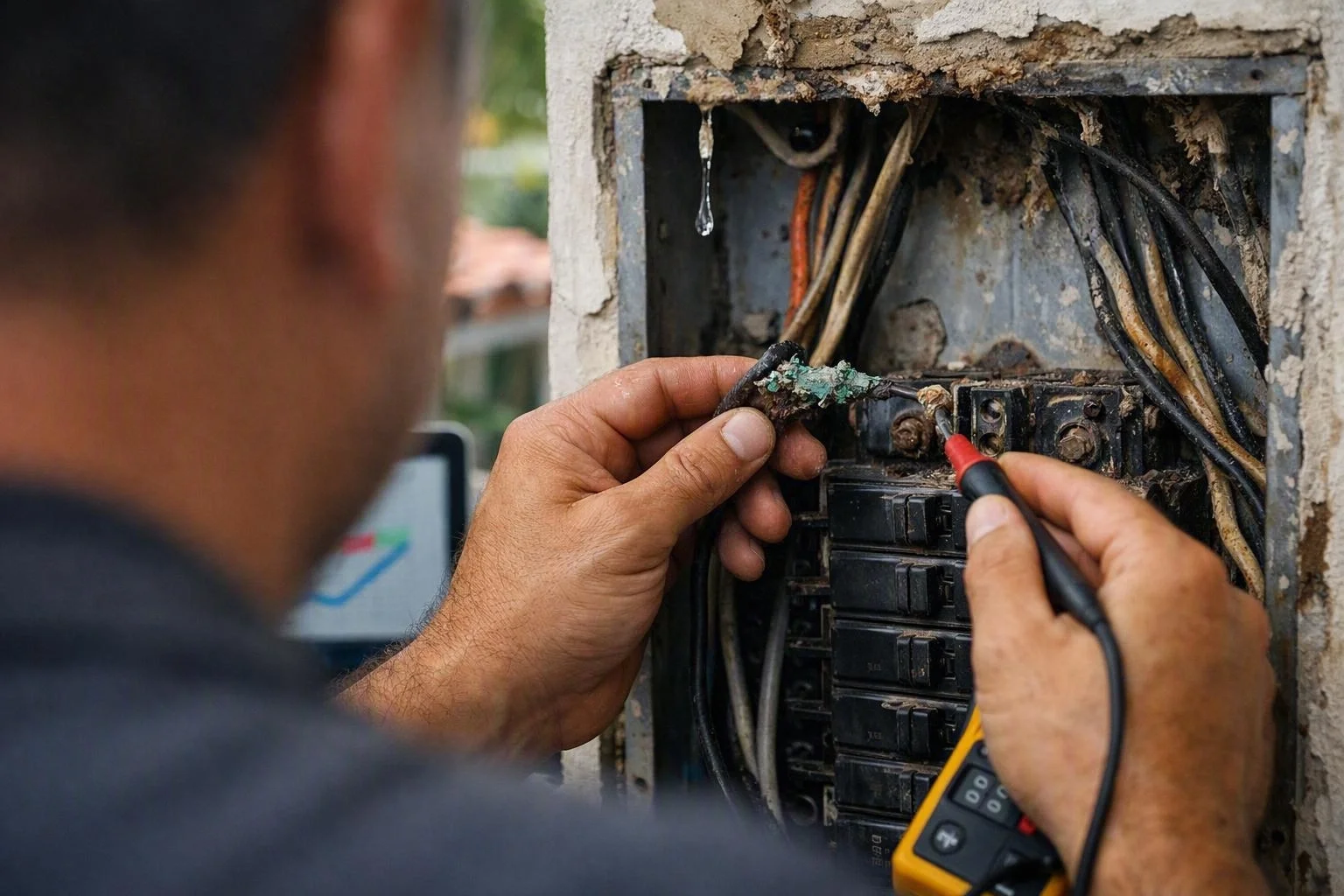
Why Storm and Water Damage Can Create Electrical Hazards?
Water-damaged electrical wiring becomes dangerous when moisture reaches live wires. It can also reach outlets, panels, boxes, and appliances. Water weakens insulation and rusts metal connections. It can cause short circuits after the area looks dry. An electrician should check each affected circuit before power returns.
Storm water may enter through a roof, wall, window, or service entry. Floodwater can move through floors and reach outlets and appliances. It may also reach the lower part of an electrical panel. Clear water can still leave dirt, minerals, or moisture behind. Saltwater and dirty floodwater cause even more rust. They can also create paths for electric current.
A wet circuit can cause an electrical shock. This may happen when someone touches a device or metal surface. Standing water can also carry current from the electrical system. Moisture can weaken wire covers and send current the wrong way. A ground fault may trip a safety device. An arc fault may create heat and fire risk without clear marks.
Dry walls and floors don't prove that hidden wiring is safe. Moisture may remain inside boxes, cables, outlets, or panels for days. Storm And Water Damage Electrical Repairs in Miami may involve hidden damage. Do not reuse damaged equipment until testing shows that it is safe.
7 Warning Signs Your Electrical Wiring May Be Water-Damaged
Electrical warning signs can appear after water damage. They include flickering lights, tripped breakers, burning smells, buzzing outlets, and warm receptacles. Sparks and dead outlets can also signal trouble. Stop using the circuit and arrange a professional inspection.
These signs may appear together or after the room feels dry. Leave connected appliances off. Tell the electrician which areas show trouble. Don't remove covers or test wet equipment yourself.
What Each Warning Sign Can Mean?
Flickering and buzzing may point to an arc fault. A loose connection or moisture may cause the same signs. Repeated breaker trips may show a ground fault or short circuit. They may also show an overloaded circuit. A ground fault happens when current takes an unsafe path.
Heat and discoloration may come from rust at a terminal. Failed insulation can also make wires overheat. A rusty connection creates resistance and heat. The circuit may still seem to work. A dead outlet may need a safe reset. It may also have hidden water damage.
Signs alone can't show the full cause. One symptom may have several possible causes. A damaged cable or loose connection may be involved. A safety device may have failed. Several circuits may also have damage. Professional testing helps find the true problem.
What to Do Immediately After Water Reaches Electrical Equipment?
Immediate safety starts with keeping people away from wet equipment. Don't touch standing water near electrical devices. Turn off power only when the panel stays dry and safe. Never reset wet circuits. Call an electrician for an emergency inspection.
Move people and pets away from the room first. Don't step into standing water to reach an outlet. Never touch a wet switch, cord, fixture, appliance, or wire. Water can stay dangerous after the leak stops.
If the main electrical panel and nearby floor are dry, you may turn off power. Only do this when you can reach the panel safely. Don't cross water or touch damaged materials. Leave the panel alone if it is wet, hot, cloudy, or damaged.
Don't use fans, shop vacuums, or extension cords near wet circuits. Don't use a portable generator near wet equipment. A trained professional must confirm safe placement first. Don't restore power because surfaces look dry. An emergency electrical inspection can find hidden moisture before someone gets hurt.
Leaks, floods, and storm damage all need care. Stop the water source only when it is safe. Don't clean plumbing near live equipment. Record the affected rooms and appliances for the electrician. The inspection often starts at the panel. Testing then follows the path of the water.
DIY Checks Versus Professional Electrical Inspection
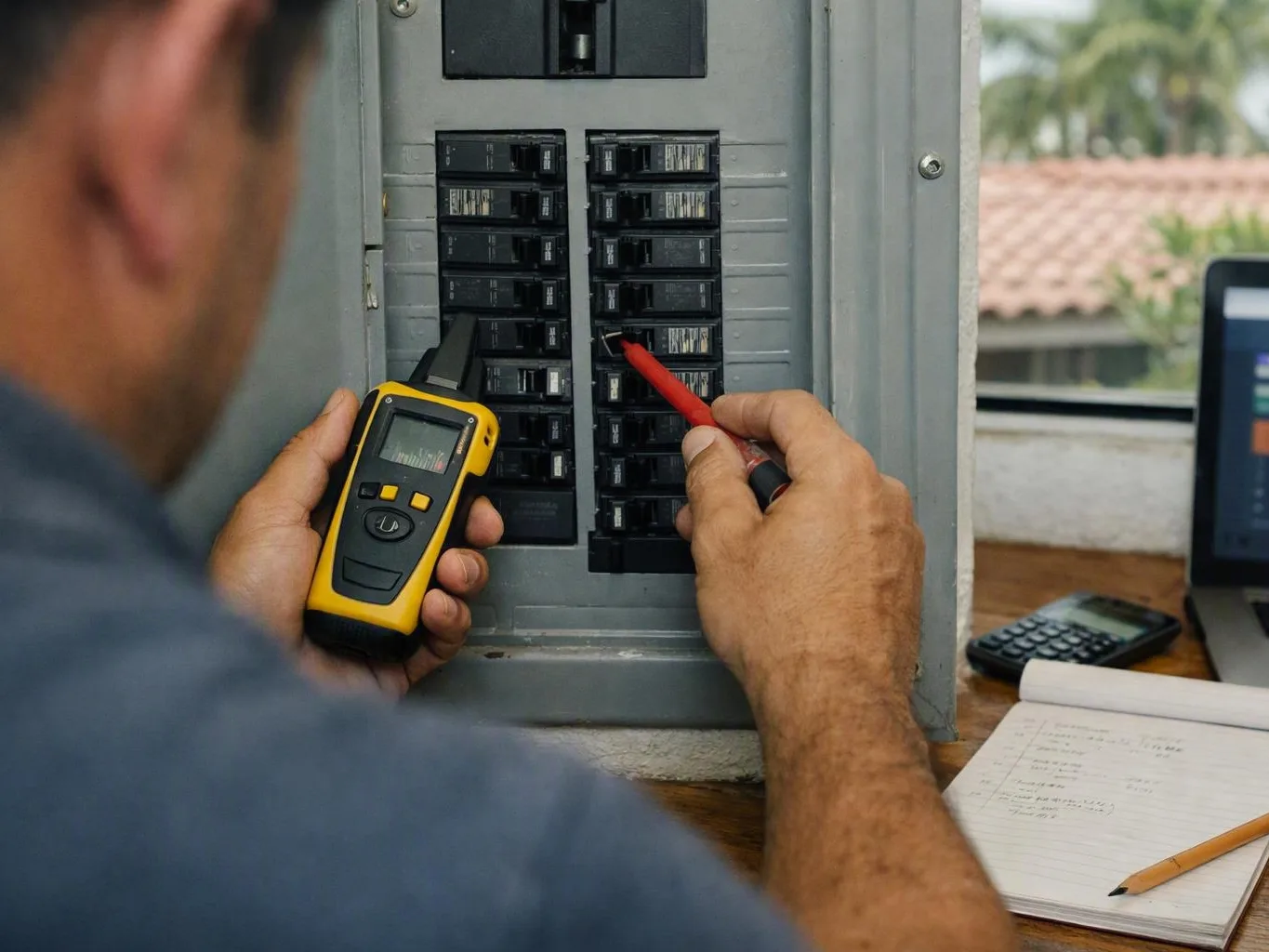
DIY checks should stay limited to safe visual checks. Look for visible water, smells, heat, or discoloration. Stay in a dry area while you look. A professional can safely turn off circuits and test wiring. They can find rust and hidden damage before repairs begin.
Homeowners can note flickering lights, dead outlets, and strange smells. They can also note water lines and breaker activity. Take photos only from a dry place. Don't remove outlet covers or open the panel. Don't probe wires or test wet equipment.
| Factor | DIY | Professional |
|---|---|---|
| Visual inspection | See visible water, smells, heat, or stains from a dry place. | Check panels, boxes, devices, and safe wiring after shutting circuits off. |
| Electrical testing | Don't test wet or questionable equipment. | Test insulation, wire paths, grounding, and safety devices. |
| Wiring repair | Don't open hidden wiring or make repairs. | Replace damaged cables, boxes, outlets, and other parts. |
| Power restoration | Don't restore power to wet or flooded circuits. | Check safe operation before returning circuits to service. |
| Who should do it | Occupants can report signs and stay clear. | A licensed electrician should check hidden or live hazards. |
Water-related electrical jobs often need several checks. One quick look may miss hidden problems. An inspection may cover the main panel and branch circuits. It may also cover outlets, switches, boxes, fixtures, and appliances. The scope depends on water depth and contact time. Water type also matters.
When Should You Call an Electrician?
Call an electrician immediately when water reaches electrical equipment. This includes panels, wires, outlets, appliances, and ceiling fixtures. Call when you see smoke, sparks, heat, buzzing, or burning smells. Repeated breaker trips and power loss also need prompt help. Get an inspection before using soaked or flooded circuits.
Treat a wet panel as an electrical hazard. Don't treat it like a normal outage. A breaker may have tripped correctly. It may still be wet or rusty. Don't reset it again while looking for the cause.
Call for power outage troubleshooting when part of the home loses power. Call when several outlets fail after a storm. Uneven lights also need a check. Tell the electrician about leaks, floods, lightning, or utility problems. These details help the team plan safe tests.
Storm And Water Damage Electrical Repairs may be needed after exposure. This includes damaged wires, outlets, fixtures, cables, and connections. Our team can explain when replacement is safer than drying. An Emergency Electrician is the right contact for smoke or arcing. Call right away for a hot panel or danger to people.
Call before entering a flooded room or using large appliances. Dry floors don't prove that hidden wiring is safe. Ground paths and wires still need a check. We can plan wiring repair and power restoration after isolating unsafe circuits.
How Electricians Restore a Water-Damaged Electrical System?
Electrical restoration begins by shutting off unsafe circuits. The electrician then finds where water entered the system. They test wires, panels, devices, and connections. They remove parts that can't be made safe. They replace damaged materials and test the system before restoring power.
Our team explains the damage and needed work before power returns. Drying may not stop rust inside a connection. Proper repairs support safe room use and reliable appliances. They also help with power outage troubleshooting later.
Questions About Emergency Electrician
How Can You Tell if Electrical Wiring Has Water Damage?
Look for flickering lights, tripped breakers, burning smells, buzzing, warm outlets, sparks, or dead receptacles. These signs may appear after a leak or storm. They don't give a full diagnosis. Hidden water and rust may have no visible signs.
What Happens if Water Gets into an Electrical Outlet?
Water can cause a ground fault, short circuit, rust, arcing, or shock risk. The outlet may trip a safety device or stop working. It may still be unsafe. Stay away from the outlet. Don't reset or reuse it before inspection.
Should I Turn off the Electricity After a Storm or Flood?
Turn off power only when the panel and nearby area are dry. You must reach it without standing in water. Never touch a wet panel. Keep people away and call an electrician when safe shutoff is unclear.
Can Water-Damaged Electrical Wiring Be Repaired?
Sometimes, but the answer depends on the wire type and water exposure. Rust, dirt, and insulation damage also matter. An electrician may replace damaged wires, devices, or connections. Flooded or dirty wiring may need replacement instead of drying.
When Should I Call an Electrician After Water Damage?
Call immediately when water reaches a panel, outlet, wire, appliance, or fixture. Call when you see smoke, sparks, heat, buzzing, or burning smells. Repeated breaker trips and power loss also need help. Call before restoring power to soaked, flooded, or storm-damaged circuits.
Earth Electric Florida can check storm-related electrical hazards in Miami. We can plan emergency electrical inspections and safe repairs. Tell us what happened and which areas got wet. Also tell us if the power is on or off. Our team can guide your next safe step.
Contact our teamRelated Resources
How Much Does an Emergency Electrician Cost in Miami?
emergency electrician cost Miami
What It CostsHow Much Does It Cost to Add a New Electrical Circuit?
new circuit installation cost
What It CostsEmergency Electrical Inspections: Cost, Process, and Results
emergency electrical inspection cost
How It WorksWhat an Electrician Does During a Power Outage
power outage troubleshooting electrician