
What is AWG?
AWG is the American Wire Gauge system, a standard way to identify the diameter and cross-sectional area of electrical wire. AWG numbers run in reverse size order. So a smaller number means a larger conductor. Electricians use AWG to select wire for current capacity, voltage drop, equipment terminals, and code-compliant circuit installation.
Quick Facts About AWG
Category
Electrical wire sizing system
Measured by
Conductor diameter and cross-sectional area
Used for
Selecting wire for electrical circuits
Common confusion
A smaller AWG number means a larger wire
Also called
American Wire Gauge, wire gauge
Often discussed with
Electrical Wiring Repair, Electrical Code Corrections
Key Takeaways About AWG
- A lower AWG number means thicker wire and generally supports more electrical current.
- Wire choice depends on load, insulation rating, circuit length, temperature, and site conditions.
- AWG describes conductor size, not the wire’s voltage rating, insulation type, or allowed breaker size.
- Voltage drop becomes more likely when a circuit uses undersized wire or runs a long distance.
Understanding AWG
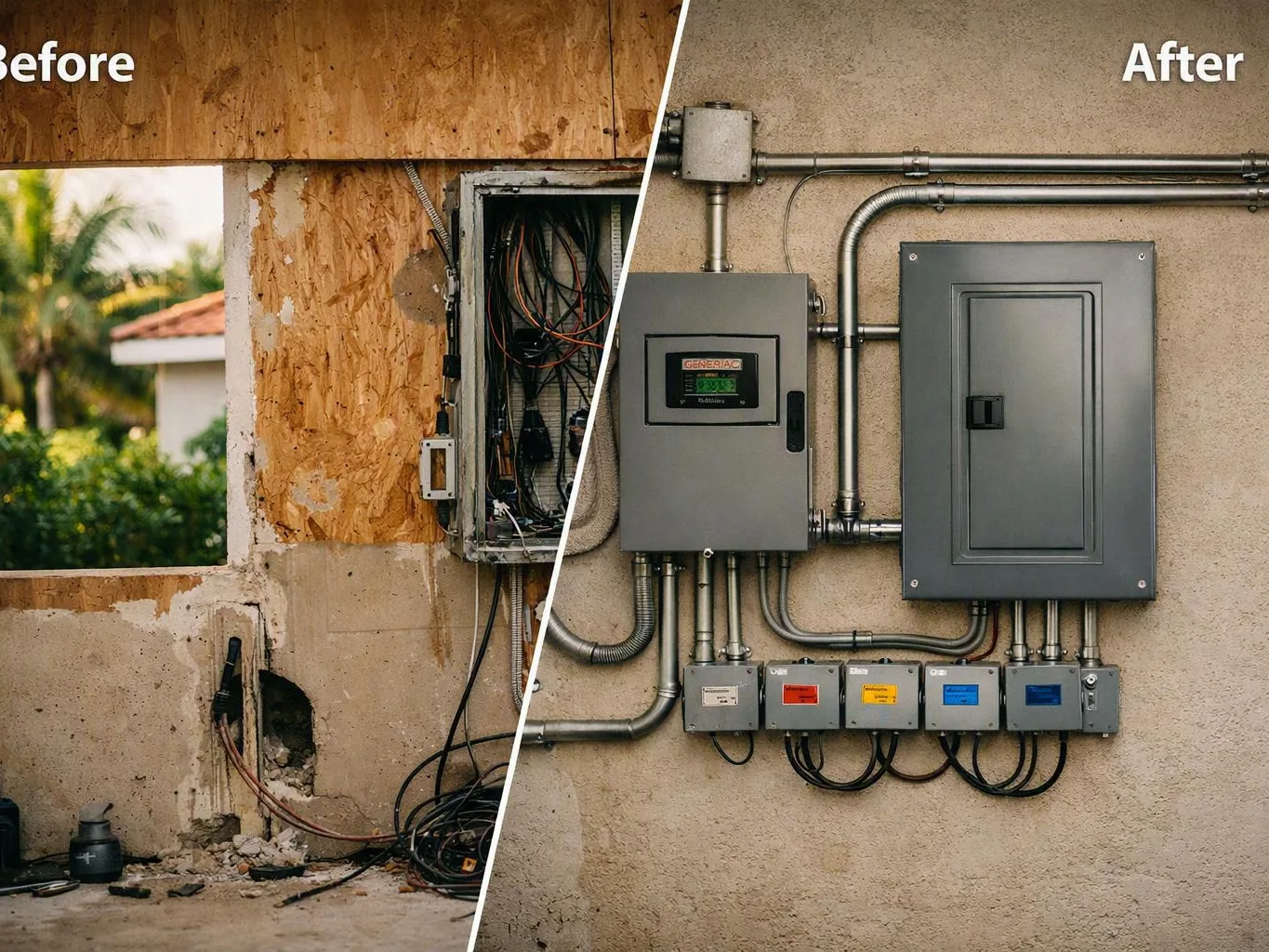
AWG, or American Wire Gauge, identifies the size of a solid or stranded electrical conductor. The system describes conductor diameter through numbered sizes. Examples include 14 AWG, 12 AWG, and 10 AWG. The number works in reverse order. So, 10 AWG is larger than 12 AWG. Also, 12 AWG is larger than 14 AWG.
Related glossary terms: Branch Circuit, Copper Wiring, Electrical Code.
The conductor is the metal part that carries electricity. It’s usually copper or aluminum. AWG doesn't describe the complete cable. A cable also has insulation and a temperature rating. It sometimes has a grounding conductor. Two wires can share the same AWG size but have different permitted uses. Their insulation, material, or installation method may differ.
How AWG Works, Is Measured, or Is Used?
AWG follows a logarithmic size scale rather than a simple one-to-one measurement. Each gauge number represents a defined change in conductor diameter and area. As the gauge number decreases, the conductor becomes wider. Its electrical resistance generally falls. Manufacturers label wire by AWG. This helps electricians match conductors to circuit designs and equipment terminals.
Wire selection starts with the circuit load and the expected current. An electrician then checks the conductor material and insulation temperature. They also check ambient temperature and current-carrying conductors. The installation method and circuit length also matter. A longer run may need a larger conductor to control voltage drop. This applies even when the basic current calculation seems acceptable.
AWG also affects how a wire fits a circuit breaker, terminal, connector, or lug. A breaker protects the conductor from excessive current. The correct pairing depends on electrical code and equipment listing. Stranded wire can be easier to route than solid wire. Yet both types still need the correct AWG size and approved termination.
Why AWG Matters?

Correct wire size helps a circuit carry its intended load. It also helps prevent excess heat and unwanted voltage loss. An undersized conductor can cause poor equipment performance or damaged insulation. It can also create a fire hazard when protection doesn't match the conductor. An oversized conductor is usually safer electrically when properly terminated. But it may not fit a device terminal. It may also create a costly design.
AWG gives you a common starting point for reviewing wiring, but AWG alone can't prove that an installation is safe. The full evaluation includes ampacity, overcurrent protection, and insulation temperature. It also includes grounding and termination quality. Equipment manufacturer’s instructions also matter. Electrical codes may set different requirements for many locations. These include residential, commercial, wet, outdoor, and high-temperature locations.
When AWG Matters Most?
AWG becomes especially important during new circuit installation and panel changes. It also matters during equipment replacement and troubleshooting. A larger air conditioner, electric water heater, generator, or electric vehicle charger may need another conductor size. This size may differ from the previous equipment. Reusing existing wire without checking the new load can cause nuisance trips. It can also cause voltage problems or unsafe overheating.
Wire size also matters after water intrusion, storm damage, overheating, or a short circuit. Heat, corrosion, and damaged insulation can reduce conductor reliability. This can happen even when its printed AWG marking remains correct. During an inspection, look for readable markings and secure terminations. Also check compatible breaker ratings and signs of discoloration. Check that the conductor size matches the circuit design and local code requirements.
How to Evaluate AWG?
- Confirm that the printed AWG size matches the circuit design and equipment installation instructions.
- Compare conductor ampacity with the breaker rating after accounting for temperature and installation conditions.
- Check the entire circuit length for voltage drop, especially with motors, compressors, and distant equipment.
- Inspect terminals for loose connections, discoloration, melted insulation, corrosion, or exposed conductor strands.
- Verify that copper or aluminum conductors use terminals and connectors listed for that conductor material.
Related Concepts Compared
AWG vs. Ampacity
AWG identifies a conductor’s physical size. Ampacity is the maximum current the conductor may carry under specific conditions.
AWG vs. Voltage Drop
AWG is a wire-size designation. Voltage drop is the reduction in voltage that occurs as current travels through conductor resistance.
AWG vs. Wire Gauge
Wire gauge is a general term for a wire-sizing system. AWG is the specific American Wire Gauge system used for many electrical conductors.
AWG vs. Cable
AWG normally identifies the size of a conductor inside a cable. Cable refers to the complete assembly, which may include multiple conductors, insulation, and a jacket.
Expert Note
Do not choose wire from AWG alone. The same conductor size can have different limits when insulation temperature, ambient heat, conduit fill, conductor count, or aluminum construction changes. Check the complete circuit design and each device terminal rating before installation.
Common Mistakes or Myths About AWG
- Assuming a higher AWG number means a thicker wire.
- Matching wire size to breaker size without checking load, length, temperature, or installation method.
- Treating AWG as the wire’s complete voltage, insulation, or outdoor-use rating.
- Joining copper and aluminum conductors without listed connectors and approved installation methods.
- Ignoring voltage drop on long runs to motors, pumps, compressors, or detached structures.
AWG in Practice: A Real-World Example
A 20-amp branch circuit may use 12 AWG copper conductors if code requirements are met. A long run to a detached structure may need larger conductors to reduce voltage drop. The breaker rating and terminations still need separate checks.
Sources & Further Reading on AWG
Related Terms
Branch Circuit
Branch Circuit is the part of an electrical system that carries power from a final overcurrent…
Copper Wiring
Copper Wiring is electrical conductors made from copper strands or solid copper cores that carry electric…
Electrical Code
Electrical Code is a set of safety rules for designing, installing, inspecting, and maintaining electrical systems…
Electrical Resistance
Electrical Resistance is the opposition a material or component presents to electric current. Resistance limits current…
Earth Electric Florida
Have Questions About AWG?
Contact Earth Electric Florida for practical guidance on AWG and related emergency electrician work in Miami.