Why Does Only Part of the House Have Power?
A partial power outage often means some circuits have lost power. A tripped breaker, blown fuse, utility phase loss, damaged service connection, or panel issue may cause it. Check if breakers sit fully in the on position. Look for visible blown fuses. Ask if nearby homes also lost power. Don’t remove the panel cover or touch damaged wires.
Get a Free Estimate
Earth Electric Florida helps homeowners find the source of power problems. Our team checks each symptom and follows it to the source.
Why Does Only Half the House Have Power?
Partial power outages happen when some circuits work while others stay off. A tripped breaker, blown fuse, lost utility phase, damaged meter connection, or panel failure may cause this issue. Ongoing problems need professional electrical troubleshooting.
Most homes use split-phase electrical service. The utility sends power through two hot legs. Each leg serves different circuits in the home. A breaker sends power to one branch circuit. That circuit may serve lights, outlets, or an appliance.
If one supply leg fails, circuits on the other leg may still work. This can make the outage look like a half-house power loss. Lights may work in one area, while outlets stay dead elsewhere.
A refrigerator may work while a range or air conditioner does not. The fault may start at a circuit, panel, meter box, or utility connection.
A loose connection can cause unstable voltage. Lights may dim when an appliance starts. Electronics may also act strangely. Stop using equipment if this happens. Power outage troubleshooting should find the fault first.
A home may have many branch circuits but only two incoming service legs. Losing one leg can affect several rooms.
Why Do Some Rooms Have No Electricity?
Some rooms lose electricity when they share a tripped circuit. A failed GFCI outlet or loose connection may also cause this issue. Nearby rooms may still work on separate circuits.
First, note what has stopped working. A bedroom may lose outlets but keep its ceiling light. A bathroom GFCI outlet may shut off other outlets farther along the circuit.
A breaker may trip from too much load, a damaged appliance, moisture, or faulty wiring. Press the reset button on an accessible GFCI outlet once.
Stop if the GFCI will not reset, trips again, feels warm, or shows damage. Don’t open outlets or pull them from the wall. A loose connection can heat inside the box.
Rooms, lights, outlets, and appliances can fail for different reasons. A list of working and dead items helps our team find the issue safely.
What Are the Signs of a Partial Power Outage?
Signs of a partial power outage include dead outlets, flickering lights, and equipment that works only sometimes. These signs can show a circuit issue or a larger service problem.
Smoke, sparks, burning odors, water, and hot panels need fast action. Move away from the danger. Don’t touch the equipment. Seek emergency electrical hazard help.
If safe, turn off the main disconnect. Don’t approach wet or damaged equipment. Never keep resetting a device to restore power.
What Causes One Side of a House to Lose Electricity?
Common causes of one-sided power loss include a tripped double-pole breaker, blown fuse, failed breaker, or loose service connection. Damaged meter equipment, lost utility phase, and panel faults can also cause it.
Ask if nearby homes also lost power. If they did, the utility may need to check its lines or transformer.
If only your home is affected, the fault may be in your meter box, service wire, panel, or branch wiring. Homeowners must not repair utility equipment or sealed meter connections.
Our crews can work with the utility when the issue starts outside your home. We can then repair house-side wiring when needed.
What Can You Safely Check Before Calling an Electrician?
Safe checks include checking nearby homes, viewing the panel cover, resetting one breaker, and pressing GFCI reset buttons. Stop if you see heat, smoke, arcing, water, or burning odors.
These checks only cover visible controls. Don’t test live terminals or open a meter box. Don’t touch loose wires or work near water.
Electrical safety means knowing when to stop. Arrange professional service if one reset does not restore power.
Most simple visits take about one to two hours. Repair time depends on access, damage, utility work, and parts.
When Should an Electrician Troubleshoot the Power Outage?
An electrician should troubleshoot a partial outage when one reset fails, a breaker trips again, or several rooms stay off. An electrician can find unsafe connections and decide if panel repair, fuse box replacement, meter work, or utility help is needed.
Call for service when one side of the house has no electricity. Call when major appliances stop working or lights flicker after a reset.
Repeated outages are warning signs. They may point to an overloaded circuit, loose connection, failing breaker, damaged wire, or panel problem.
Our team provides Power Outage Troubleshooting And Restoration. We trace the issue from the outlet or appliance to the circuit, panel, meter box, and utility connection.
We don’t treat a fuse box as a do-it-yourself project. We don’t bypass safety devices.
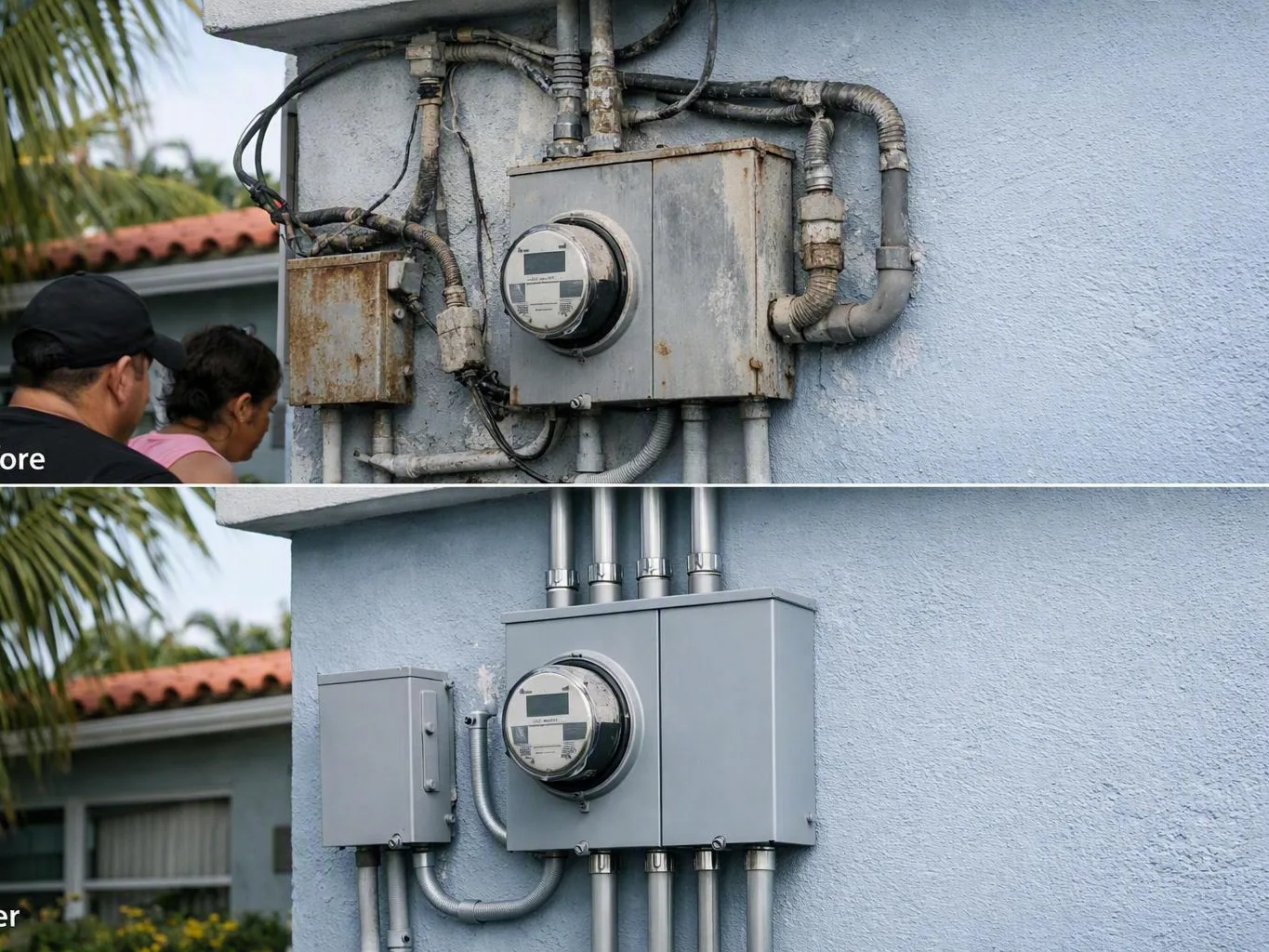
Electrical Panel Repair And Replacement may help with heat damage, rust, poor connections, old protection, or capacity concerns.
Meter box replacement may need utility approval. Service equipment can stay live even when part of the home is dark.
An Emergency Electrician may help with smoke, arcing, burning odors, water exposure, or hot equipment. Power Outage Troubleshooting And Restoration in Miami still needs safe utility and house-side checks.
How Can You Prevent Repeated Partial Power Outages?
Preventing repeated partial outages starts with safe circuit loads, sound wiring, working GFCI protection, and dry equipment. Regular panel checks can also help. Repeated trips need a real cause, not constant resets.
List the devices running when the breaker trips. Space heaters, portable air conditioners, kitchen tools, pumps, and workshop tools can overload one circuit.
Moving a device may reduce the problem. It won’t fix damaged wiring or a weak connection.
Check visible cords, outlets, switches, and covers for heat or damage. Ask for an inspection if you notice flickering, trips, odors, buzzing, rust, or moisture.
Surge protection can help guard electronics. It cannot fix an overloaded circuit or failing service equipment.
Keep the panel clear and dry. Don’t store liquids nearby or block access. A clear circuit list helps during an emergency.
Prevention Steps for Safer, More Reliable Power
Simple habits can reduce electrical stress. They don’t replace professional help when outages repeat.
- Manage circuit loads: Don’t run many high-wattage appliances on one circuit.
- Schedule an electrical inspection: Have old panels, loose connections, and damaged wires checked.
- Use the right surge protector for sensitive electronics. Replace it after serious surge damage.
- Test GFCI protection with the TEST and RESET buttons. Follow the device instructions.
- Stop using a damaged appliance. Don’t keep resetting its breaker.
Good care supports steady power. It cannot make wet, hot, exposed, or arcing equipment safe.
Questions About Emergency Electrician
What Are the Causes When Half of a House Has No Power?
Causes include a tripped double-pole breaker, blown fuse, lost utility phase, failed service connection, damaged meter, loose wiring, or panel failure. Don’t open the panel or meter box.
Why Do Some Rooms Have No Power?
Some rooms may share a tripped circuit or GFCI outlet. A loose connection, overloaded circuit, damaged appliance, or failed breaker can also affect selected rooms.
What Should I Do During a Partial Power Outage in My House?
Check if neighbors are affected. Look at breakers without removing the cover. Reset one breaker and accessible GFCI outlets once. Stop if you see heat, smoke, water, arcing, burning odors, or repeated trips.
Why Does One Side of My House Have No Electricity?
One side may use a supply leg or circuit group that lost power. A breaker, utility phase, meter, service wire, or panel failure can cause this pattern. Call an electrician if one reset fails.
Our team can help find the source when power stays unstable. Contact us through our service request page for safe electrical guidance.
Related Resources
Burning Smell From Outlets or Wiring in Miami, FL: When to Call an Emergency Electrician
burning smell from electrical outlet when to call electrician
When You Need ItFlickering and Dimming Lights: Signs of a Dangerous Electrical Problem in Miami, FL
flickering lights when to call an electrician miami
When You Need ItPartial Power Outage in Miami, FL: How to Know When You Need an Emergency Electrician
partial power outage in house when to call electrician
When You Need ItSigns Storm or Water Damage Has Created an Electrical Hazard
signs of water damage to electrical wiring when to call electrician