When an Old Fuse Box or Electrical Panel Becomes a Problem
Old fuse boxes and electrical panels can’t always handle today’s power needs. Damage, heat, and repeated trips also create safety risks. Warning signs include flickering lights, burning smells, buzzing, warm covers, and scorch marks. Frequent blown fuses also need attention. Never use oversized fuses to stop the problem. Don’t use extension cords for permanent loads. They can recommend repair, replacement, or a service upgrade.
Get a Free Estimate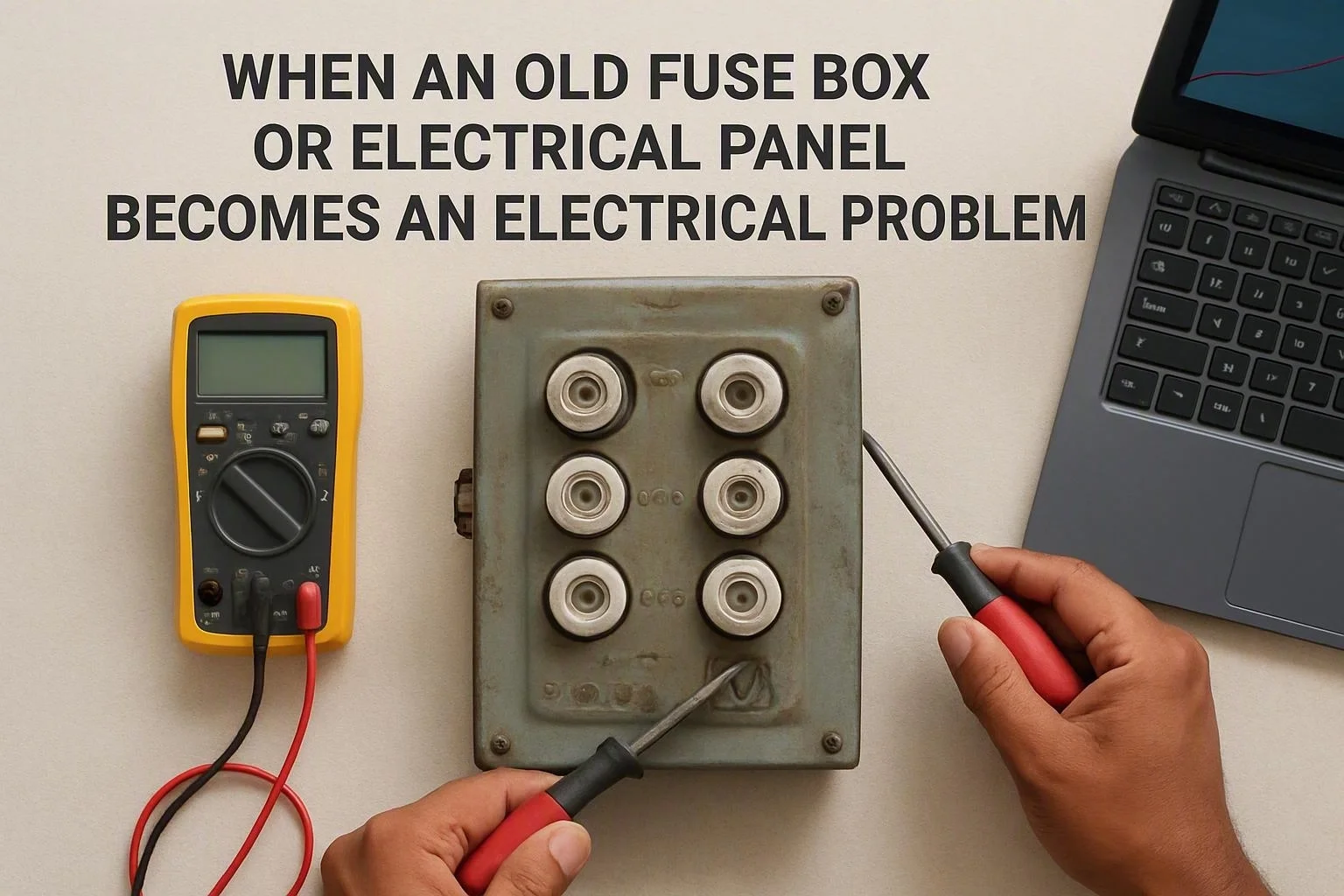
What Old Fuse Box Electrical Problems Mean for Your Home?
Old fuse box problems can start with aging parts or limited power. Damaged wiring can also cause trouble. Repeated blown fuses, heat, odors, and sparks need a professional check.
An old fuse box is older electrical equipment. It uses fuses to protect each circuit. A fuse melts when current gets too high. An electrical panel uses circuit breakers instead. Breakers trip during an unsafe power event. Both systems must match the home’s wiring and power needs.
Many older homes were built before large appliances became common. A kitchen remodel can add more power demand, so can central HVAC, a heat pump, an electric dryer, or an electric vehicle charger. Limited power can cause dimming, heat, and repeated trips.
These problems don’t always mean the whole system has failed. A loose connection may cause the issue. A damaged fuse holder or faulty appliance may also be responsible. Only a qualified electrician can find the true cause. Our team can inspect the equipment and explain the safest next step.
A diagnostic visit checks several connected parts. These may include fuses, breakers, bus bars, grounding, and visible wiring. The exact check depends on the home and its symptoms. Never remove a cover or touch exposed parts yourself. The main switch may not remove all danger.
Why Does My Fuse Box Keep Blowing Fuses?
A fuse box keeps blowing fuses when a circuit pulls too much power. A fault can also create an unsafe path for current. Common causes include overloads, short circuits, ground faults, bad appliances, and loose connections. Wrong fuse sizes can cause the same problem. Replacing the fuse doesn’t fix the cause.
Unplugging appliances one at a time may offer a clue. It shouldn’t replace an electrical inspection. The problem may involve hidden wiring or a loose connection.
Safe Ways to Respond to a Repeatedly Blown Fuse
Repeatedly blown fuses are a warning sign. Follow these steps while you arrange qualified help.
- Isolate power: Turn off or unplug suspected appliances. Leave the area if you see smoke, sparks, or severe heat. Shut off main power only when it’s safe.
- Fuse replacement: Use only the approved fuse type and rating. Replace it only when there’s no heat, odor, or damage. Never use foil, coins, nails, or oversized fuses.
- Request an electrical inspection: Have a licensed electrician test the circuit, appliance, wiring, and safety parts.
- Arrange emergency electrical service for sparks, smoke, burning odors, rising heat, or unsafe panel access.
Don’t keep changing fuses to restore power. Our crews can find the source of the issue. It may involve an appliance, branch circuit, residential wiring, or main equipment. Finding the cause helps prevent needless replacement.
Signs of a Bad Electrical Panel and Overheating
A bad electrical panel may show heat, odors, noise, or damage. Other signs include flickering lights, loose breakers, and repeated trips. These signs need quick attention. Heat can damage insulation and raise fire risk.
These signs can also start in wiring or an appliance. Keep people away from a hot, smoking, or sparking panel. Request an emergency inspection. Don’t store items against the equipment. Keep its access area clear.
When Should an Electrical Panel Be Replaced?
An electrical panel should be replaced when it’s damaged, overheated, outdated, or too small. Replacement may also help when the panel fails often. An old fuse box may lack enough capacity. An electrician should inspect the full system first.
Replacement may make sense when the case is corroded. It may also help when parts aren’t supported or breakers don’t fit. Heat damage to bus bars and insulation is another concern. Age alone doesn’t prove that replacement is needed. Condition, safety, capacity, and fit matter more.
Homes need more power as owners add new appliances. HVAC systems, workshops, room additions, and vehicle chargers can increase demand. A larger panel won’t fix every issue. The incoming service, meter, grounding, and wiring may also be too small.
A new panel needs enough spaces for future loads. Our team can perform a load calculation. We can review breakers, connections, and wiring. Then we’ll explain if repair, fuse box replacement, or an upgrade fits best. A qualified electrician should review code needs.
Many panel replacements take about one workday. This estimate assumes ready equipment and easy access. Damaged wiring or service changes can extend the work.
How an Electrician Diagnoses and Prevents Panel Problems?
An electrician checks the panel, fuses, breakers, wiring, and grounding. They also check service capacity and heat damage. Testing can show if an appliance or circuit causes the issue. Prevention includes fixing overloads and damaged parts. It also includes keeping clear access and planning upgrades.
An electrical inspection starts with questions about outages and trips. The electrician also asks about blown fuses, appliances, and recent work. They look for corrosion, loose parts, damaged insulation, and wrong fuse sizes. Power may be turned off before testing.
A load calculation compares the home’s service with its power use. It includes heating, cooling, cooking, water heating, and laundry. It also includes additions and vehicle charging. A heat check can find hot connections that a visual check may miss.
Testing may show that one appliance has a fault. It may also find a loose connection or bad breaker. Other findings can include damaged bus bars, poor grounding, or old wiring. The repair should fix the cause.
Regular checks can help after repairs or before major additions. Keep notes about repeated trips. Don’t cover vents or block the panel. Arrange a review when power needs change. Our services depend on the equipment, home capacity, and safest work plan.
Simple Prevention Steps for Fuse Box and Panel Safety
Simple habits can reduce stress on older equipment. They can’t fix damaged parts or low service capacity. Use these steps until a professional checks the system.
- Manage circuit loads: Spread large appliances across suitable circuits. Don’t run many heating or cooking devices from one outlet group.
- Use surge protection: Choose protection with the right rating. It doesn’t replace grounding or safe overcurrent protection.
- Schedule electrical maintenance after remodeling or new HVAC work. Also schedule it when lights and outlets act differently.
- Use appliances safely. Replace damaged cords and don’t use extension cords as permanent wiring.
- Arrange a professional inspection for trips, old equipment, heat, odors, sparks, or planned vehicle charging.
Repair, Replacement, or an Electrical Service Upgrade?
Fuse box repair or electrical panel repair may fix one small defect. Replacement may fit damaged, old, or undersized equipment. An electrical service upgrade may help when the home needs much more power. Emergency inspection is needed for smoke, sparks, severe heat, or burning odors.
The right choice depends on the equipment and wiring. Future power needs also matter. A small repair may work when the box and wiring are sound. Replacement may be better when failures happen often.
| Option | When it may fit | What should be reviewed |
|---|---|---|
| Fuse box repair | A fuse holder, connection, or other small defect needs repair. | Fuse rating, wiring, heat damage, grounding, and remaining capacity. |
| Electrical panel repair | A modern panel has a replaceable breaker or damaged part. | Breaker fit, bus bars, enclosure, load balance, and heat signs. |
| Panel replacement | Equipment is old, damaged, failing, or too small. | Panel spaces, circuit fit, service rating, grounding, and future loads. |
| Electrical service upgrade | The incoming service can’t support planned appliances or charging. | Load calculation, utility equipment, meter, service wires, and code review. |
| Emergency electrical inspection | Smoke, sparks, severe heat, or burning odors are present. | Safe power shutoff, fire risk, damaged wiring, and urgent repairs. |
When a homeowner asks about Fuse Box Repair And Replacement in Miami, the same safety checks apply. Is the equipment sound? Can the wiring support the load? Will the work meet current rules? Our team can explain the findings first. An Emergency Electrician may be needed when conditions are dangerous.
Questions About Emergency Electrician
Can an Old Fuse Box Cause Electrical Problems?
Yes. An old fuse box may have low capacity, worn holders, loose connections, or damaged insulation. Modern appliances may overload older circuits. Repeated blown fuses, heat, odors, flickering, or sparks need an electrical inspection. Never use larger fuses.
How Do I Know if My Electrical Panel Is Unsafe?
Warning signs include burning smells, scorch marks, buzzing, crackling, flickering lights, and repeated trips. Corrosion or a warm cover also needs attention. Leave the area during smoke, sparks, or severe heat. Request professional help.
Is It Better to Repair or Replace a Fuse Box?
Repair may fit one small defect when the box, wiring, and capacity are sound. Replacement may be safer when equipment is old, damaged, overheated, or too small. A qualified electrician should inspect the full system first.
What Causes an Electrical Panel to Overheat?
Common causes include high loads, loose connections, corrosion, bad breakers, damaged bus bars, and poor wiring. Electrical panel overheating can damage insulation and raise fire risk. Don’t open the cover or reset a hot breaker.
How Much Does It Cost to Replace an Old Fuse Box?
The cost depends on service size, access, wiring, grounding, equipment, permits, and utility work. A service upgrade may also change the price. A professional assessment can define the work. Each home has different needs.
Earth Electric Florida can find the right next step. Your system may need a repair, replacement, or more capacity. Arrange an inspection through our contact page.
Get a Free EstimateRelated Resources
Burning Smell From Outlets or Wiring in Miami, FL: When to Call an Emergency Electrician
burning smell from electrical outlet when to call electrician
When You Need ItFlickering and Dimming Lights: Signs of a Dangerous Electrical Problem in Miami, FL
flickering lights when to call an electrician miami
When You Need ItPartial Power Outage in Miami, FL: How to Know When You Need an Emergency Electrician
partial power outage in house when to call electrician
When You Need ItSigns Storm or Water Damage Has Created an Electrical Hazard
signs of water damage to electrical wiring when to call electrician