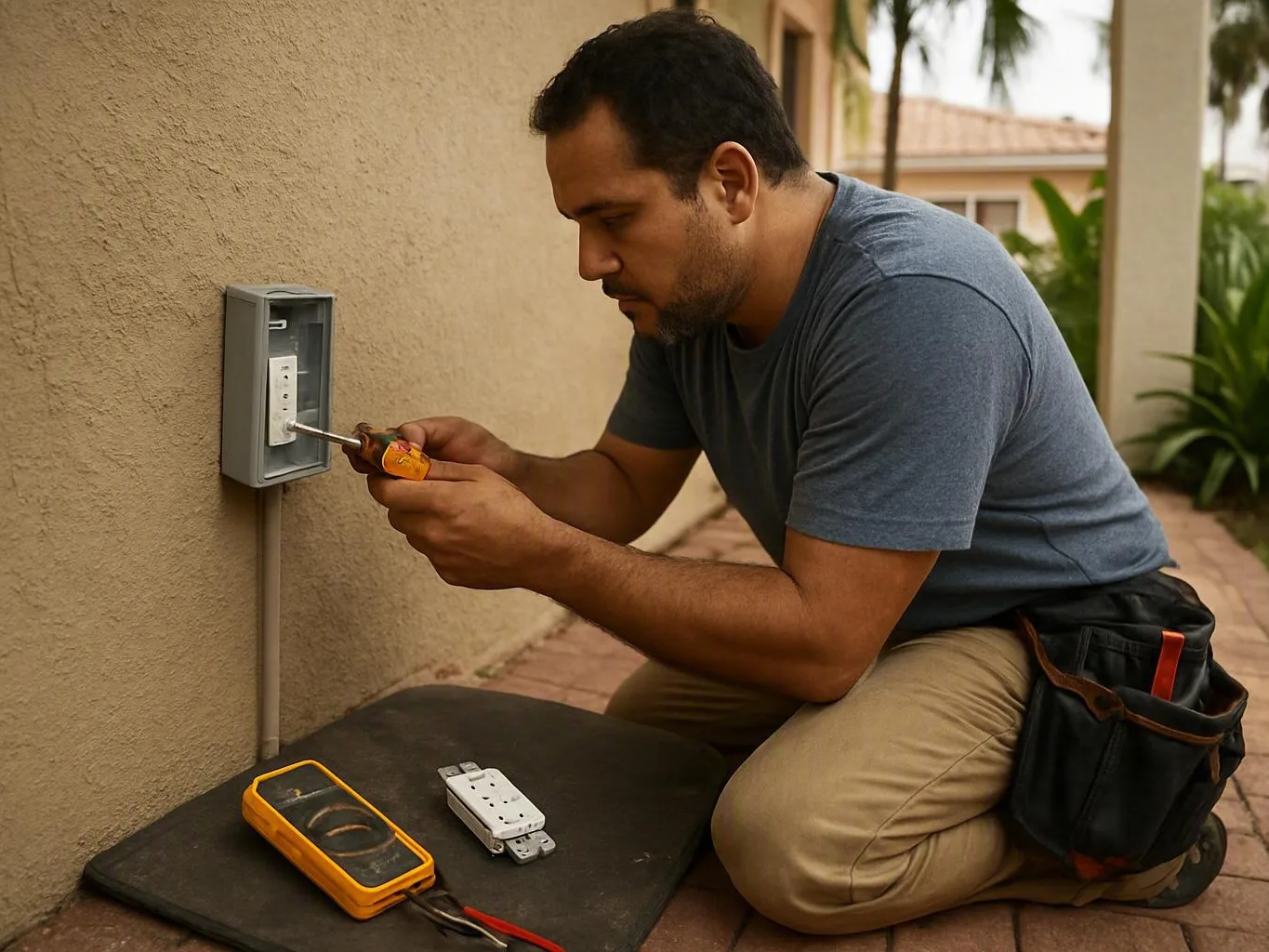
What to Do About Electrical Damage After a Storm or Flood
Electrical damage after a storm or flood needs fast action. Shut off power, avoid wet equipment, and call a qualified electrician. Do not turn power back on until an electrician checks the panel, wiring, outlets, appliances, and service equipment. Stay away from standing water near electrical parts. Call emergency services for immediate dangers. Take photos from a safe place, then arrange storm and water damage electrical repairs. An Emergency Electrician can find shock and fire risks, replace damaged parts, repair the panel, and set up temporary power when safe.
Get a Free EstimateElectrical Safety After a Flood or Storm
Electrical safety after a flood or storm starts with staying away from standing water, damaged wires, and wet equipment. If you can reach the main disconnect without entering water, turn off the power. If not, call the utility or emergency services. Don't touch wet electrical devices or restore power yourself.
Floodwater can hide live parts, open wire joints, and fallen lines. It may also contain mud, chemicals, or sewage. These materials can raise the shock risk. Treat a flooded panel, outlet, appliance, or extension cord as dangerous, even if it looks dry.
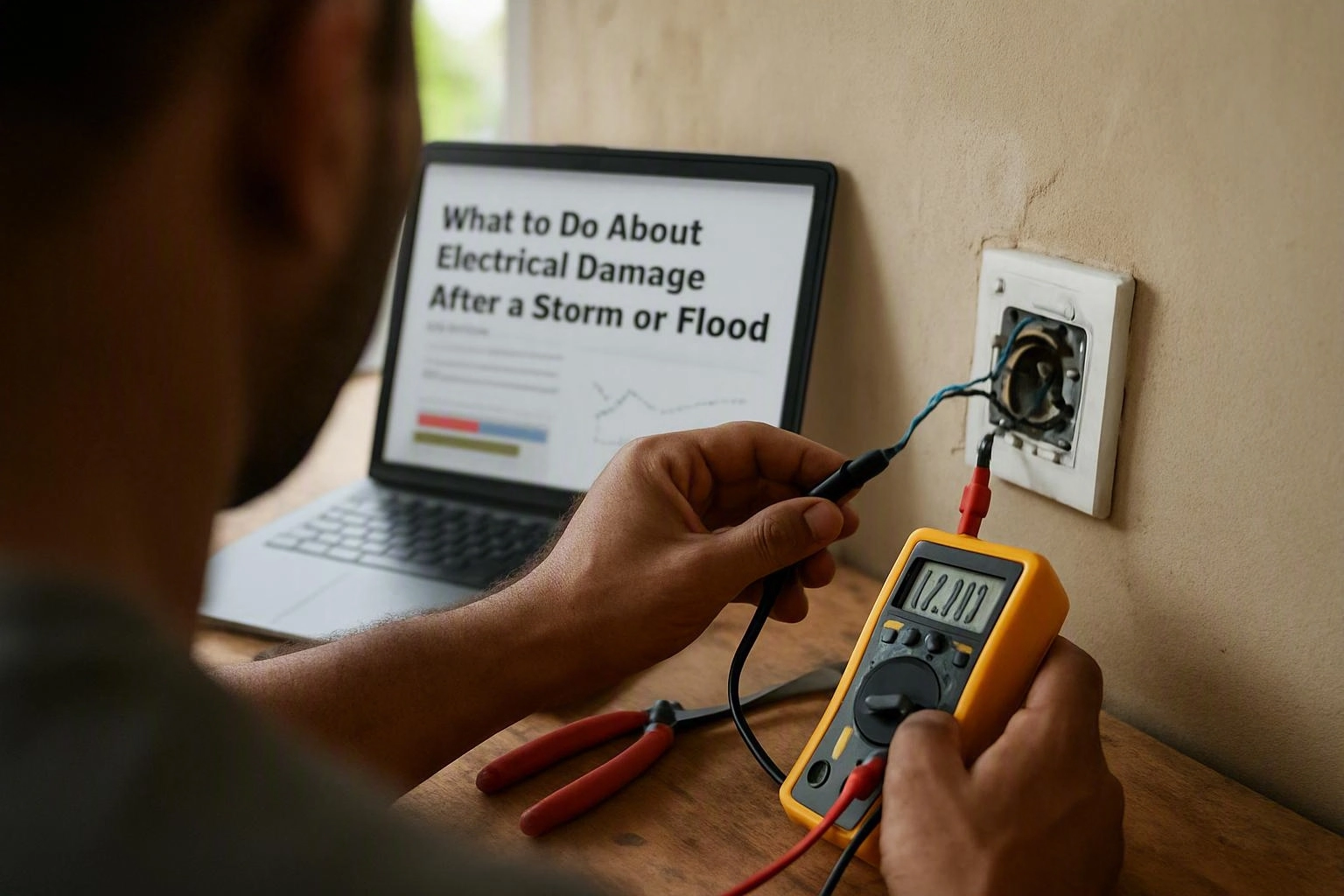
Keep children, residents, tenants, and pets away from affected rooms. Don't enter a basement, garage, crawl space, or low area with nearby electrical systems. Landlords and property managers should allow access only after the utility and an electrician say the area is safe.
If a power line has fallen, wires spark, or smoke appears, move away. Call emergency services. Don't move a damaged wire or drive near it. An Emergency Electrician can help separate building hazards. The utility must handle its own equipment.
Take photos from a dry place when conditions are safe. Don't remove covers or open equipment. The first step is to separate the danger. A careful inspection can then guide repairs.
What to Do About Electrical Damage After a Storm?
Electrical damage after a storm should be handled by isolating the hazard, keeping people away, taking photos, and arranging an electrical inspection. An electrician should test the service equipment, panel, circuits, outlets, and wiring before repairs or power restoration. Looks alone can't prove that electrical parts are safe.
Storm And Water Damage Electrical Repairs may include panel repair or replacement, flooded outlet replacement, damaged disconnects, new wiring, and circuit tests. We can also help with Power Outage Troubleshooting And Restoration when the cause may involve the building, the utility, or both.
Emergency checks often take one to three hours. Access, water levels, and circuit count affect the time. This range isn't a promise. Dirty water, hidden wires, or utility damage may require more time and a separate plan.
Signs and Symptoms of Water-Damaged Electrical Systems
Signs can point to danger, but they can't prove a system is safe. Keep the power off and arrange testing if you see any of these problems:
- Burn marks on outlets, switches, panels, plugs, or nearby walls may show overheating or arcing.
- Sparking outlets, crackling sounds, or flashes show an immediate fire and shock risk.
- Tripped breakers that trip again may point to moisture, a short circuit, or damaged equipment.
- Flickering or dim lights may point to loose or wet connections.
- Rust, green deposits, swollen covers, or white residue may remain after surfaces dry.
- A burning smell, melted plastic smell, or warm cover needs fast action and expert help.
Don't reset a breaker again and again. A breaker can work while wet wiring stays unsafe. Write down when the problem happened. Note which rooms or appliances were in use.
Can Power Be Turned on After Flooding?
Power can be turned on after flooding only after a qualified electrician inspects, tests, and clears the system. The utility may also need to approve the service. A flooded home can hide damage inside panels, cables, outlets, and appliances. A new fuse or breaker reset doesn't make wet equipment safe.
Power restoration depends on test results, not drying time. The electrician may separate damaged circuits, inspect the panel, check breakers, and test grounding. Insulation testing (a check for current leaks) may find wet or damaged wire covering.
Some safe circuits may return during phased repairs. Other circuits may stay off until walls, floors, and hidden wires are reachable. Moisture can remain inside conduits and behind covers after visible water is gone.
Ask who controls the final connection. The utility may need to check the meter, service equipment, or incoming supply. A building electrician checks equipment owned by the customer. Each party should approve only the parts it controls.
Residents may need lights, food cooling, medical devices, or phone service during an outage. We can discuss safe temporary power options. Generators must stay outdoors. Cords must stay dry. Temporary service must match the load, weather, air flow, transfer equipment, and access.
Which Electrical Equipment Needs Repair or Replacement?
Water-damaged electrical equipment needs an electrician's review. Moisture, mud, rust, and dirty water can remain after surfaces dry. Panels, breakers, outlets, switches, wiring, disconnects, and appliances may need replacement. The right choice depends on the part, damage, dirt, and test results.
| Component | Why it may be unsafe | Typical decision |
|---|---|---|
| Electrical panel and circuit breakers | Moisture, silt, rust, and damaged connections can affect how they work. | Test only when allowed. Replacement is often needed after flooding or contamination. |
| Service equipment and disconnects | These parts may control the whole property. Hidden damage can remain inside. | Arrange a utility check. Replace damaged parts when required. |
| Receptacles, switches, and ground-fault circuit interrupter devices | Water and dirty material can enter through small openings. | Replacement is often safer than cleaning after a flood. |
| Wiring, cables, and junction boxes | Water can harm wire covering and rust the connections. | Inspect and test them. Replace parts that fail or were contaminated. |
| Appliances and portable equipment | Motors, controls, batteries, and heating parts may hold moisture. | Have each item checked. Don't plug it in to test it. |
Drying may work for some lightly wet, approved equipment. It isn't right for every part. Saltwater, sewage, mud, and storm surge increase the risk of rust and current leaks.
Our team separates repairable items from parts that need replacement. We explain the reason for each choice. This helps homeowners, landlords, and property managers make a safe plan.
Common Causes of Storm and Flood Electrical Damage
Several problems can affect one property at once. Finding the source helps guide the inspection:
- Rainwater intrusion through roofs, walls, windows, doors, and seals can reach outlets, wire joints, and panels.
- Storm surge can cover service equipment, appliances, wiring, and low outlets with salt or dirty water.
- Wind damage may pull down utility lines, break weatherheads, open covers, or harm outdoor disconnects.
- Lightning can damage panels, electronics, controls, and connected appliances.
- Dirty floodwater can leave mud, chemicals, sewage, and rust inside electrical equipment.
One storm can cause both water and surge damage. A quick look at one outlet can't clear the whole system.
Does a Flooded House Need an Electrical Inspection?
A flooded house needs an electrical inspection when water may have reached wiring, outlets, appliances, the panel, or service equipment. A qualified electrician can find hidden moisture, rust, damaged wire covering, grounding issues, and unsafe connections. The inspection shows what can be repaired and what needs replacement.
An inspection also makes sense when water stayed outside the living area. It may have reached an outdoor panel, crawl space, garage, meter area, generator connection, or underground wire path. Moisture can move through conduits and wall spaces. A dry room doesn't prove its circuit is dry.
We ask what happened, where water reached, how long the equipment was wet, and whether the water was clean, salty, or dirty. Then we check the service equipment, panel, circuits, outlets, appliances, grounding, and visible connections. Testing must fit the equipment and damage.
The final plan may include cleaning nearby areas, drying building materials, replacing a flooded panel, repairing some circuits, or removing unsafe wires. Local electrical rules also apply during repairs.
Property owners should keep notes, photos, equipment lists, utility instructions, and receipts. Landlords and property managers should tell residents about safe access. No one should enter areas with electrical hazards. Emergency work can make the property safer first. Later visits can finish other repairs.
Preventing Electrical Damage During Future Storms and Floods
Storm and flood electrical damage can be reduced with surge protection, dry generators, raised equipment, and regular inspections. A proper transfer switch and backup power plan can prevent unsafe connections. Prevention can't remove all flood risk. Damaged equipment still needs an expert check.
Temporary power should be planned, not improvised. Our crews can help find essential loads, safe cord paths, dry locations, and the right time to return to permanent power.
Tell residents which rooms are closed, where panels are locked, and where generators may operate. Clear rules protect people while cleanup and repairs move forward.
Questions About Emergency Electrician
What Should I Do About Electrical Damage After a Storm?
Keep people away from water and damaged equipment. Turn off power only if the disconnect is dry and safe to reach. Call the utility or emergency services for urgent hazards. Take photos without touching the damage. Arrange an inspection before resetting breakers or restoring power.
Can Power Be Turned on After Flooding?
Only after a qualified electrician inspects, tests, and clears the system. The utility may also need to approve it. A breaker reset or new fuse can't show that wet panels, wiring, outlets, service equipment, or appliances are safe.
Do I Need an Electrician for Water-Damaged Electrical Equipment?
Yes. A water-damaged electrical equipment electrician can check moisture, mud, dirty water, rust, wire covering, grounding, and internal contacts. Don't plug in, clean, dry, or open flooded equipment yourself. Some parts can be tested. Others need replacement.
Does a Flooded House Need an Electrical Inspection?
Yes, when floodwater may have reached wiring, outlets, appliances, the panel, service equipment, or outdoor electrical parts. An inspection can find hidden moisture, rust, grounding problems, and unsafe connections before power returns.
How Do You Know if Water Damaged Electrical Wiring Is Safe?
You can't confirm safety by sight or by waiting for the surface to dry. A qualified electrician must check the wiring, connections, grounding, and related equipment. Damaged, dirty, rusty, or failed wiring may need replacement.
Our team can help isolate storm damage, record conditions, arrange inspections, make repairs, and plan temporary power. Earth Electric Florida offers a safe path from emergency checks to full restoration. Contact our team to discuss the next safe step.
Related Resources
Burning Smell From Outlets or Wiring in Miami, FL: When to Call an Emergency Electrician
burning smell from electrical outlet when to call electrician
When You Need ItFlickering and Dimming Lights: Signs of a Dangerous Electrical Problem in Miami, FL
flickering lights when to call an electrician miami
When You Need ItPartial Power Outage in Miami, FL: How to Know When You Need an Emergency Electrician
partial power outage in house when to call electrician
When You Need ItSigns Storm or Water Damage Has Created an Electrical Hazard
signs of water damage to electrical wiring when to call electrician