How to Tell If Your Home Has an Overloaded Electrical Circuit
An overloaded electrical circuit can show several warning signs. These signs include tripped breakers, blown fuses, flickering lights, and warm outlets. You may also notice buzzing, burning odors, or dark marks around receptacles. Several appliances may draw more current than the circuit can safely handle. This can trip the breaker or heat the wiring. Repeated trips, heat, smoke, sparks, or burning smells need quick action. Unplug devices you don't need. Don't keep resetting the breaker. An electrician can test the circuit and find wiring problems. They can spread out the load or install a new circuit. They may suggest an electrical service upgrade if needed.
Get a Free Estimate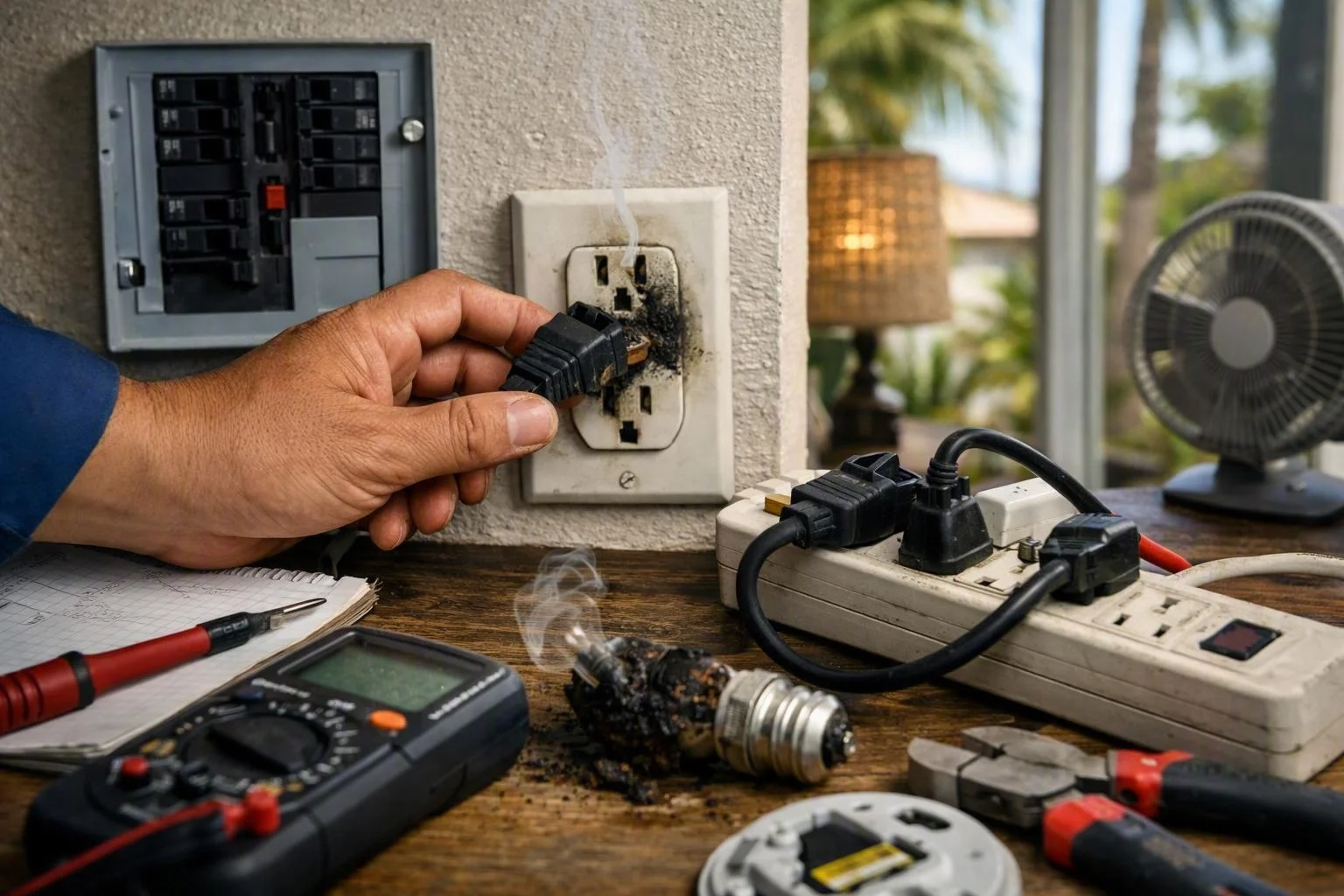
Residential electrical circuits carry a safe amount of current for connected devices. Earth Electric Florida helps homeowners spot simple load issues. We also find cases that need expert testing.
Many home circuits have a 15 or 20 amp rating. The safe load depends on the wiring, breaker, and equipment. Never assume an empty outlet has unlimited power.
What Are the Signs of an Overloaded Electrical Circuit?
An overloaded electrical circuit can trip a breaker or blow a fuse. It may also cause flickering lights, warm outlets, buzzing, or burning odors. Brown or black marks are also warning signs. These problems may mean excess current, loose wires, or heat buildup. Smoke, sparks, and burning smells need immediate help.
One sign can have more than one cause. Flickering lights may come from an overloaded circuit or loose wiring. A failing device can cause the same problem. Don't remove an outlet cover or panel cover unless you're qualified.
Stop using a device if you see arcing, smoke, melted plastic, or scorch marks. Unplug safe devices if you can. Leave the home if there's active smoke or fire. Contact emergency services first.
Why Does My Breaker Trip When Multiple Devices Run?
A circuit breaker trips when devices draw too much power. Space heaters, microwaves, air conditioners, and hair dryers use lots of power. Running them together can exceed the circuit rating. The breaker cuts power to limit heat and lower fire risk.
Each device adds to the electrical load. A space heater may use much of a bedroom circuit. A microwave can use much of a kitchen circuit. A hair dryer can do the same in a bathroom. Laundry equipment and air conditioning also add demand.
A shared circuit may power lights, outlets, and appliances. The breaker opens when their total current gets too high. This protects the wiring. It's not a problem you should defeat.
First, turn off or unplug devices you don't need. Then find which devices share the circuit. The breaker may stay on after you reduce the load. Still, repeated trips point to a deeper problem. Heat, odors, or one device causing a trip may mean bad wiring. They may also mean a short circuit or failing breaker.
Why Do Fuses Keep Blowing?
A fuse keeps blowing when too much current passes through it. A short circuit or other fault may also cause this problem. The fuse melts when current gets too high. This breaks the path before wires become dangerously hot.
Too many devices may share one fuse. A high-power appliance may also have an internal fault. Damaged cord covers can cause trouble. Moisture, loose terminals, and worn connections can create problems too.
Never install a larger fuse to stop the problem. The fuse protects the wiring. A larger fuse can let the wires overheat. Don't bypass the fuse or use metal objects in its place.
Unplug equipment that may be involved. Then have a qualified professional test the fuse box and wiring. The repair may fix a fault or replace damaged parts. It may also require a new circuit.
How Do I Know if My House Wiring Is Overloaded?
House wiring may be overloaded when one circuit trips often. Warm outlets and switches are warning signs. Lights that dim when appliances start can also point to trouble. Permanent extension-cord use is another concern. An electrician must test the circuit to confirm its capacity.
Start by noting which rooms lose power after a breaker trips. Write down the appliances that were running. Include kitchen tools, laundry machines, heaters, computers, and air conditioning. This list can show which circuit has too much demand.
Watch for voltage drops. Lights may dim briefly when a motor starts. Frequent or strong dimming needs attention. It may point to a heavy load or loose connection. Old wiring may also have damaged covers or weak connections.
Extension cords shouldn't power major equipment forever. This includes refrigerators, heaters, air conditioners, washers, dryers, and office gear. Cords can hide the real power demand. They also add more connection points. A power strip doesn't add circuit capacity. It only adds more places to plug in.
The electrical panel sends power to branch circuits. It also holds the safety devices. An electrician can check circuit ratings and outlets. They can measure current and test connections. They can also see if the home needs more service power. The fix may include load balancing, a new circuit, breaker repair, or an upgrade.
What Commonly Causes an Electrical Circuit to Overload?
Too many appliances often overload one branch circuit. High-power equipment can cause the same issue. Power strips and extension cords may add more demand. Small wires and loose connections can also cause trouble. A home may now need more power than its design allows. Resetting the breaker won't fix these causes.
Homes often use more devices than before. A home office may have computers, screens, printers, chargers, and network gear. Kitchen tools and laundry machines add more demand. Heaters and air conditioning can also use large amounts of power.
Equipment can also draw different amounts of power while running. Motors and compressors use more power when they start. Heating devices may use high power for long periods. An electrician can find the real cause. They can tell a simple load issue from damaged wiring.
How Can You Prevent an Overloaded Circuit?
You can lower overload risk by spreading high-power appliances across circuits. Don't use extension cords as permanent wiring. Limit power strips and keep circuit labels correct. Replace damaged cords and outlets. Some equipment needs a dedicated circuit. Never install a larger breaker without a professional check.
Start by learning which devices run together. Don't use a portable heater with a microwave or toaster oven. Avoid using one circuit for a coffee maker and hair dryer too. Spread home-office equipment across suitable circuits. Different outlets may still share one circuit.
Never cover a warm outlet or ignore a burning smell. Don't keep resetting a breaker. Fix loose connections and damaged receptacles quickly. Pay attention to lights that dim often. When demand grows, New Circuit Installation may offer a safer choice.
Does an Overloaded Circuit Need an Electrician?
An overloaded circuit needs an electrician when trips or blown fuses happen again. Warm wires, dark outlets, and dim lights also need help. Professional testing can find the cause. The problem may be an overload, short circuit, loose connection, or bad breaker. The fix may include load balancing, a new circuit, breaker work, or an electrical service upgrade.
You may only need to unplug and spread out devices. This applies when there is no heat, odor, damage, smoke, arcing, or repeated trip. Use only suitable circuits and follow appliance instructions. Stop if the same breaker trips again.
Our team can explain the findings in plain language. We can also outline safe choices. A kitchen circuit may need separation from a home-office load. An older panel may need a wider check before new equipment is added. We provide Electrical Overload Correction in Miami when it's the right service. These safety steps apply to every home.
Most visits include checks at several points. These points may include the panel, breaker, outlets, and appliances. The repair depends on the wiring and service capacity. Contact us through our electrical service team for safe next steps.
Questions About Emergency Electrician
What Are the Signs of an Overloaded Electrical Circuit?
Common signs include repeated breaker trips, blown fuses, flickering lights, warm outlets, buzzing, and burning odors. Brown or black marks can also appear. Smoke, sparks, melting, or a strong burning smell need immediate help from a professional.
Why Does My Breaker Trip When Multiple Devices Run?
The devices draw more power than the circuit can safely carry. Heaters, microwaves, air conditioners, and hair dryers can exceed the rating together. The breaker trips to stop overheating and lower fire risk.
Why Do Fuses Keep Blowing?
Fuses blow when current exceeds their rating. Too many devices, short circuits, damaged wiring, or bad appliances can cause this. Don't install a larger fuse. Have a qualified professional inspect the fuse box and find the fault.
How Do I Know if My House Wiring Is Overloaded?
Repeated trips, warm outlets, dim lights, and permanent extension-cord use are warning signs. Several high-demand devices on one outlet can also cause trouble. An electrician must test the wiring, panel, connections, and total load.
Does an Overloaded Circuit Need an Electrician?
Dimming lights, heat, odors, smoke, sparks, and arcing also need help. Testing can show if you need load balancing, breaker repair, a new circuit, or an upgrade.
Related Resources
Frequently Tripping Circuit Breakers in Miami, FL: Warning Signs You Need Electrical Repair
circuit breaker keeps tripping when to call an electrician
When You Need ItFlickering and Dimming Lights: Signs of a Dangerous Electrical Problem in Miami, FL
flickering lights when to call an electrician miami
When You Need ItPartial Power Outage in Miami, FL: How to Know When You Need an Emergency Electrician
partial power outage in house when to call electrician
When You Need ItOld Electrical Panel Warning Signs: When a Panel Needs Repair or Replacement
warning signs electrical panel needs to be replaced