
What is Service Mast?
Service Mast is a vertical pipe that supports overhead electrical service conductors as they enter a building. The mast connects the service entrance point to the utility connection, often above the roofline. It may contain conductors, weatherhead fittings, and attachment hardware that help keep energized wires clear of the structure and surrounding property.
Quick Facts About Service Mast
Category
Electrical service entrance component
Used for
Supporting overhead utility conductors
Common confusion
Mistaken for the entire service entrance
Main risk
Water entry, loose conductors, or structural damage
Also called
Service riser, Overhead service riser
Often discussed with
Electrical Service Upgrades, Storm And Water Damage Electrical Repairs
Key Takeaways About Service Mast
- A service mast supports overhead conductors and often rises above the roofline.
- The weatherhead helps keep rain away from service entrance conductors.
- Mast damage can expose energized wiring and stop electrical service.
- Utility and electrical code rules set mast height, attachment, and conductor protection.
Understanding Service Mast

Service mast is the rigid pipe or conduit. It supports overhead service conductors where utility power enters a building. The mast commonly extends through the roof or attaches to an exterior wall. Its upper end holds a weatherhead. The weatherhead helps shield the conductors from rain. Utility wires connect above the structure.
Related glossary terms: Service Entrance, Main Disconnect, Electrical Grounding.
A mast is one part of the service entrance. It isn't the whole electrical connection. The complete system may also include the meter socket and service entrance conductors. It may include the main disconnect, grounding electrode conductor, and utility attachment point. Mast material, size, bracing, and placement depend on the service design. Local rules and the electric utility's requirements also affect them.
How Service Mast Works, Is Measured, or Is Used?
Service mast conductors travel from the utility connection through the weatherhead. They then run down toward the meter or main service equipment. The pipe protects the conductors from physical contact. It also gives the overhead connection a stable support point. A metal mast may form part of the electrical raceway. A nonmetallic design requires proper conductors and fittings. These parts must meet the applicable wiring rules.
Electricians evaluate a mast by checking its diameter, material, and attachment. They also check conductor capacity and clearances from nearby objects. The utility sets the connection point. It may specify the minimum extension above the roof. A mast through a roof also needs sealed flashing. This arrangement limits water intrusion. The layout must match the approved service design. It must also meet local inspection requirements.
Why Service Mast Matters?
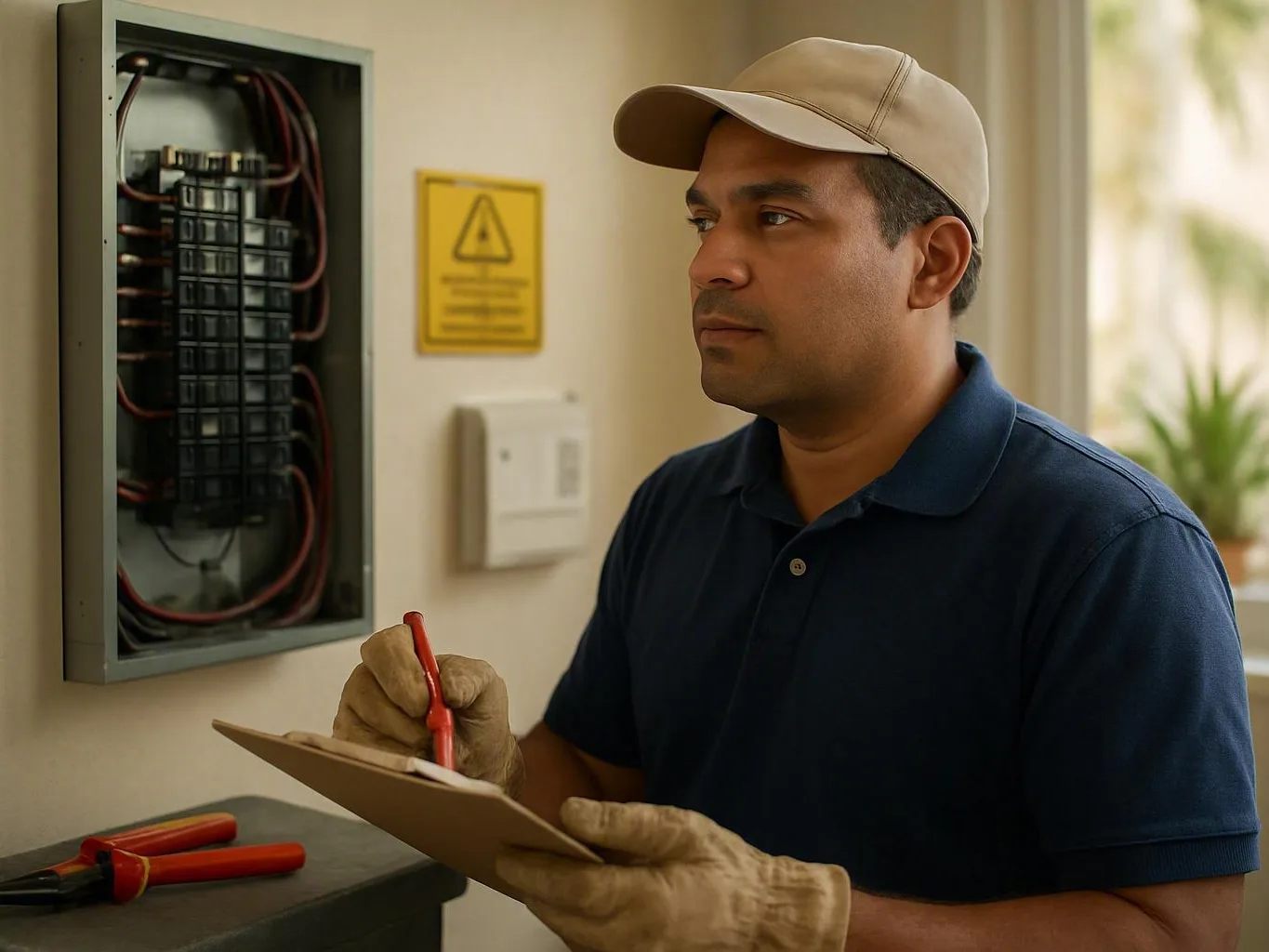
Service mast condition affects electrical safety and building protection. A bent pipe can pull on utility conductors. It can loosen the meter connection or stress the service equipment. Missing caps, cracked fittings, or failed roof seals can let water reach energized parts. This can cause corrosion, arcing, or an outage.
Correct mast installation supports reliable coordination between the electric utility, meter socket, and main disconnect. A poorly placed attachment point may fail inspection. It may also delay reconnection after storm damage. Replacing only the visible pipe may not solve the problem. The conductors, roof penetration, or service equipment may also have damage.
When Service Mast Matters Most?
Service mast concerns become urgent after hurricanes, high winds, vehicle impacts, roof work, or tree contact. Warning signs include a leaning pipe, detached support straps, or exposed conductors. Other signs include scorch marks, water inside the meter area, or a faulty weatherhead. The weatherhead may point upward incorrectly or break away. don't touch the mast or move fallen wires. The conductors may remain energized.
Service work also matters during a service upgrade or roof replacement. It matters during a conversion from overhead to underground power. The work may require utility coordination, a permit, and a planned outage. It may also require inspection before energizing the connection. In Miami, salt air, heavy rain, and tropical storms can speed corrosion. Regular visual checks help identify damage before a failure.
How to Evaluate Service Mast?
- Check whether the mast is plumb, firmly supported, and free from bends, cracks, rust holes, or impact damage.
- Confirm that the weatherhead and roof flashing keep water away from the service entrance conductors.
- Compare the mast attachment point and conductor clearance with utility instructions and approved electrical plans.
- Look for loose straps, pulled fittings, exposed wire, scorching, or moisture near the meter socket.
- Verify that required permits, inspections, and utility approvals cover any replacement or service upgrade.
Related Concepts Compared
Service Mast vs. Service Entrance
The service entrance is the complete path and equipment that bring utility power into a building. The service mast is one physical support or raceway within that system.
Service Mast vs. Weatherhead
A weatherhead is the fitting at the top of a mast that helps shed rain and organize the utility connection. It is not the vertical pipe itself.
Service Mast vs. Meter Socket
A meter socket houses the utility meter and provides its connection point. The mast usually supports the overhead conductors that feed toward that socket.
Service Mast vs. Underground Service
Underground service brings utility conductors below grade instead of across an overhead mast. A building may have one service type or be converted from one to the other.
Expert Note
A mast problem often extends beyond the pipe. Before replacement, inspect the weatherhead, service conductors, meter socket, roof seal, attachment hardware, and grounding connections. Utility ownership rules can also determine which party may disconnect or reconnect the overhead conductors.
Common Mistakes or Myths About Service Mast
- Assuming the mast is only a pipe and ignoring damaged conductors or service equipment.
- Sealing a roof penetration without correcting loose supports or damaged fittings.
- Touching or moving overhead service wires after a storm.
- Replacing a mast without checking utility specifications, permits, and inspection requirements.
Service Mast in Practice: A Real-World Example
A tropical storm bends the service mast above a Miami home and pulls overhead conductors down. An electrician finds damaged support hardware and a failed roof seal. The utility disconnects service before repairs start. Workers inspect the mast and related parts before power returns.
Sources & Further Reading on Service Mast
- National Fire Protection Association, Electrical Safety
- Occupational Safety and Health Administration, Electrical Safety
- Florida Building Commission, Florida Building Code
Related Terms
Service Entrance
Service Entrance is the point where utility power enters a building and connects to the building’s…
Main Disconnect
Main Disconnect is the primary device that shuts off electrical power to an entire building or…
Electrical Grounding
Electrical Grounding is a planned connection between an electrical system, equipment, or circuit and the earth…
Electrical Code
Electrical Code is a set of safety rules for designing, installing, inspecting, and maintaining electrical systems…
Earth Electric Florida
Have Questions About Service Mast?
Contact Earth Electric Florida for practical guidance on Service Mast and related emergency electrician work in Miami.