What Flickering or Dimming Lights Say About Your Electrical System
Flickering lights can point to loose bulbs, busy circuits, bad switches, or damaged wires. They can also show a problem with your electrical panel. Lights that dim during appliance use need an electrician’s attention. A bad LED bulb may cause minor flicker. Burning smells, buzzing, sparks, heat, or whole-house flicker can signal danger. Turn off affected equipment and schedule an electrical inspection. This can help prevent shocks, fires, and equipment damage.
Get a Free Estimate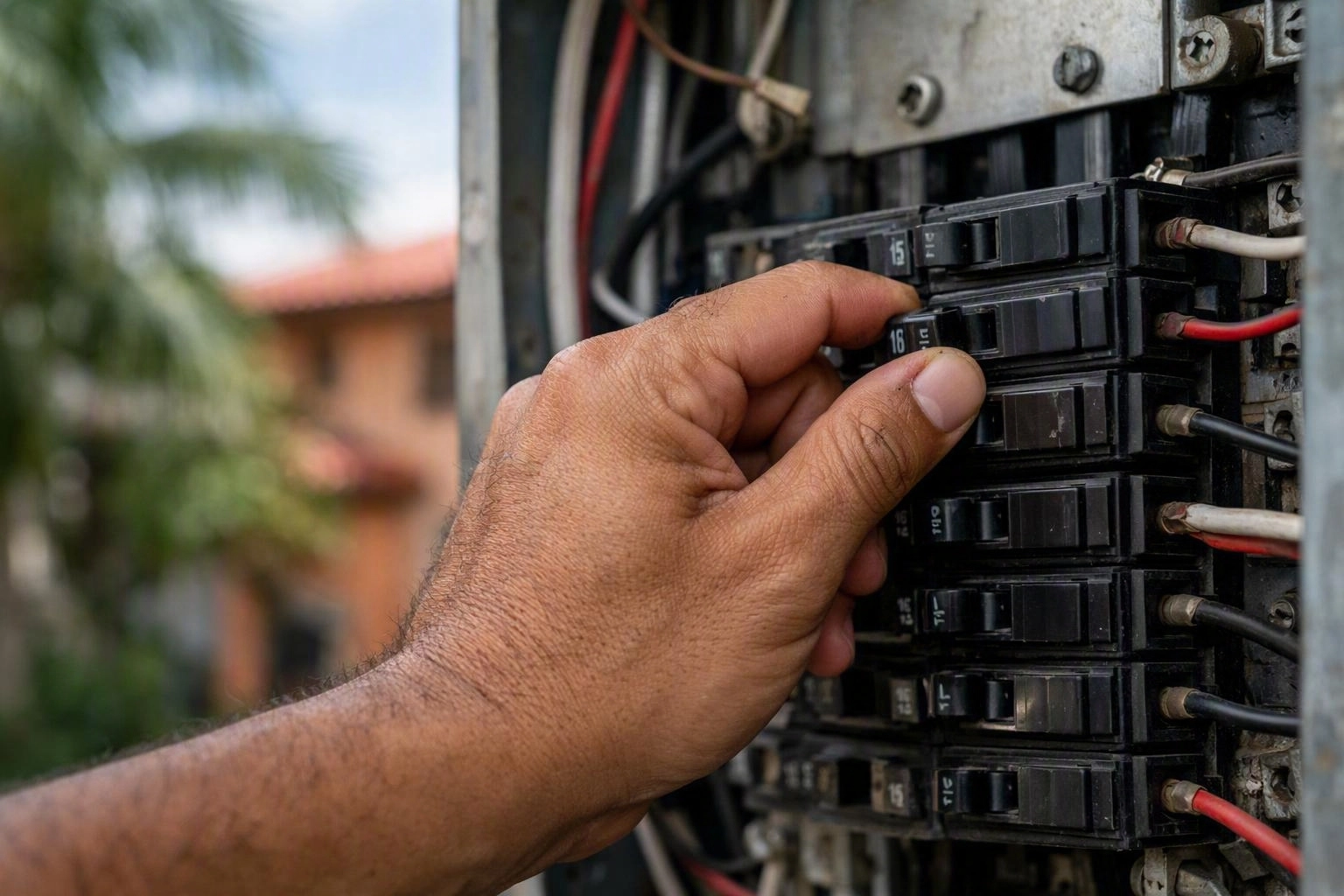
Why Are My Lights Flickering?
Flickering lights often come from loose bulbs, bad LED lamps, or weak wiring. They can also come from busy circuits, bad breakers, or unstable voltage. One light often shows a local problem. Lights in many rooms may show a circuit, panel, service, or utility problem.
A loose bulb may lose contact as the fixture heats or shakes. Turn off the light and let it cool before checking the bulb. Don’t touch a hot, damaged, or sparking fixture. A tight bulb that still blinks may need socket or switch testing.
Some LED lamps pulse with older dimmer switches. Their controls may not work well together. A bad lamp can affect one light. A voltage change may affect several lights.
Older homes may have worn insulation, aluminum wires, or loose terminals. They may also have wiring from many past projects. New lights may connect to older circuits. An electrician checks the full path instead of blaming the bulb.
Our team checks when and where the flicker happens. We also check appliance use and recent work. Electrical Wiring Repair in Miami may fix loose connections or damaged wires. Safe testing must confirm the cause first.
What Does It Mean When Lights Flicker Throughout the House?
Whole-house flickering can show a panel, service, neutral wire, or utility power problem. Lights in separate rooms may pulse at once. This points away from one loose bulb. It may involve equipment shared by many circuits.
A loose neutral wire can make some lights brighten. It can make other lights dim. This unstable power can harm equipment. A weak service connection or damaged panel part can cause the same issue.
Utility problems may end quickly. Repeated events still need attention. Turn off sensitive electronics during severe or sudden flicker. Don’t remove the panel cover or tighten terminals. An electrician can test the panel, service, and connections.
Why Do Lights Dim When Appliances Turn On?
Lights that dim when appliances turn on often show a voltage drop. High-demand appliances, motors, weak connections, or busy circuits can cause it. A short, small change may happen during motor startup. Strong or repeated dimming needs attention.
Air conditioners, fridges, pumps, washers, and heaters use extra power at startup. A shared circuit may briefly lose voltage. Long wires, small wires, busy circuits, or loose connections can make this worse.
Our crews check the circuit, appliance load, breaker, wires, and voltage. The fix may include better load use or a dedicated circuit. It may also need wiring repair or panel work. An electrical service upgrade may help when home demand is too high.
Why Are Lights Flickering After Replacing a Bulb?
Flickering after a bulb replacement often means the bulb does not match the dimmer. It may also have a poor socket connection or a bad LED driver. The fixture may need a certain voltage or control type. A bulb change may solve a small issue. Flicker that continues needs fixture testing.
Start with the simple checks. Confirm the new bulb has the right base and wattage. Check that it suits the fixture. A dimmable LED can still flicker with an older dimmer. Enclosed fixtures can overheat bulbs without the right rating.
Turn off power before touching a socket or fixture. A loose socket contact can break the power connection. Dark marks, melted plastic, heat, or a burnt smell show a deeper problem. Don’t keep testing a damaged fixture.
Electrical fixture installation and repair includes more than changing bulbs. It may include socket, switch, or dimmer repair. It may also include new fixture wiring. Small checks often take less than an hour. Hidden wires and several circuits may take longer.
When a new LED bulb flickers in several fixtures, compare the pattern. Check if the bulbs share the same type. One affected lamp may need replacement. Several rooms may show a circuit or voltage problem.
When Are Flickering Lights Dangerous?
Flickering lights are dangerous with burning smells, buzzing, sparks, or heat. Discolored outlets and repeated breaker trips also warn of danger. These signs may show arcing, overheating, or damaged wires. Stop using the affected circuit. Contact a qualified electrician promptly.
Use these warning signs to decide how fast to act:
Call an Emergency Electrician for smoke, active sparks, or strong burning smells. Call emergency services if there is a fire. Leave the home first. Don’t open a panel or remove an outlet. Repeated breaker resets aren’t a repair.
Common Electrical Causes of Flickering or Dimming Lights
Common causes include loose wires, busy circuits, bad breakers, and old panels. Bad dimmers and damaged fixtures can also cause flicker. An electrician checks the bulb, fixture, circuit, panel, and voltage.
Electrical Panel Repair And Replacement can fix breaker and connection faults. One breaker or a small repair may solve the problem. A damaged panel may need replacement. Testing should guide this choice. Panel age alone doesn’t decide it.
Older homes need checks for insulation, wire type, grounding, and panel connections. Renovated homes need checks for added circuits and controls. Mixed-era wiring can hide loose splices or mismatched parts. Tell the electrician about past remodeling work.
How an Electrician Diagnoses Flickering Lights?
An electrician finds which lights and circuits have the problem. They test voltage under load and inspect bulbs, switches, and panel connections. They also trace loose or damaged wires. The repair may involve the fixture, wiring, breaker, panel, or service.
First, share what you’ve noticed. Say if one light, one room, or the whole home is affected. Note if flicker starts with an appliance. Mention rain, recent work, or a bulb change. These details help narrow the cause.
During an electrical inspection, the electrician checks the fixture and socket. They also check switches, dimmers, junction points, circuits, breakers, and neutral connections. Voltage testing compares normal use with appliance startup. Circuit tracing shows which devices share a path.
Load testing can show if a motor causes an unusual voltage drop. Panel checks can find heat marks, rust, loose terminals, or bad breakers. The electrician may check service wires during whole-house flicker.
We connect the visible symptom to the right repair. A fixture fault may need socket or dimmer repair. A damaged wire needs Electrical Wiring Repair. A panel fault may need repair or replacement. An electrical service upgrade may help when demand is too high.
A remote description can’t prove the cause. Safe testing needs proper meters, access, and skill. A qualified electrician should handle suspected heat, sparks, neutral faults, or service problems.
How to Prevent Flickering Lights and Electrical Problems?
Use bulbs that match the fixture and dimmer. Avoid busy circuits and replace damaged fixtures. Have panel connections checked when needed. Schedule an inspection if flicker repeats or affects many rooms.
These simple habits can reduce lighting problems:
Preventive electrical maintenance helps before adding large loads. These may include air conditioning, electric heat, or workshop tools. Surge protection may help sensitive electronics. It can’t fix loose wires or busy circuits.
Choose fixture repair when one fitting has the fault. Choose wiring repair for damaged or hot wires. Panel work fits breaker and connection faults. A full service upgrade is considered when demand exceeds safe capacity.
Questions About Emergency Electrician
Why Are My Lights Flickering?
Lights may flicker because of a loose bulb, bad LED driver, or old dimmer. Damaged fixtures, loose wires, busy circuits, and voltage changes can also cause flicker. One light suggests a local fault. Several rooms suggest a circuit, panel, service, or utility issue.
What Does It Mean When Lights Flicker in the Whole House?
Whole-house flicker may point to the electrical panel, service connection, neutral wire, or utility power. Turn off sensitive equipment and arrange prompt testing. Act sooner if lights brighten and dim unevenly.
Why Do My Lights Dim When Appliances Turn On?
Lights can dim when appliances start because startup power causes voltage drop. Motors, busy circuits, long wires, loose connections, or limited capacity can worsen it. Repeated or strong dimming needs professional testing.
Why Are My Lights Flickering After Replacing the Bulb?
Flickering after a bulb change often means the bulb does not match the dimmer. It may also have poor socket contact or a bad LED driver. Check the bulb only when power is off and the fixture is cool. Continued flicker needs fixture testing.
When Are Flickering Lights Dangerous?
Flickering lights are dangerous with burning smells, buzzing, sparks, heat, or dark marks. Shocks, breaker trips, and whole-house dimming also need prompt action. Stop using the equipment and contact a qualified electrician.
Repeated blinking and unstable lights may show an electrical system problem. Our team can find the right next step. Options include fixture service, wiring repair, panel work, or a service review.
Request an electrical inspection when the issue continues or any warning sign appears.
Get a Free EstimateRelated Resources
Burning Smell From Outlets or Wiring in Miami, FL: When to Call an Emergency Electrician
burning smell from electrical outlet when to call electrician
When You Need ItFlickering and Dimming Lights: Signs of a Dangerous Electrical Problem in Miami, FL
flickering lights when to call an electrician miami
When You Need ItSparking, Hot, or Discolored Outlets in Miami, FL: Emergency Electrical Warning Signs
sparking outlet when to call electrician
When You Need ItPartial Power Outage in Miami, FL: How to Know When You Need an Emergency Electrician
partial power outage in house when to call electrician