How Long Does Circuit Breaker Replacement Take in Miami, FL?
Circuit breaker replacement usually takes 1 to 3 hours. Complex work can take several hours or need another visit. An electrician checks the fault, shuts off power, and confirms the panel type. The electrician then replaces the breaker and tests the circuit. They also check for wiring problems. Limited access, an old panel, or damaged parts can add time. Permits or inspections may add time too. Earth Electric Florida can inspect your circuit breaker or panel. We’ll explain the expected repair time before work starts in Miami, FL.
Get a Free EstimateHow Long Does Circuit Breaker Replacement Usually Take?
Circuit breaker replacement usually takes 1 to 3 hours. This time applies when the panel is easy to reach. The new breaker must fit the panel. The wiring must also be in good shape.
A simple repair may take less time. A complex repair can take several hours. It may need another visit. This can happen with panel damage, old equipment, or wiring faults.
For Miami, FL homes, the visit starts with a safe check. The electrician checks the electrical panel and finds the failed device. Tests show if the breaker or wiring caused the issue. Heat, humidity, moisture, and coastal air can harm metal parts. A visual check helps find these problems.
| Service step | Typical time | What may affect it |
|---|---|---|
| Diagnosis and power shutoff | About 20–45 minutes | Access, symptoms, and safety concerns |
| Breaker removal and installation | About 20–60 minutes | Breaker type and panel condition |
| Voltage and circuit testing | About 20–45 minutes | Load concerns or wiring damage |
These times are common ranges. They don’t fit every home. A single-pole breaker may need one visit. A double-pole or main breaker needs extra testing. These breakers serve larger loads or more of the home.
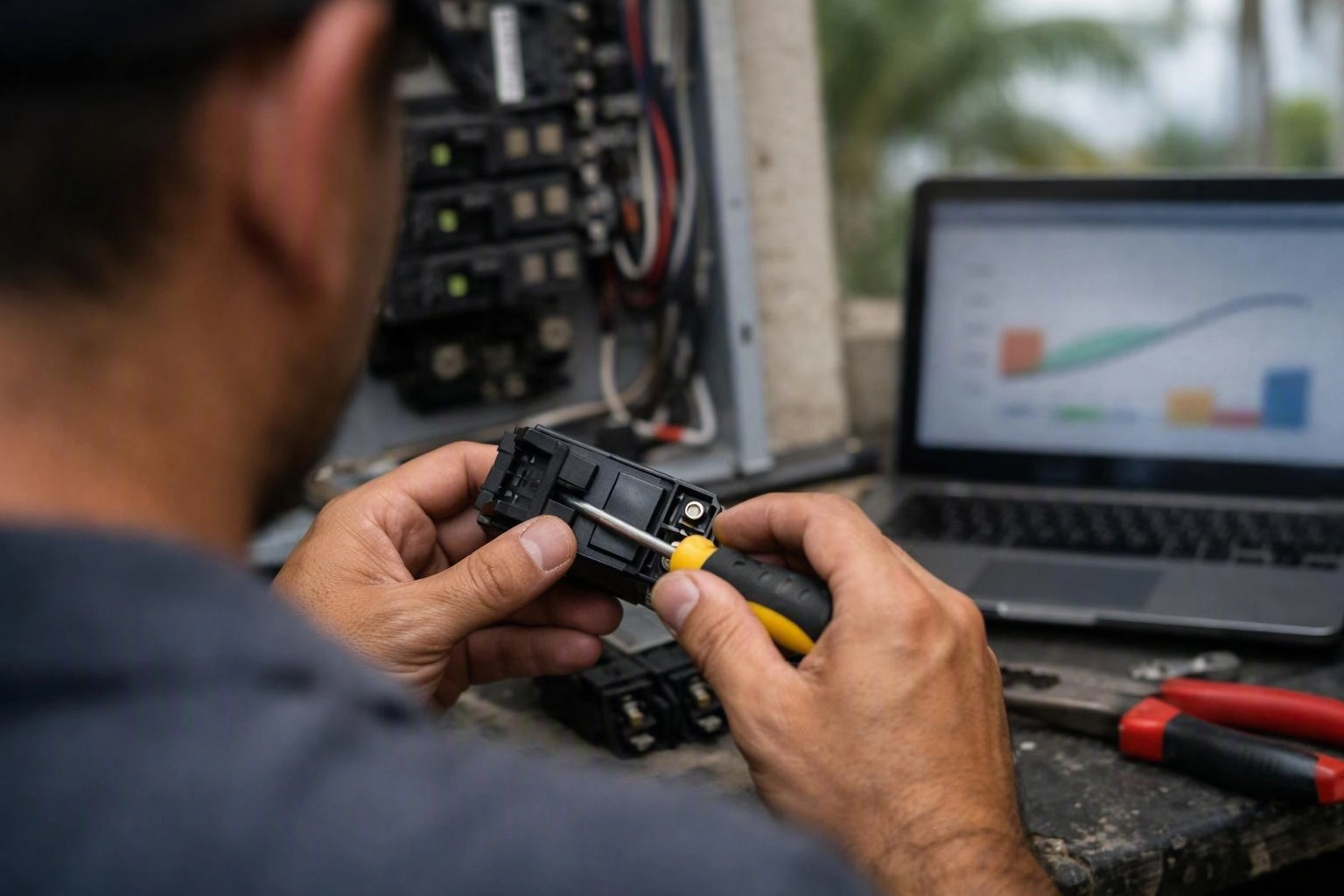
Circuit Breaker Replacement Timeline by Project Scope
The project size affects the repair time. A simple job replaces one failed breaker. An average repair may need testing or small wiring repairs. A complex job may involve panel replacement or damaged wires.
It may also need permits or another visit. The electrician will explain the work before starting.
| Project scope | Typical duration | Common work |
|---|---|---|
| Simple circuit breaker replacement | About 1–2 hours | Power shutoff, compatible swap, circuit testing |
| Average breaker repair | About 2–3 hours | Troubleshooting, voltage testing, minor wiring work |
| Complex electrical panel repair | Several hours or a return visit | Panel damage, conductors, permits, or inspection |
Most simple home repairs take 1 to 3 hours. The repair can take longer for several reasons. Power must be off during the work. This protects the worker and the home.
Final testing shows if the breaker works correctly. It also shows if connected equipment causes an overload.
What Happens During a Circuit Breaker Replacement Visit?
The electrician starts by checking the problem. They review the symptoms and inspect the panel. They find out if the breaker is truly faulty.
This check can find a short circuit, ground fault, or overload. It can also find a branch circuit wiring problem.
Next, the team shuts off power when it’s safe. They confirm that the new breaker fits the panel. It must match the panel design and circuit rating.
The breaker must also match the pole setup. It must be an approved equipment type. A breaker that only fits the opening can create a serious hazard.
After installation, the electrician tests the voltage. They check power entering and leaving the breaker. They also check terminals for loose parts or heat damage.
The electrician looks for corrosion too. A load check may be needed for large appliances. It may also help when the breaker trips often.
Miami, FL homes may need a closer check. Heat and humidity can wear down parts. Coastal air can cause corrosion on metal equipment.
Older homes may have tight work areas or old panels. Past additions may also affect the wiring. These issues can turn a short visit into a larger repair.
What Can Make the Repair Take Longer or Less Time?
Several factors affect circuit breaker replacement time. These include panel access, part supply, equipment age, and wiring condition.
Permit or inspection rules may also affect the schedule. A clear panel and common breaker can shorten the visit. Hidden damage or an old panel can make the repair longer.
Storm faults and busy service periods can also affect timing in Miami, FL. Surge damage and repeated trips may need more testing. Hidden circuit problems can take time to find.
We’ll explain the expected steps before work begins.
When Does a Tripped Breaker Need More Than a Replacement?
A tripped breaker may need more than replacement. This can happen when it trips often or shows heat damage. The circuit may have a short, overload, ground fault, or damaged wiring.
An electrician should find the cause first. Replacing the breaker alone may leave a serious hazard.
Repeated trips are a warning. They aren’t a reason to keep resetting the handle. A short circuit happens when live wires touch.
An overloaded circuit draws more power than it can safely carry. A ground fault sends power along an unsafe path. It may need special safety testing.
A ground fault circuit interrupter is often called a GFCI. This device helps protect people from shock. It’s common in areas where shock risk is higher.
If a GFCI keeps tripping, the device may not be the cause. Moisture, an appliance, an outlet, or damaged wiring may be at fault.
Heat marks, melted insulation, buzzing, and burning smells need prompt service. Rust and loose terminals also need attention.
Sometimes, the electrical panel is too old or damaged. It may also lack space for today’s power needs. Electrical Panel Repair And Replacement may then be better than one breaker swap.
Storms and outages can reveal surge damage or weak connections. We may suggest more testing before choosing the repair.
The right solution may be breaker repair, branch circuit wiring repair, or full panel replacement.
How Earth Electric Florida Helps You Plan the Visit?
Our team can start with a service check. We’ll find the failed breaker and confirm panel fit. We’ll also look for related electrical hazards.
Then, we’ll explain the likely repair. It may be a same-visit replacement or a larger panel repair. The job may need parts, access, permits, or an inspection.
We can help you choose the right service. Call a general electrical repair crew for common repairs. Call an Emergency Electrician for smoke, burning smells, exposed wires, or water near the panel.
Loss of safe power also needs prompt help. Circuit Breaker Repair And Replacement in Miami should start with a cause check.
Don’t replace a breaker while the panel is energized. Contact our team for a service check and repair time estimate.
Questions About Emergency Electrician
How Long Does It Take an Electrician to Change a Circuit Breaker?
A simple change usually takes 1 to 3 hours. This includes diagnosis, power shutoff, installation, testing, and final checks. Old equipment, tight access, wiring damage, or rare parts can add time.
Can a Circuit Breaker Be Replaced in One Visit?
Yes, many compatible breaker replacements take one visit. Another visit may be needed for an old breaker or damaged panel. Wiring repairs, permits, and inspections may also require more time.
Why Does My New Circuit Breaker Keep Tripping?
A new breaker may trip because of an overload, short circuit, or ground fault. Damaged wiring or a bad appliance may also cause the issue. Stop resetting it and have the cause checked.
How Do I Know if I Need a Breaker Replacement or a New Electrical Panel?
A sound panel with one failed breaker may only need replacement. A new electrical panel may help when the panel is old, rusty, heat-damaged, or overloaded. It may also be needed when the panel can’t support needed circuits. An electrician should inspect it first.
Is It Safe to Replace a Circuit Breaker Myself?
No. Some parts of an electrical panel may stay live after a circuit is off. The wrong breaker, loose terminals, or hidden damage can cause shock or fire. Use a qualified electrician for testing and replacement.
Related Resources
Burning Smell From Outlets or Wiring in Miami, FL: When to Call an Emergency Electrician
burning smell from electrical outlet when to call electrician
When You Need ItFrequently Tripping Circuit Breakers in Miami, FL: Warning Signs You Need Electrical Repair
circuit breaker keeps tripping when to call an electrician
When You Need ItFlickering and Dimming Lights: Signs of a Dangerous Electrical Problem in Miami, FL
flickering lights when to call an electrician miami
When You Need ItPartial Power Outage in Miami, FL: How to Know When You Need an Emergency Electrician
partial power outage in house when to call electrician