
What Is a Standby Generator?
A standby generator is a permanently installed backup power system that starts automatically when utility power fails. It uses an engine, an alternator, and a transfer switch to supply selected electrical loads. Unlike a portable generator, it remains connected to the building and operates without manual placement or connection during an outage.
Quick Facts About Standby Generator
Category
Backup power equipment
Used for
Maintaining selected building circuits
Common confusion
Often confused with portable generators
Also called
Whole-House Generator, Automatic standby generator
Often discussed with
Generator Installation, Generator Transfer Switch Installation
Key Takeaways About Standby Generator
- It stays installed and ready for automatic operation.
- A transfer switch moves building loads to generator power.
- It is not the same as a portable generator.
How Standby Generator Works
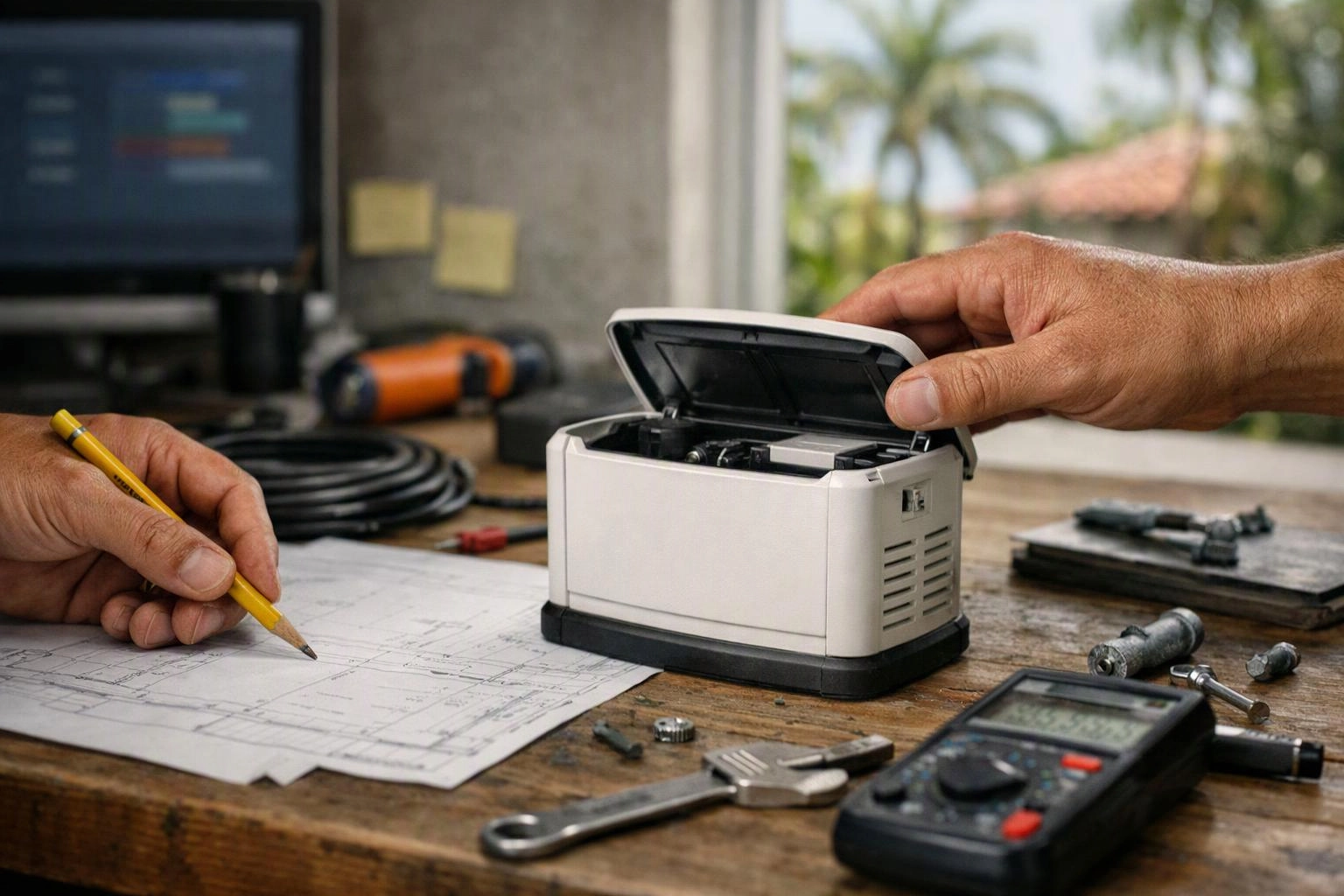
Standby generator systems monitor the building's utility supply through an automatic transfer switch. When the utility source fails, the switch signals the generator to start. The switch then disconnects the utility source and connects selected circuits to generator power. When utility service returns, the system transfers the circuits back and stops the engine after its operating cycle.
Related glossary terms: Automatic Transfer Switch, Generator Interlock Kit, Electrical Load.
Generator capacity must match the electrical load that the system is expected to serve. A load calculation helps identify essential equipment, such as refrigeration, pumps, lighting, or selected air-conditioning equipment. Fuel type, engine condition, ventilation, wiring, and the location of the transfer equipment also affect how the system operates. Proper connections keep utility power and generator power separated.
From the Earth Electric team
When we handle a standby generator installation, we review the intended circuits, the transfer equipment, and the building's existing electrical system. We also check conductor terminations, grounding connections, clearances, and control wiring so the generator can communicate properly with the transfer switch.
Standby Generator in Practice: A Real-World Example
A Miami home may use a standby generator to keep refrigeration, selected lighting, a sump pump, and essential air-conditioning equipment operating during a utility outage. The installation connects those chosen circuits through a transfer switch.
Related Terms
Automatic Transfer Switch
An automatic transfer switch is a device that moves selected electrical loads between a utility supply…
Generator Interlock Kit
A Generator Interlock Kit is a panel-mounted mechanical device that coordinates a portable generator connection with…
Electrical Load
Electrical Load is the amount of power that connected devices and equipment draw from an electrical…
Load Calculation
Load Calculation is an electrical engineering process that estimates the demand a property places on its…
Earth Electric
Have Questions About Standby Generator?
Contact Earth Electric for practical guidance on Standby Generator and related 24 hour electrician work in Miami.