
What is Ohm's Law?
Ohm's Law is the relationship between voltage, current, and electrical resistance in a circuit. The law states that current equals voltage divided by resistance, written as I = V/R. It also allows you to calculate voltage as V = I × R or resistance as R = V/I when two values are known.
Quick Facts About Ohm's Law
Category
Electrical circuit principle
Formula
V = I × R
Measured by
Digital multimeter
Used for
Circuit analysis and troubleshooting
Common confusion
Ohm's Law is not a wiring code
Also called
V = I × R, Voltage-current-resistance relationship
Key Takeaways About Ohm's Law
- Voltage pushes electrical current through a resistance.
- Current increases when voltage rises and resistance stays unchanged.
- The formula is V = I × R.
- A multimeter can measure voltage, current, and resistance.
- The law helps identify overloads, faults, and excessive voltage drop.
Understanding Ohm's Law

Ohm's Law describes the link between voltage, current, and resistance in an electrical circuit. Voltage is the electrical pressure that drives charge. Current is the movement of charge. It's measured in amperes. Resistance opposes that movement. It's measured in ohms.
Related glossary terms: Ohm, Electrical Resistance, Voltage Drop.
The basic formula is V = I × R. In this formula, V means voltage in volts. I means current in amperes. R means resistance in ohms. You can also use I = V/R or R = V/I. These formulas help you find one value using the other two.
How Ohm's Law Works, Is Measured, or Is Used?
Suppose a circuit has 120 volts and 24 ohms of resistance. The expected current is 5 amperes. That's because 120 divided by 24 equals 5. If resistance rises to 48 ohms, voltage stays at 120 volts. Current then falls to 2.5 amperes. This calculation shows how one electrical value affects the others.
A technician applies the law by finding the circuit voltage. The technician measures resistance when the circuit's de-energized. The technician checks current under operating conditions. A digital multimeter measures these values. Each test needs the correct setting and connection. Resistance testing on an energized circuit can damage the meter. It can also create a shock hazard.
- Use V = I × R to calculate voltage.
- Use I = V/R to calculate current.
- Use R = V/I to calculate resistance.
- Compare calculated values with the circuit rating and equipment instructions.
Why Ohm's Law Matters?
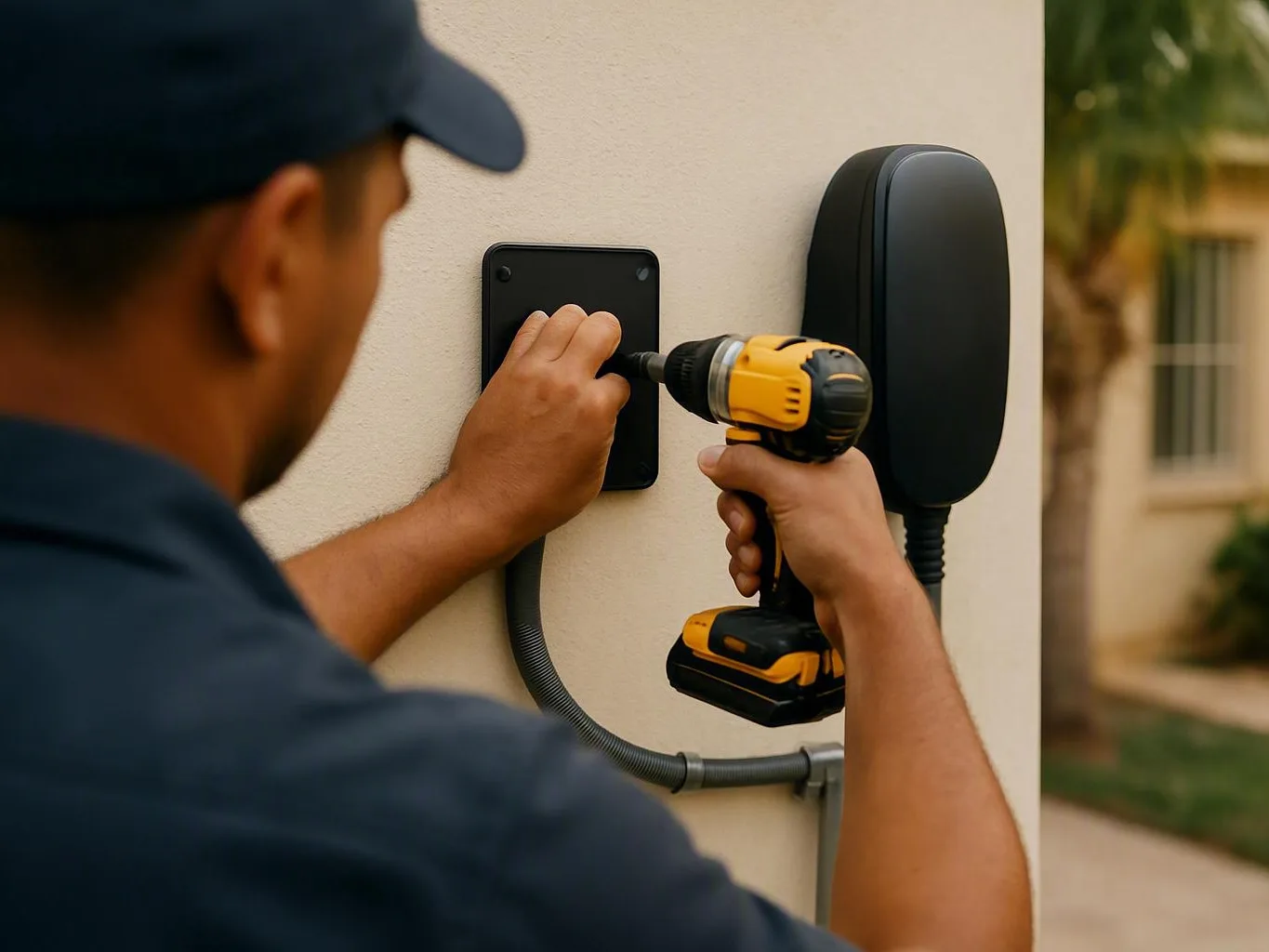
Ohm's Law helps explain why a circuit draws too much current. It explains why a device receives low voltage. It also explains why a conductor becomes hot. Excess current can trip an overcurrent protection device. It may damage equipment if protection doesn't work correctly. A loose connection can also create heat. This can happen without changing the supply voltage.
The law supports choices about wire size, circuit loading, and voltage drop. It doesn't replace the National Electrical Code. It doesn't replace equipment instructions. It doesn't replace required installation calculations. Instead, it gives electricians a clear way to test circuit behavior. They can compare measured behavior with expected behavior.
When Ohm's Law Matters Most?
Ohm's Law helps during short circuit repair. It also helps with electrical overload checks. It helps troubleshoot lights or receptacles that work poorly. A near-zero resistance path can allow very high current. A damaged connection can add resistance and produce heat. A technician compares meter readings with the circuit design. The technician does this before changing a breaker or conductor.
The law also matters during Electrical Wiring Repair and equipment installation. Long conductors can affect circuit performance. Undersized conductors can also cause problems. Corroded terminals and high-load devices can affect performance too. In Miami, moisture, heat, and storm damage may weaken connections. Measured values and a visual check should support the same diagnosis.
How to Evaluate Ohm's Law?
- Check that the voltage, current, and resistance units are volts, amperes, and ohms.
- Confirm the formula produces the measured value within the meter's stated accuracy.
- Compare calculated current with the conductor and overcurrent protection ratings.
- Look for voltage drop across loose, corroded, or damaged connections.
- Never measure resistance on an energized circuit.
Related Concepts Compared
Ohm's Law vs. Electrical Resistance
Electrical resistance is one part of Ohm's Law. It describes opposition to current, while Ohm's Law describes the relationship among resistance, voltage, and current.
Ohm's Law vs. Watt
A watt measures electrical power, not resistance or current. Power can be calculated with P = V × I, while Ohm's Law uses V, I, and R.
Ohm's Law vs. Kirchhoff's Laws
Kirchhoff's laws describe how current and voltage behave at circuit junctions and around closed loops. Ohm's Law describes the voltage, current, and resistance relationship for a component or circuit section.
Expert Note
Ohm's Law describes an ideal relationship, but some loads are not purely resistive. Motors, transformers, electronic power supplies, and heating elements can change current as they operate, so a single resistance reading may not predict running behavior.
Common Mistakes or Myths About Ohm's Law
- Treating voltage, current, and resistance as interchangeable measurements.
- Using resistance mode on an energized circuit.
- Assuming a breaker rating alone proves that a circuit is safe.
- Ignoring voltage drop on long conductors.
- Applying the law without considering motor starting current.
Ohm's Law in Practice: A Real-World Example
A 120-volt circuit supplies a heater with 24 ohms of resistance. Ohm's Law predicts 5 amperes of current because 120 divided by 24 equals 5. If a loose connection adds resistance, the heater may receive less voltage and the connection may produce unwanted heat.
Sources & Further Reading on Ohm's Law
- OpenStax, Ohm's Law, Resistance, and Resistivity
- U.S. Department of Energy, Measuring Electricity
Related Terms
Ohm
Ohm is the SI unit of electrical resistance. One ohm describes a circuit or component that…
Electrical Resistance
Electrical Resistance is the opposition a material or component presents to electric current. Resistance limits current…
Voltage Drop
Voltage Drop is the reduction in electrical potential that occurs as current travels through a wire…
Watt
Watt is the SI unit of power, measuring how quickly electrical energy is transferred or used…
Earth Electric Florida
Have Questions About Ohm's Law?
Contact Earth Electric Florida for practical guidance on Ohm's Law and related emergency electrician work in Miami.