
What is Electrical Safety?
Electrical Safety is the practice of preventing shock, burns, fires, and equipment damage when electricity is generated, distributed, installed, repaired, or used. It includes proper wiring, grounding, overcurrent protection, safe work procedures, equipment condition, and compliance with applicable electrical codes. Electrical Safety applies to homes, commercial buildings, job sites, and utility systems.
Quick Facts About Electrical Safety
Category
Safety practice and risk-control discipline
Used for
Preventing shock, fire, burns, and equipment damage
Relevant standard
National Electrical Code, NFPA 70
Common confusion
Turning off a switch does not always remove all electrical energy.
Also called
Electrical hazard prevention, Electrical safety practices
Often discussed with
Emergency Electrical Inspections, Electrical Code Corrections
Key Takeaways About Electrical Safety
- Grounding and bonding create safer paths for fault current during equipment failures.
- Circuit breakers and fuses limit current before wires overheat and cause fires.
- Water, damaged insulation, loose connections, and overloaded outlets raise electrical risk.
- Turn off power before service, then use proper testing equipment to verify the circuit is de-energized.
- Electrical work must follow the National Electrical Code and applicable local requirements.
Understanding Electrical Safety
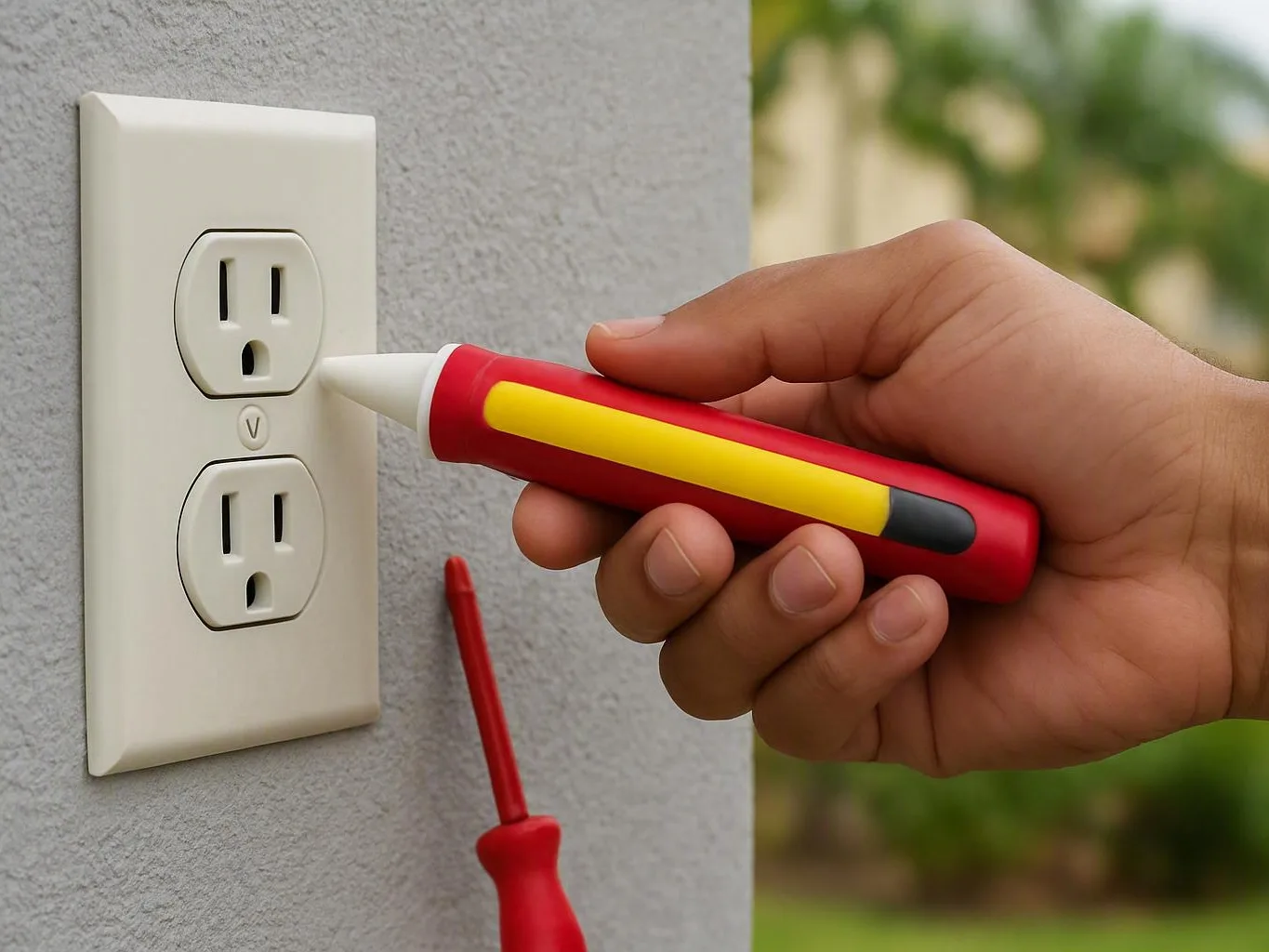
Electrical Safety is a set of design, installation, inspection, and work practices. These practices control hazards created by electricity. The main hazards include electric shock, arc flash, thermal burns, fires, and abnormal voltage or current damage. Safe systems keep energized parts enclosed. They maintain suitable insulation and provide a planned path for fault current.
Related glossary terms: Electrical Grounding, Electrical Bonding, Overcurrent Protection.
Electrical Safety applies to branch circuits, service equipment, appliances, generators, temporary power, and workplace installations. A safe installation matches wire size to circuit demand. It protects conductors with the correct overcurrent protection. It keeps connections inside approved enclosures. Moisture, corrosion, physical damage, and loose terminals can weaken a system. This can happen when lights and receptacles still work.
How Electrical Safety Works, Is Measured, or Is Used?
Electrical safety starts with hazard identification. It continues through design, installation, testing, operation, and maintenance. A worker or inspector checks the power source, disconnecting means, conductors, enclosures, grounding, bonding, and protective devices. Before service begins, the circuit should be disconnected, locked or tagged when required, and tested with an appropriate meter. The circuit should be treated as energized until testing confirms otherwise.
Grounding connects certain equipment and system points to earth or a grounding path. Bonding joins conductive metal parts. This lets fault current travel back to the source and operate a breaker or fuse. Ground-fault circuit interrupters compare current leaving and returning through a circuit. They open the circuit when the difference reaches the device threshold. These controls work together, but none replaces sound wiring or safe work procedures.
Evaluation also considers physical condition and operating limits. Inspectors look for warm outlets, discoloration, buzzing, burning odors, and repeated breaker trips. They also look for exposed conductors, damaged cords, and signs of water entry. Test instruments can measure voltage, continuity, insulation condition, and ground-fault operation. Load measurements can reveal whether a circuit's carrying more demand than its design permits.
Why Electrical Safety Matters?
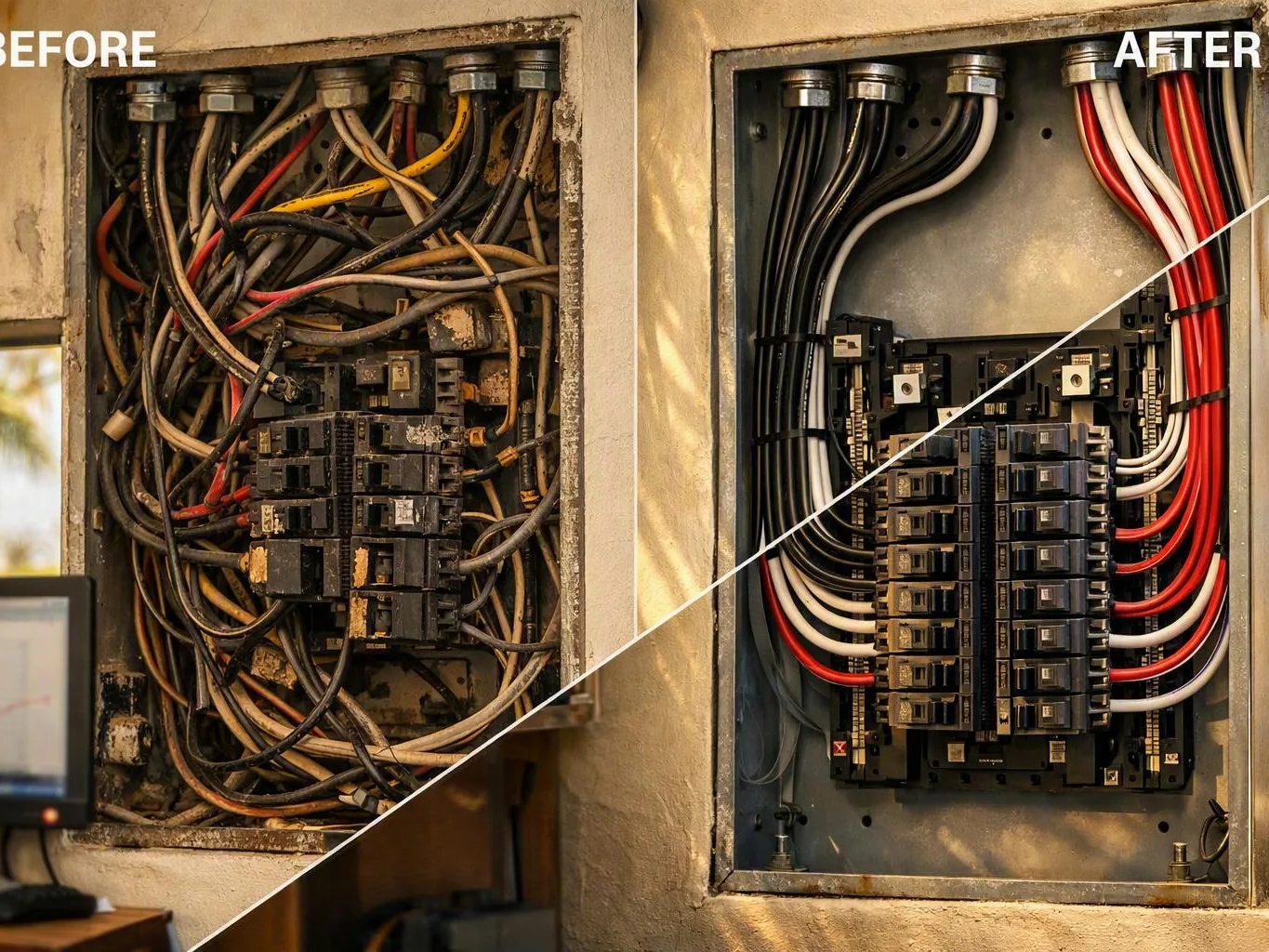
Electrical failures can injure people and start fires without much warning. A loose termination creates resistance at the connection. That resistance can produce heat as current flows. Continued heating can damage insulation, deform a receptacle, or ignite nearby material. A breaker may not trip when a loose connection creates heat below the breaker's trip level.
Good safety practices also protect equipment and support sound decisions. A documented inspection can show whether a problem involves a single device, a branch circuit, or the service equipment. That distinction affects the repair method, the required shutdown, the need for a permit, and the urgency of the response. Code compliance supports safety. Code compliance alone doesn't replace condition checks and proper operation.
When Electrical Safety Matters Most?
Electrical safety deserves immediate attention after flooding, storms, lightning, renovation, equipment failure, or a burning smell. Water can reduce insulation speed and leave corrosion inside boxes, panels, and devices. Storm damage can also affect service conductors, generators, transfer equipment, and outdoor circuits. Don't touch wet electrical equipment or reset a tripped device when damage or moisture is visible.
Safety controls matter during panel work, generator operation, temporary power setup, commercial maintenance, and repairs near exposed conductors. Look for a clearly labeled main disconnect and accessible working space. Check for intact covers, suitable working clearance, and protection suited to the circuit. In Miami, Florida, heat, humidity, hurricanes, salt air, and outdoor exposure can speed corrosion. These conditions make post-storm inspections especially important.
How to Evaluate Electrical Safety?
- Check for warm, discolored, cracked, buzzing, or loose receptacles and switches.
- Test GFCI devices with the test and reset buttons according to the device instructions.
- Confirm breakers match conductor size and that repeated trips receive a cause-based diagnosis.
- Verify panels, junction boxes, and outdoor equipment have intact covers and no visible water damage.
- Ask whether permits, inspections, and National Electrical Code requirements apply to the work.
Related Concepts Compared
Electrical Safety vs. Electrical Grounding
Electrical grounding provides a connection to earth or a grounded system point. Electrical Safety is broader and also covers insulation, enclosures, protective devices, work procedures, and equipment condition.
Electrical Safety vs. Electrical Bonding
Electrical bonding connects conductive metal parts so fault current has a low-impedance return path. Bonding is one control within the wider practice of Electrical Safety.
Electrical Safety vs. Electrical Code
Electrical Code contains technical rules for safe electrical design and installation. Electrical Safety includes code compliance plus inspection, maintenance, operation, and worker behavior.
Electrical Safety vs. Lockout Tagout
Lockout Tagout is a documented procedure for isolating hazardous energy during service. Electrical Safety includes this procedure when applicable. Along with many controls used during normal operation.
Expert Note
A de-energized circuit is safer, but a breaker position alone does not prove that condition. Verify the correct circuit with a properly rated tester, confirm the tester works before and after testing, and account for backfeed, stored energy, and multiple power sources.
Common Mistakes or Myths About Electrical Safety
- Assuming a tripped breaker identifies and fixes the underlying fault.
- Using extension cords as permanent wiring.
- Resetting a GFCI or breaker repeatedly without finding the cause.
- Working on equipment that appears off without testing for voltage.
- Ignoring heat, discoloration, buzzing, burning odors, or water entry.
Electrical Safety in Practice: A Real-World Example
A homeowner sees a warm receptacle and faint burning odor near a kitchen counter. The homeowner stops using the receptacle and does not reset the breaker again. An electrician finds loose connection, checks load and wires, repairs it, tests devices, and restores service.
Sources & Further Reading on Electrical Safety
Related Terms
Electrical Grounding
Electrical Grounding is a planned connection between an electrical system, equipment, or circuit and the earth…
Electrical Bonding
Electrical Bonding is the practice of connecting metal parts of an electrical system with conductive paths…
Overcurrent Protection
Overcurrent Protection is a safety system that limits current when electricity exceeds a circuit’s rated capacity…
Ground Fault Circuit Interrupter
Ground Fault Circuit Interrupter is a protective device that shuts off electrical power when current takes…
Earth Electric Florida
Have Questions About Electrical Safety?
Contact Earth Electric Florida for practical guidance on Electrical Safety and related emergency electrician work in Miami.