
What is a Busbar?
Busbar is a rigid conductor, usually made from copper or aluminum, that distributes electrical power inside switchboards, panelboards, distribution equipment, and other assemblies. Unlike individual wires, a busbar provides a shared, low-resistance path for multiple circuits. Insulation, spacing, bracing, and overcurrent protection must match the system voltage and available fault current.
Quick Facts About Busbar
Category
Electrical distribution conductor
Used for
Sharing power among circuits
Common confusion
A busbar is not a breaker
Typical material
Copper or aluminum
Also called
Bus bar, Electrical bus
Often discussed with
Electrical Panel Repair And Replacement, Emergency Electrical Inspections
Key Takeaways About Busbar
- Busbars carry and share power between breakers, switches, transformers, and other electrical equipment.
- Copper and aluminum are common busbar materials because both conduct electricity well.
- Busbar size depends on current, temperature, voltage, fault current, and site conditions.
- Loose connections, poor spacing, or corrosion can cause heat, arcing, and equipment damage.
- A busbar is not a circuit breaker and does not replace overcurrent protection.
Understanding Busbar
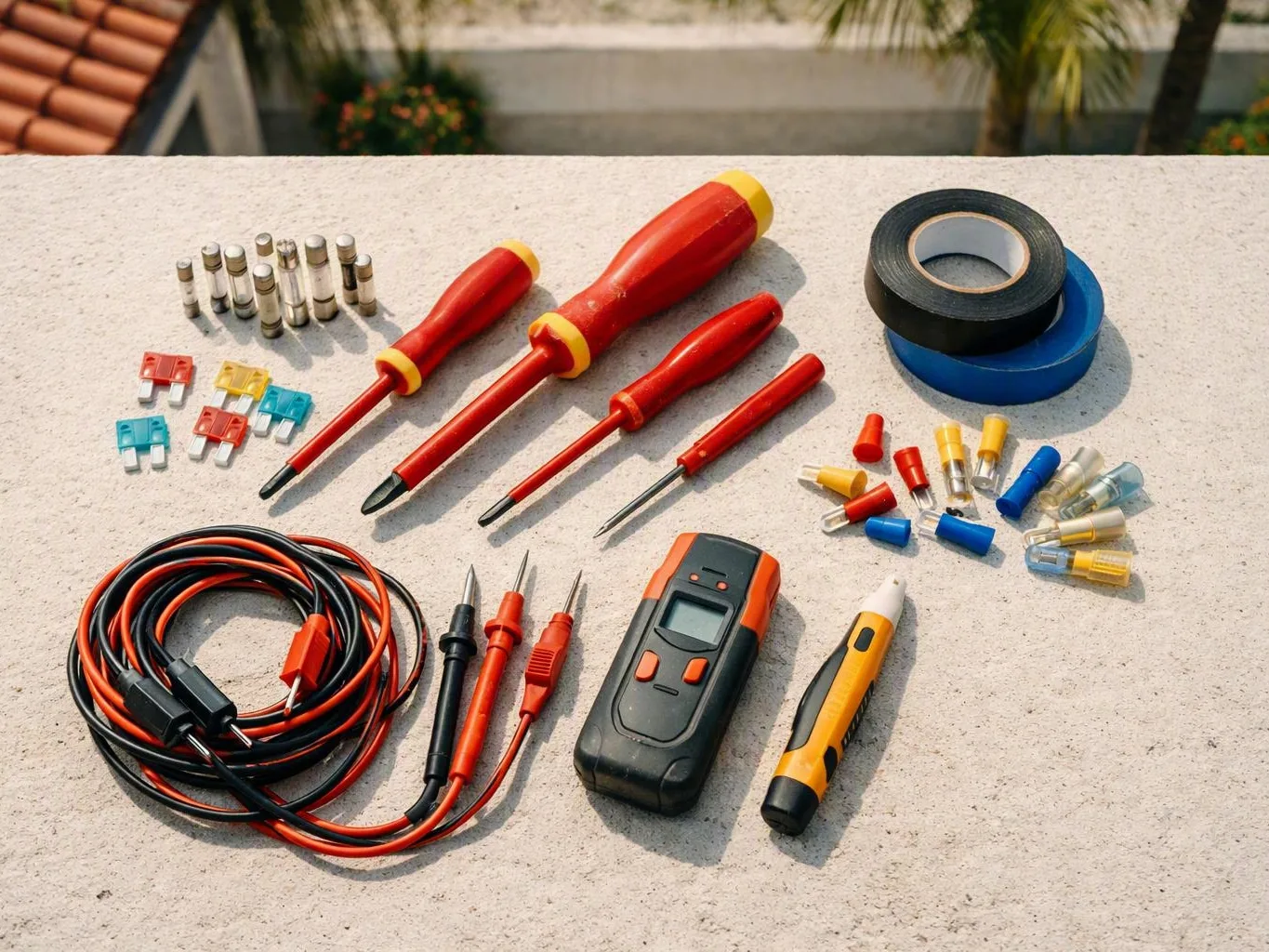
Busbar is a solid electrical conductor. It sends power to many connected circuits. Makers often use copper or aluminum. A busbar may look like a flat strip or round bar. It may also form inside a panelboard, switchboard, switchgear lineup, or power distribution assembly.
Related glossary terms: Overcurrent Protection, Electrical Grounding, Electrical Bonding.
Separate wires can run from one supply point to each breaker. Equipment can instead connect many breakers to one busbar. The busbar carries current along its length. Terminals or bolted connections send power to each circuit. Insulating barriers, air gaps, supports, and enclosures keep live parts apart. They also keep live parts away from people and grounded metal.
How Busbar Works, Is Measured, or Is Used?
In a typical panel, incoming power reaches the main terminals. It then passes into the busbar assembly. Circuit breakers connect to the busbar through clips, bolts, or approved methods. Each breaker sends power to a branch circuit. The busbar stays part of the shared distribution path.
Engineers choose a busbar rating by checking several factors. These include continuous current, voltage, material, heat rise, and enclosure conditions. They also check available short-circuit current. The design considers ampacity. Ampacity means the current a conductor can carry under set conditions. It also considers short-circuit withstand rating. This rating shows how the assembly handles fault energy. A wider or thicker bar often carries more current. Size alone doesn't prove that an installation is safe.
Electrical workers inspect busbar systems by checking many parts. They check torque, alignment, insulation, clearances, and corrosion. They also check heat damage and signs of arcing. Thermal imaging can find a hot connection during operation. It doesn't replace inspection without power or electrical testing. Work near an exposed busbar needs an approved shutdown. It also needs a set electrical safety procedure.
Why Busbar Matters?
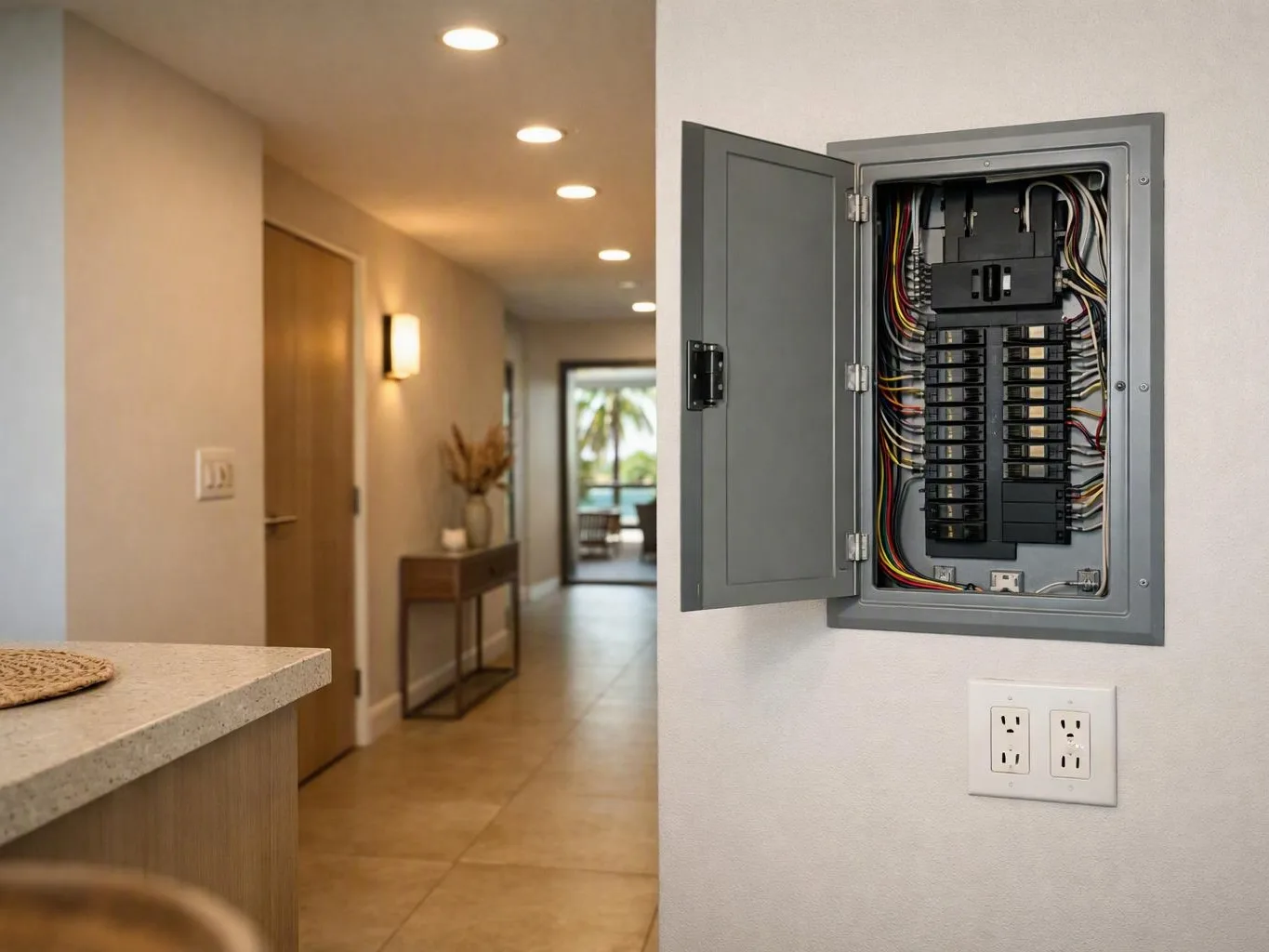
Busbar design affects voltage flow, heat control, equipment size, and service access. A well-chosen busbar reduces extra connection points. It can also create a neat layout inside distribution equipment. A damaged or overloaded busbar can cause hot spots. It can also cause insulation failure, false trips, smoke, or an electrical arc.
The link between a circuit breaker and the busbar needs the right equipment match. Breakers aren't interchangeable just because they fit a slot. The panel listing and maker instructions must support the match. Conductor ratings and enclosure design must also support it. The right overcurrent protection rules must support it too.
When Busbar Matters Most?
Busbars need close care during a panel replacement or service upgrade. They also matter during a generator connection or breaker trip review. They matter after floods, roof leaks, salt exposure, or storm damage. Moisture and corrosion can reduce insulation speed. Miami buildings near coastal air may face faster corrosion. This risk affects unprotected metal surfaces, especially when water enters electrical equipment.
Warning signs include discoloration, melted plastic, a burning odor, or buzzing. They also include visible arcing, loose hardware, or an unusually hot breaker. Don't remove a panel cover to inspect a live busbar. Shut off power only when you can operate the disconnect safely. Keep clear of damaged equipment. Treat exposed conductors as live until a qualified person checks them.
How to Evaluate Busbar?
- Compare the busbar ampere rating with the calculated continuous and noncontinuous loads.
- Confirm the voltage, phase arrangement, and short-circuit current rating match the equipment.
- Check for heat discoloration, melted insulation, corrosion, arcing marks, or loose connections.
- Verify that breakers are listed for the specific panelboard and busbar assembly.
- Review manufacturer torque values and confirm connections were tightened with a calibrated torque tool.
Related Concepts Compared
Busbar vs. Circuit Breaker
A circuit breaker opens a circuit when current becomes unsafe. A busbar carries power to connected breakers and does not provide overcurrent protection by itself.
Busbar vs. Wire
A wire is usually a flexible conductor with insulation. A busbar is commonly a rigid conductor designed for shared power distribution inside electrical equipment.
Busbar vs. Terminal Block
A terminal block joins and organizes individual conductors at connection points. A busbar distributes power along a common conductive path.
Busbar vs. Grounding Bar
A grounding bar connects equipment grounding conductors or grounding electrode conductors to the grounding system. A power busbar normally carries energized circuit current.
Expert Note
A busbar may look intact while a loose connection has already created damaging heat. Inspectors should review torque, breaker compatibility, fault ratings, and signs of thermal stress rather than judging condition by appearance alone.
Common Mistakes or Myths About Busbar
- Assuming a larger busbar automatically makes an undersized panel safe.
- Installing a breaker because it physically fits without checking panel listing compatibility.
- Treating corrosion or discoloration as cosmetic damage.
- Working near an exposed busbar without de-energizing, verifying absence of voltage, and controlling re-energization.
- Ignoring the manufacturer torque specification on busbar connections.
Busbar in Practice: A Real-World Example
A 200-amp panel gets power through main lugs and sends it across a copper busbar. Several circuit breakers connect to the busbar and feed lighting, receptacles, and air-conditioning equipment. A loose breaker connection can build heat. Though total panel load stays below 200 amps.
Sources & Further Reading on Busbar
Related Terms
Overcurrent Protection
Overcurrent Protection is a safety system that limits current when electricity exceeds a circuit’s rated capacity…
Electrical Grounding
Electrical Grounding is a planned connection between an electrical system, equipment, or circuit and the earth…
Electrical Bonding
Electrical Bonding is the practice of connecting metal parts of an electrical system with conductive paths…
Working Clearance
Working Clearance is the unobstructed space around electrical equipment that allows qualified people to inspect, operate…
Earth Electric Florida
Have Questions About Busbar?
Contact Earth Electric Florida for practical guidance on Busbar and related emergency electrician work in Miami.