Why Is an Outlet or Switch Hot, Discolored, or Melting?
A hot electrical outlet may have too much current, loose wiring, or damage. Stop using it and contact an electrician. A slightly warm device can be normal while powering something. Heat, dark marks, burning smells, buzzing, cracks, or melting are warning signs. An electrician can check the outlet, switch, wires, breaker, and appliances. Never remove a melted cover while power is on.
Get a Free EstimateHot, discolored, or melting electrical outlets and switches can signal an electrical fault, overload, loose connection, or unsafe device. Earth Electric Florida helps homeowners spot these signs and arrange safe outlet or switch repair when needed.
Is a Hot Electrical Outlet Dangerous?
A hot electrical outlet can be dangerous. Heat may point to loose wiring, an overloaded circuit, a damaged outlet, or failing wires. Stop using it and unplug devices if safe. An electrician should find the fault before use resumes.
A slightly warm outlet can be normal when a device draws power. A hot outlet, cover, or plug needs attention. This matters most with heaters, air conditioners, microwaves, and hair dryers. Heavy loads can heat weak connection points.
Never touch exposed wires. Don't remove a cracked, burned, or melting cover. Leave the area if you see smoke or sparks. Call emergency services for a strong burning smell or fast heat. If no danger exists, turn off the matching breaker if safe. Then arrange an inspection.
Older wiring can raise the risk. Terminals may loosen over time. Outlet contacts can also wear out. A breaker protects against some current problems. It may not trip when heat comes from one poor connection.
What Signs Show an Outlet or Switch Needs Attention?
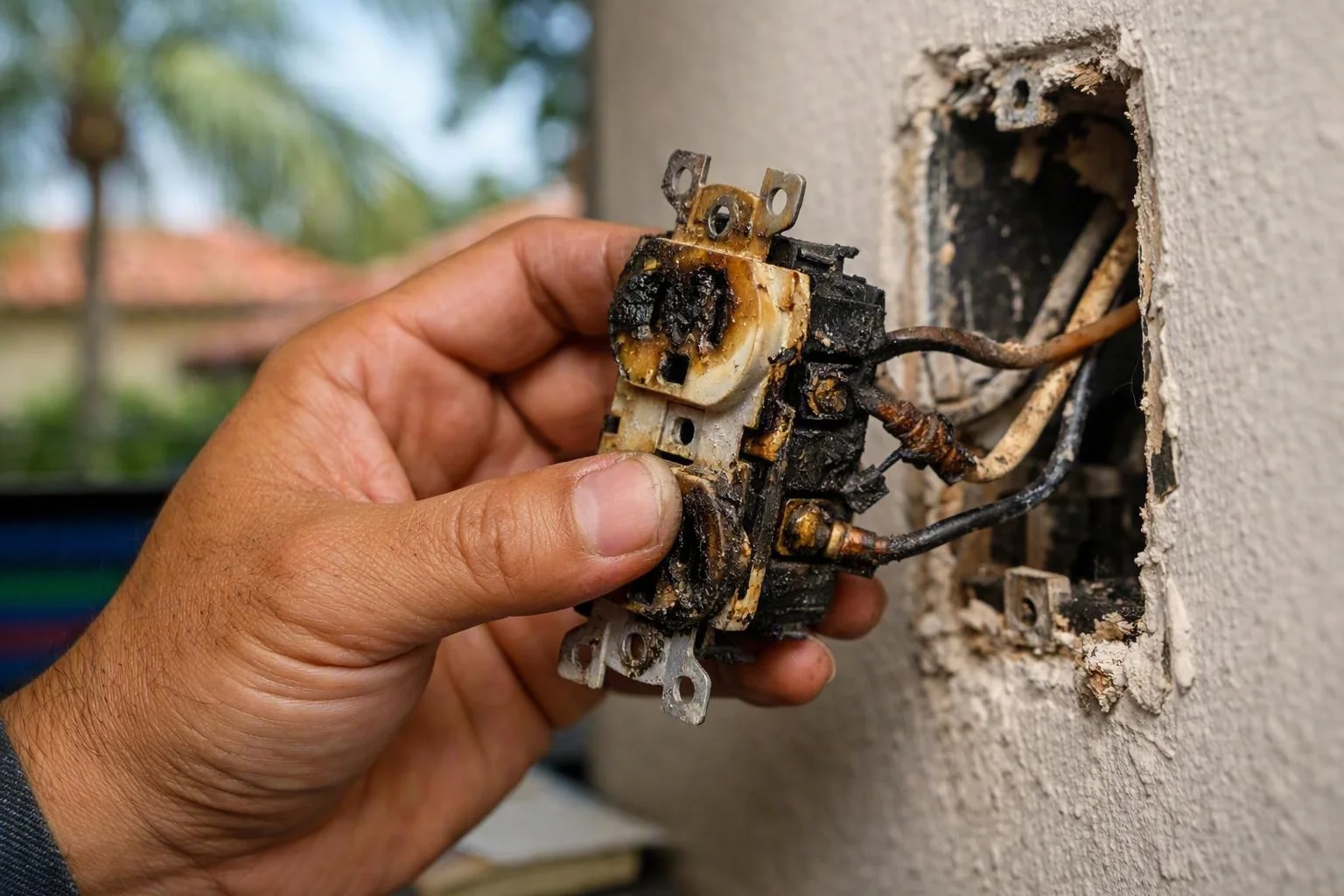
A damaged outlet or switch may feel warm or show dark marks. You may also notice melting, buzzing, crackling, or a burning smell. Power may cut out, or the faceplate may feel loose. These signs can come before sparks or a fire.
Use your senses, but don't keep testing an unsafe device. A small color change may show heat inside the box. A sound or smell may point to arcing behind the wall.
These problems can affect more than a standard receptacle. A GFCI receptacle, dimmer switch, or other residential wiring part can also overheat. Stop using the device until someone checks the circuit and wires.
What Causes a Discolored or Hot Electrical Outlet?
A hot or discolored outlet often has a loose terminal, poor connection, overloaded circuit, or damaged receptacle. Incorrect wiring or a faulty appliance can also cause heat. The breaker may stay on during this problem. An electrician must check the wires and circuit load.
The fault may sit inside the outlet, behind it, or farther along the circuit. A new cover won't fix the real problem.
Old wiring may have brittle insulation. Its connections may also loosen over time. Frequent use can wear an outlet faster. We check the appliance, circuit, and connection point. This helps us fix the cause, not just the visible mark.
Why Is My Light Switch Warm?
A light switch may feel slightly warm while it controls a load. A dimmer can also create some heat. Strong heat may signal a loose terminal, wrong switch rating, bad device, or wiring problem. Turn off the circuit if the switch is hot or damaged. Then have an electrician inspect it.
A standard light switch should create little warmth. A dimmer manages power, so it may feel warmer. Its rating must match the lights. An LED load can cause trouble with the wrong dimmer.
Heat may come from a loose terminal or crowded wires. Damaged wiring can cause it too, so can a switch with too low a rating. Don't blame the wall plate alone. Unusual warmth needs a proper check.
Our Switch Installation And Repair service can include device replacement and load matching. We can also check wire ends and the switch box. A basic inspection may take about 1 to 3 hours. Time depends on access and wiring repairs.
Should I Replace a Melted Outlet?
A melted outlet should be replaced. Replacing the outlet alone may not remove the danger. Melting can damage wire insulation, terminals, the box, or nearby wires. Keep the circuit off. An electrician must find why it overheated.
Don't pull out a melted outlet while power is on. Heat may have spread into the box or cable. Damaged insulation can expose wires. This raises the chance of another failure.
Replace a receptacle when it's worn, burned, cracked, or loose. The repair may also need new wiring or a new box. An electrician may review the breaker and appliance. Arc damage can hide behind the faceplate.
Our team checks both the visible damage and its cause. Outlet Installation And Repair in Miami may include testing the load and older wiring. An Emergency Electrician may help when the circuit is unsafe.
How Can You Prevent Outlet and Switch Overheating?
You can lower the risk by avoiding overloaded power strips. Use appliances within the circuit's limit. Replace damaged devices quickly. Keep plugs fully seated. Address repeated breaker trips. Old wiring also needs attention.
Heat often starts when heavy appliances share one circuit. A power strip adds more connections. It doesn't add circuit capacity. Keep cords in good shape. Don't use an extension cord as a permanent fix.
Choose the right replacement device. A dimmer, GFCI receptacle, and standard outlet have different uses. Each also has its own rating. Professional outlet replacement can check the device, wires, box, and circuit.
What Will an Electrician Check on a Hot Outlet?
An electrician checks a hot outlet by turning off the circuit and testing voltage. They inspect the terminals, wires, receptacle, and box. They also review the circuit load. The repair may need new wiring, a new outlet, or overload correction.
We start with a safe way to shut off the device. Voltage testing confirms whether power remains. Other tests may show an unwanted path. The electrician also checks the breaker and connected devices.
Next, the electrician checks wire ends, conductor size, and box space. They look for signs of arcing. The connected appliance may also need testing.
Service may include replacing a damaged device or tightening a loose connection. It may include wire repair or overload correction. A heavy appliance may need its own circuit. We explain the repair after the inspection.
Don't restore power just to see if a new cover stays cool. A professional should confirm the fault is fixed.
Questions About Emergency Electrician
Why Is My Electrical Outlet Hot?
Heat usually comes from loose wiring, an overloaded circuit, or a damaged outlet. A faulty appliance can also cause it. Stop using the device and turn off the circuit if safe. An electrician should inspect it first.
What Causes a Discolored Outlet?
A discolored outlet may have overheated from a loose terminal or heavy appliance load. Worn contacts and electrical arcing can also cause marks. Replacing only the cover may leave damage inside the box.
What Does It Mean if an Outlet Is Hot but Has No Smell?
A hot outlet can still have loose wiring, an overload, worn contacts, or a faulty appliance. A smell isn't needed for danger. Stop using the outlet and arrange testing if heat increases.
Should I Replace a Melted Outlet?
Yes, but don't replace it while power is on. The outlet may not be the only damaged part. Heat can harm the wires, box, or terminals. Keep the circuit off and have an electrician find the cause.
Why Is My Light Switch Warm?
A switch may feel slightly warm while it controls a load. Strong heat can signal loose wiring, a wrong switch rating, an LED issue, or an overload. Turn off the circuit if it buzzes, burns, or shows dark marks. Then request an inspection.
Related Resources
Burning Smell From Outlets or Wiring in Miami, FL: When to Call an Emergency Electrician
burning smell from electrical outlet when to call electrician
When You Need ItFrequently Tripping Circuit Breakers in Miami, FL: Warning Signs You Need Electrical Repair
circuit breaker keeps tripping when to call an electrician
When You Need ItFlickering and Dimming Lights: Signs of a Dangerous Electrical Problem in Miami, FL
flickering lights when to call an electrician miami
When You Need ItSparking, Hot, or Discolored Outlets in Miami, FL: Emergency Electrical Warning Signs
sparking outlet when to call electrician