What to Do When One Room Has No Power
One room may lose power because a breaker or GFCI outlet tripped. An overloaded circuit, loose connection, or damaged wire can also cause this issue. Check nearby lights and outlets first. Reset the matching breaker once. Press the reset button on nearby GFCI outlets. Don't reset a breaker again and again. Don't open electrical boxes or touch damaged wires. Call for help if you smell burning, hear buzzing, see sparks, or feel heat.
Get a Free EstimateWhy Is There No Power in One Room?
A single-room power outage often starts with a tripped breaker or GFCI outlet. An overloaded circuit can also cause it. A bad outlet, switch, wire, or connection may be the cause. One room may share a circuit with nearby rooms. The fault may not be in the room that lost power.
Your home has many electrical circuits. A branch circuit carries power from the panel to lights, switches, outlets, or rooms. A bedroom may share power with a hall or office. Kitchen outlets may share power with nearby counters or appliances. A garage outlet may connect with an outdoor outlet or bathroom GFCI outlet.
The circuit breaker protects each wiring path. It shuts off when too much power flows through it. It may also trip when a fault occurs. A tripped breaker can leave one room dark. The breaker handle may sit between “on” and “off.” It may also look on without sending power.
A GFCI outlet helps protect areas near water. These areas include kitchens, bathrooms, garages, laundry rooms, and outdoor spaces. The outlet cuts power when it senses a ground fault. The GFCI may sit in another room. A dead outlet may be the first sign of the problem.
Other causes involve the electrical wiring. A loose connection, bad outlet, worn switch, or hot terminal can stop power. Old wires and loose connections may cause power to come and go. Don't remove a cover plate or open an electrical box. Live parts can cause shock, sparks, or fire.
Start by checking the pattern. Are all lights and outlets in one area dead? A breaker or GFCI may have tripped. Is only one outlet or light dead? That device may have failed. Is the whole home without power? Check for a utility problem or main-service issue.
What Should You Check When One Room Loses Electricity?
Check the lights and outlets in the room. Unplug appliances used before the outage. Look for a tripped breaker at the panel. Reset nearby GFCI outlets once. Test the room with a small load. Stop if you see damage, water, smoke, sparks, or exposed wires.
Use these steps in bedrooms, kitchens, bathrooms, garages, and offices. Only check the system if the area is dry. Don't touch exposed electrical parts.
Never reset a breaker or GFCI many times. The device trips for a reason. Repeated resets can let a fault continue. Don't use an extension cord as a permanent fix. Don't open the panel beyond the breaker handles. Basic checks should end when the reset fails or the fault remains unclear.
Can a GFCI Outlet Cause Other Outlets to Stop Working?
A GFCI outlet can shut off other outlets on its protected side. A ground fault, water, bad appliance, or wiring issue can trip the GFCI. Reset it only after removing the suspected cause. Make sure the area is dry first.
GFCI outlets receive power through line terminals. They can send protected power through load terminals. One GFCI may control outlets across a counter or garage wall. It may also control an outdoor outlet or nearby bathroom outlet. The dead outlet may work properly but receive no power.
Water can trip ground-fault protection. A damaged appliance can do the same. A wire touching a grounded surface can also cause a trip. Loose or wrong connections may create the problem. Reset the button once when the area is dry. Unplug the suspected appliance first. Stop if the button won't stay in.
Don't remove the GFCI cover. Line and load terminals can carry live power. Safe testing needs special skill and tools. They can also check wiring and downstream outlets.
Basic checks often take only a few minutes. A fault that returns needs more testing. Treat a dead kitchen, bathroom, garage, or outdoor circuit as a wiring issue until checked.
Why Does Power Come Back and Then Go Out Again?
Intermittent power loss often points to an electrical problem. An overloaded circuit, loose connection, weak breaker, or bad appliance may cause it. Heat or an arc fault may also be involved. Repeated resets can raise the risk. Unplug devices and arrange a professional check.
An overloaded circuit may work until several devices run together. A home office may use a computer, printer, heater, and charger. One circuit may not handle all those devices. A kitchen circuit may trip when a microwave and appliance run together. Lowering the load may restore power. It won't fix a damaged or weak circuit.
A loose connection can heat while power flows. It can cool after power stops. You may notice flickering, warmth, buzzing, or dark marks. The power may fail at random. The loose part may sit inside a box or panel. Don't tighten wires or work near live parts.
Heat can damage wires and device parts. An arc fault happens when power jumps across a damaged gap. This can create heat and sparks. Some homes have arc-fault protection. That device trips when it sees an unsafe pattern. A repeated trip is a warning.
Unplug devices on the affected circuit. Leave the breaker or GFCI off if the problem returns. Note what was running when power failed. Also note any water, heat, sound, or smell. This can help the electrician find the fault.
A home visit may include several circuit checks. The work may take 30 minutes or several hours. The time depends on the fault. A clear fault takes less time. A hidden or changing fault may take longer.
| Symptom | Possible concern | Safe response |
|---|---|---|
| Breaker trips again | Overload, short circuit, or fault | Leave it off and arrange testing |
| Outlet feels warm | Loose connection or overheating | Stop using it and keep it clear |
| Power flickers | Intermittent connection or device failure | Disconnect loads and seek diagnosis |
When Should You Call an Electrician for a Partial Outage?
Call an electrician when a breaker or GFCI won't reset. Call when power keeps failing. You should also call if an outlet feels hot or wires look damaged. Burning smells and buzzing also need quick help. Hidden wiring problems can cause shock or fire.
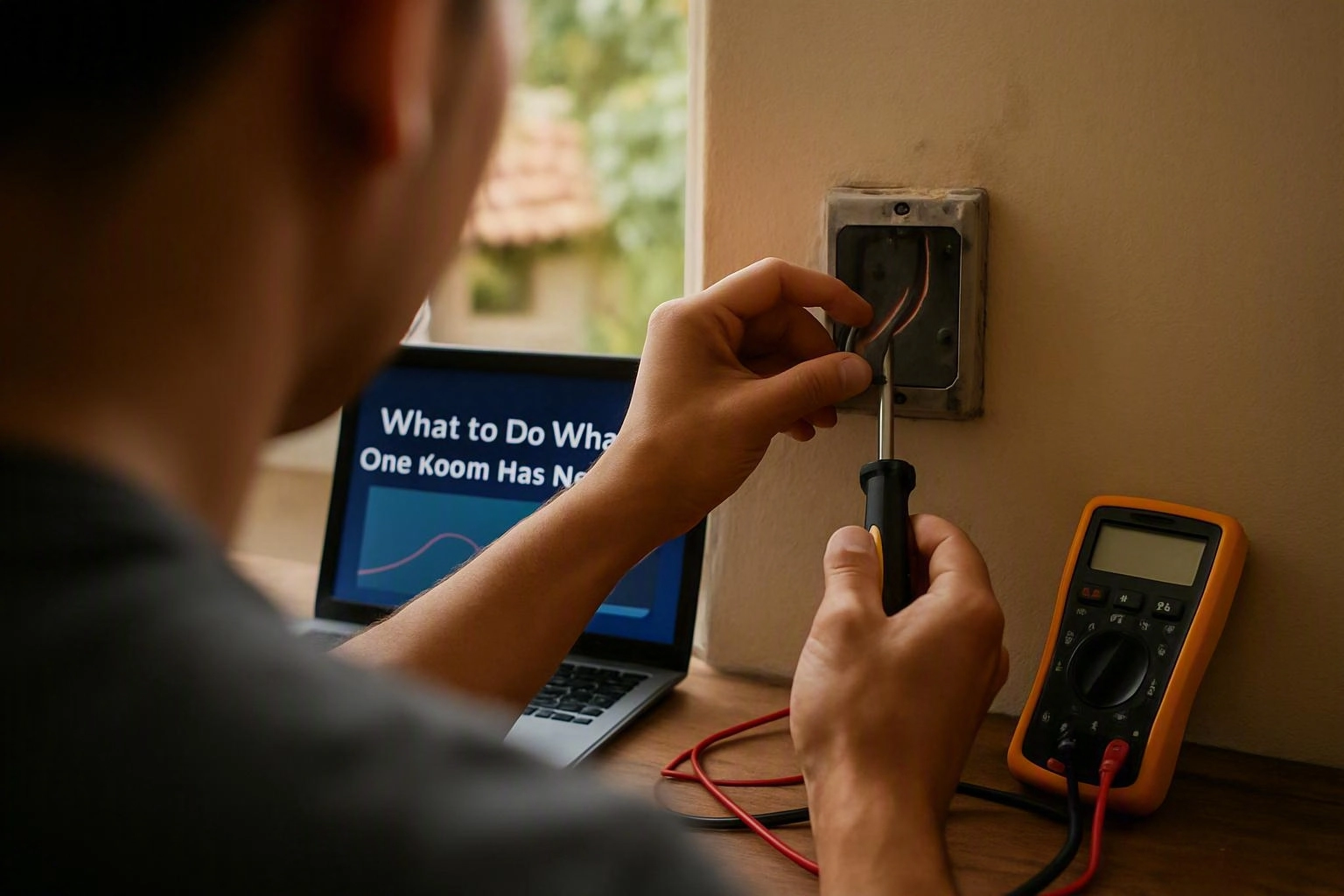
Call soon when one room stays without power after basic checks. This includes bedrooms, kitchens, bathrooms, garages, and offices. Other rooms may still have power. The dead room may still have a dangerous fault.
An electrician can trace the circuit from the panel. They can check switches, outlets, GFCI devices, and safe connections. Voltage tests show where power stops. The electrician can also check for a short, overload, bad breaker, or loose connection.
Request circuit breaker repair when a breaker won't stay on. You should also call if it feels damaged or looks discolored. A new breaker may not solve the full problem. The circuit must be tested first.
Request outlet repair or replacement when an outlet is loose, cracked, hot, or scorched. Call if it sparks or stays dead. Electrical wiring repair may be needed for damaged wires or loose connections. Older systems may not support today's needs. Our team can explain the fault and repair choices first.
Power Outage Troubleshooting And Restoration in Miami may help with a local outage. The same safety rules apply in every area. An Emergency Electrician may be needed for smoke, sparks, burning smells, or exposed live wires. Call for help near flooding and electrical equipment. If safe, turn off the affected circuit. Keep people away from the danger.
Why Homeowners Need Professional Power Restoration and Electrical Repair?
Professional electrical service can restore power safely. An electrician can find the affected circuit and test it. They can locate hidden faults and replace bad parts. They can also check for overloads and unsafe connections.
A local outage isn't always a simple reset. The breaker may be in another room. One circuit may power several areas. A hidden connection may fail only under load. Professional power restoration fixes the cause.
Repeated trips may point to overloads, short circuits, or heat. Old outlets may need safe replacement. A hidden loose connection can raise fire risk. A clear diagnosis shows if one device or the full circuit needs work.
What Features Matter When Choosing Electrical Help for One Room?
Good electrical help includes testing and the right repair. It shouldn't only reset a breaker. Look for clear answers and safe circuit tests. The electrician should check GFCI devices, outlets, and connections. Repairs should match the circuit's load and condition.
A good service visit checks the cause as well as the symptom. The breaker may sit in another room. One circuit may power lights and outlets in several rooms. Ask how the technician will confirm the repair. Ask what signs could require more work.
Key Features to Look For
Common Challenges Homeowners Face
They should use safe tests. They shouldn't suggest repeated resets as a lasting fix. Circuit mapping, GFCI installation, breaker repair, outlet repair, and wiring repair should fit the home's real needs. Circuit Breaker Repair And Replacement helps when testing finds a problem with the breaker or circuit.
Questions About Emergency Electrician
Why Is There No Power in One Room?
A tripped breaker, GFCI outlet, overloaded circuit, bad outlet, loose connection, or damaged wire may cause the outage. Check the panel and nearby GFCI buttons once.
Can a GFCI Outlet Cause Other Outlets to Stop Working?
Yes. Other outlets may connect to the GFCI's protected load side. A ground fault, water, bad appliance, or wiring issue can stop downstream power. Reset it only when the area is dry and the cause is removed.
What Should I Check When One Room Loses Electricity?
Check the affected lights and outlets. Unplug recent appliances. Look for a tripped breaker and reset nearby GFCI outlets once. Stop if you see heat, water, scorch marks, sparks, smoke, or exposed wires.
Why Does Power Come Back and Then Go Out Again?
Repeated power loss may point to an overloaded circuit, loose connection, weak breaker, bad appliance, heat, or arc fault. Unplug devices and leave the breaker or GFCI off. Arrange professional testing instead of resetting it again.
When Should I Call an Electrician for a Partial Outage?
Call when a breaker or GFCI won't reset. Call when power keeps failing or an outlet feels hot. Damaged wires, burning smells, and buzzing also need help. Hidden wiring problems can cause shock or fire.
Our team can help find the cause when a reset doesn't fix the problem. We can check the breaker, GFCI, outlet, appliance, and wiring. We'll explain the next safe step.
Contact our electrical service team to arrange a safe evaluation.
Related Resources
Burning Smell From Outlets or Wiring in Miami, FL: When to Call an Emergency Electrician
burning smell from electrical outlet when to call electrician
When You Need ItFrequently Tripping Circuit Breakers in Miami, FL: Warning Signs You Need Electrical Repair
circuit breaker keeps tripping when to call an electrician
When You Need ItFlickering and Dimming Lights: Signs of a Dangerous Electrical Problem in Miami, FL
flickering lights when to call an electrician miami
When You Need ItSparking, Hot, or Discolored Outlets in Miami, FL: Emergency Electrical Warning Signs
sparking outlet when to call electrician