Emergency Electrical Repair Mistakes: What Not to Do During a Power Fault
Emergency electrical repair mistakes include touching damaged wiring, bypassing breakers, using faulty outlets, and continuing after warning signs appear. Earth Electric identifies the fault, makes the area safe, and completes the appropriate electrical repair.
Get a Free Estimate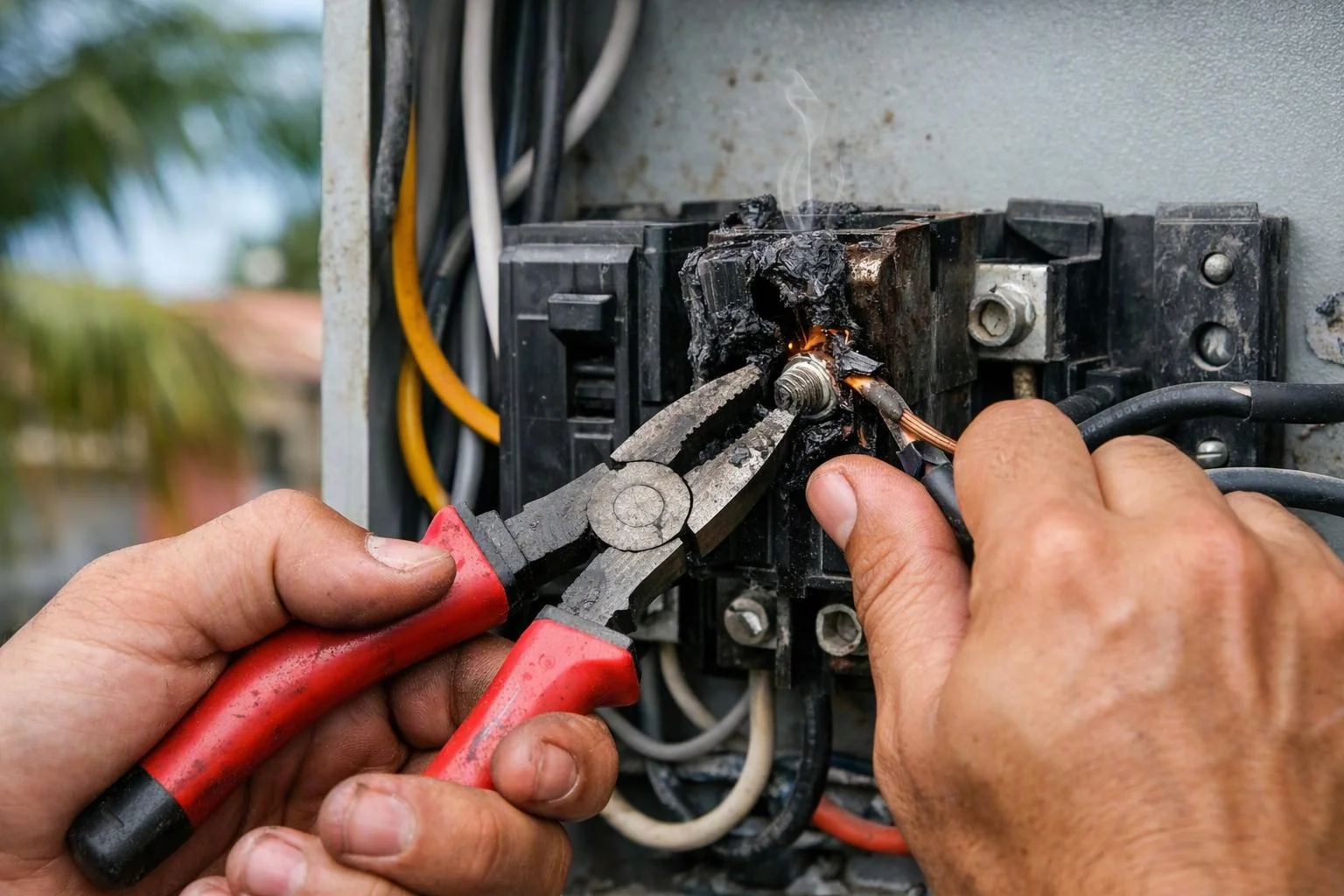
What Should You Do First During a Power Fault?
Power fault response starts with protecting people, stopping use of affected equipment, and avoiding exposed or damaged electrical parts. Earth Electric handles emergency electrical repair by identifying the fault and making the area safe before work begins.
Move people away from smoke, sparks, water, or damaged equipment. If the main electrical panel is dry and accessible, you can observe whether a circuit breaker has tripped, but do not open the panel or touch damaged parts.
Keep clear of an energized circuit when the cause is not obvious. You can contact Emergency Electrical Repair support from a safe location.
Mistake: Touching Exposed or Damaged Wiring
Exposed wiring can cause electric shock when insulation has split, pulled away, or melted. This mistake often happens when someone tries to move a loose wire or inspect a fault without knowing whether the circuit is energized.
Touching or taping the wire can worsen the damage and hide the fault. We isolate the circuit, inspect the electrical insulation, and repair or replace damaged wiring as required.
The repair cost depends on the fault location, access, and the amount of wiring affected. Safe correction starts with keeping the area clear and reporting what you saw.
Mistake: Repeatedly Resetting a Tripped Circuit Breaker
A circuit breaker that trips repeatedly is warning of an overload, short circuit, or another fault. Repeated resets can keep a damaged circuit energized and increase heat at a weak point.
We test the circuit, identify the reason for the trip, and complete circuit breaker repair when the breaker itself is damaged. The repair scope depends on whether the cause is a load problem, wiring fault, or failed component.
Stop resetting the breaker when it trips again, makes noise, smells hot, or will not stay on. That information helps us complete electrical troubleshooting without adding damage.
Mistake: Bypassing a Circuit Breaker or Fuse
Circuit protection must not be bypassed with a wire, oversized fuse, or other improvised part. A fuse and circuit breaker limit current so wiring does not overheat and create an electrical fire.
We check the circuit design, the fuse, and the breaker before restoring power. We replace failed protection with the correct component and investigate why it operated.
The cost depends on whether the bypass damaged the electrical panel, wiring, or connected equipment. Keep the circuit off and do not alter the protection device.
Mistake: Using an Outlet That Sparks, Smokes, or Feels Hot
An electrical outlet that sparks, smokes, or feels hot may have a loose connection, internal damage, or an overloaded circuit. A sparking outlet should not be used because overheating can lead to an electrical fire.
We inspect the outlet, wiring, and connected load before completing outlet repair. We also check for signs that the fault extends beyond the face of the outlet.
The repair cost depends on the outlet condition, wiring damage, and access behind the wall. Stop using the outlet, unplug equipment only if you can do so safely, and keep flammable items away.
Mistake: Pulling Apart Electrical Equipment During the Fault
Electrical equipment can contain an energized component even after its switch is off. Opening an appliance or cutting into a power cord can expose live parts and create a shock or fire hazard.
We identify whether the appliance, power cord, receptacle, or branch circuit caused the fault. We then make the affected circuit safe before repairing the electrical connection.
The repair scope depends on the equipment involved and whether the fault spread to the outlet or wiring. Leave damaged equipment disconnected and do not remove its cover.
Mistake: Working on Electrical Parts in a Wet Area
Water damage can make a wet location especially dangerous because water lowers the path to ground and increases electric shock risk. A ground fault may remain present even when the visible water has dried.
We keep people away from the affected area, isolate the circuit when it can be done safely, and inspect for moisture-related damage. We restore power only after the affected electrical parts are safe to use.
The cost depends on the source of the water, the parts affected, and the extent of the wiring inspection. Do not touch outlets, appliances, or the electrical panel while standing in water.
Mistake: Installing the Wrong Fuse or Breaker
A fuse rating or circuit breaker rating must match the circuit and its conductors. Installing a larger device can defeat overcurrent protection and allow wiring to overheat.
We inspect the electrical panel, confirm the circuit requirements, and install suitable protection. We also investigate the original trip instead of treating the replacement as the complete repair.
The repair cost depends on the incorrect part, panel condition, and any heat damage. Do not guess the rating from appearance or replace a fuse with a larger fuse.
Mistake: Covering Up Burn Marks or Ignoring Burning Odors
Burn marks and a burning odor can indicate overheating, a loose connection, or damaged insulation. Covering the mark or masking the smell can allow an electrical fire risk to continue unnoticed.
We trace the odor or heat source, inspect connections, and check nearby wiring and equipment. We repair the loose connection or replace damaged components before restoring safe operation.
The cost depends on how far heat traveled and whether the damage reached the panel, outlet, or connected equipment. Turn off use of the affected area and keep away from smoke or visible arcing.
Mistake: Assuming a Power Fault Is Only a Utility Outage
A utility outage can cause total power loss, but partial power loss may point to a service panel, circuit, or connection problem. Assuming the issue is outside the property can delay fault diagnosis.
We compare the affected areas, inspect the service panel, and trace the fault through the involved circuits. Our team separates a utility issue from an electrical problem inside the property.
The repair cost depends on the fault source, the number of affected circuits, and access to damaged wiring. Report which rooms, outlets, or equipment lost power.
How Do These Mistakes Increase Repair Costs?
Electrical repair costs increase when an unsafe action spreads damage, destroys components, or hides the original fault. Earth Electric checks the fault source before recommending the repair scope.
Repeated breaker resets can heat a weak connection. An incorrect fuse can damage wiring, while water exposure can affect parts beyond the visible area.
Our quote reflects the parts that need repair, the access required, and the testing needed to restore safe operation. Free Estimates Available.
When Should You Call Earth Electric Instead of Troubleshooting the Fault Yourself?
Emergency electrical repair is the safer choice when you cannot isolate the fault without touching electrical parts. Contact Earth Electric when any of these conditions apply:
We use electrical troubleshooting to isolate the circuit and identify the cause. We do not rely on repeated resets or visual guesses when the fault may remain energized.
What Can You Safely Check Before Electrical Repair Begins?
Visible warning signs and the affected areas are safe to report when you stay away from damaged electrical parts. Use these steps without opening equipment or handling wiring.
Do not remove panel covers, pull apart appliances, or test an energized circuit. Give our team the visible details so we can plan safe fault diagnosis.
How We Diagnose and Repair a Power Fault
Electrical troubleshooting starts with identifying the affected circuit and separating the fault source from the symptoms. Earth Electric checks the circuit, connected equipment, and visible conditions before selecting a repair.
We isolate the circuit when safe, inspect the circuit breaker and electrical outlet, and look for heat, damaged insulation, loose connections, or water damage. Our team explains what failed and which repair is needed.
When the issue involves circuit breaker repair or outlet repair, we correct the failed part and test the circuit. We then restore safe operation after the repair is complete.
What Changes the Cost of an Emergency Electrical Repair?
Emergency electrical repair cost depends on the fault location, damaged components, access to the wiring, and the repair needed to restore safe operation. The same symptom can come from an outlet, circuit breaker, appliance, or hidden connection.
Our team reviews the repair scope, the condition of the electrical panel, and any wiring damage before preparing an estimate. Free Estimates Available.
Share the affected areas, warning signs, recent electrical changes, and any attempted breaker reset when you contact us. Earth Electric uses that information to begin a focused inspection.
Contact Earth Electric for emergency electrical repair
Emergency electrical repair protects people and property when a power fault creates unsafe conditions. We identify the fault, complete the required repair, and restore safe electrical operation.
Questions About Emergency Electrical Repair Mistakes
Should I keep resetting a breaker that keeps tripping?
No, stop resetting a breaker that keeps tripping because the circuit may have an overload, short circuit, or damaged connection. Earth Electric identifies the cause and completes the needed circuit breaker repair.
Can a sparking outlet cause an electrical fire?
Yes, a sparking outlet can indicate overheating, a loose connection, or internal damage that may create an electrical fire risk. Stop using the outlet and keep the area clear until the fault is inspected.
What should I do if an electrical fault happens near water?
Keep away from the wet area and do not touch outlets, appliances, wiring, or the electrical panel while standing in water. Water damage can create a ground fault and electric shock risk.
Can I replace a blown fuse with a larger fuse?
No, a larger fuse can defeat overcurrent protection and allow the circuit wiring to overheat. The correct fuse rating must match the circuit and its conductors.
Why does only part of my home lose power?
Partial power loss can result from a tripped circuit breaker, a service panel problem, a failed connection, or a utility issue. Electrical troubleshooting separates the source outside the property from the source inside it.
What information should I give Earth Electric about an electrical emergency?
Tell Earth Electric which areas lost power and whether you saw smoke, sparks, burning odors, water, heat, exposed wiring, or a tripped breaker. Also report any damaged appliance and any action already taken.