Electrical Emergency Warning Signs You Should Never Ignore
Electrical emergency signs include burning odors, sparks, smoke, buzzing, hot outlets, breaker trips, flickering lights, and exposed wiring. These signs may point to overheating, a short circuit, damaged insulation, or fire risk. Stop using the affected device or circuit. Stay away from smoke and flames. Shut off the main breaker only when it’s safe. Never touch damaged wiring or live equipment. Call a qualified emergency electrician for help. Call emergency services if you see fire or heavy smoke.
Get a Free Estimate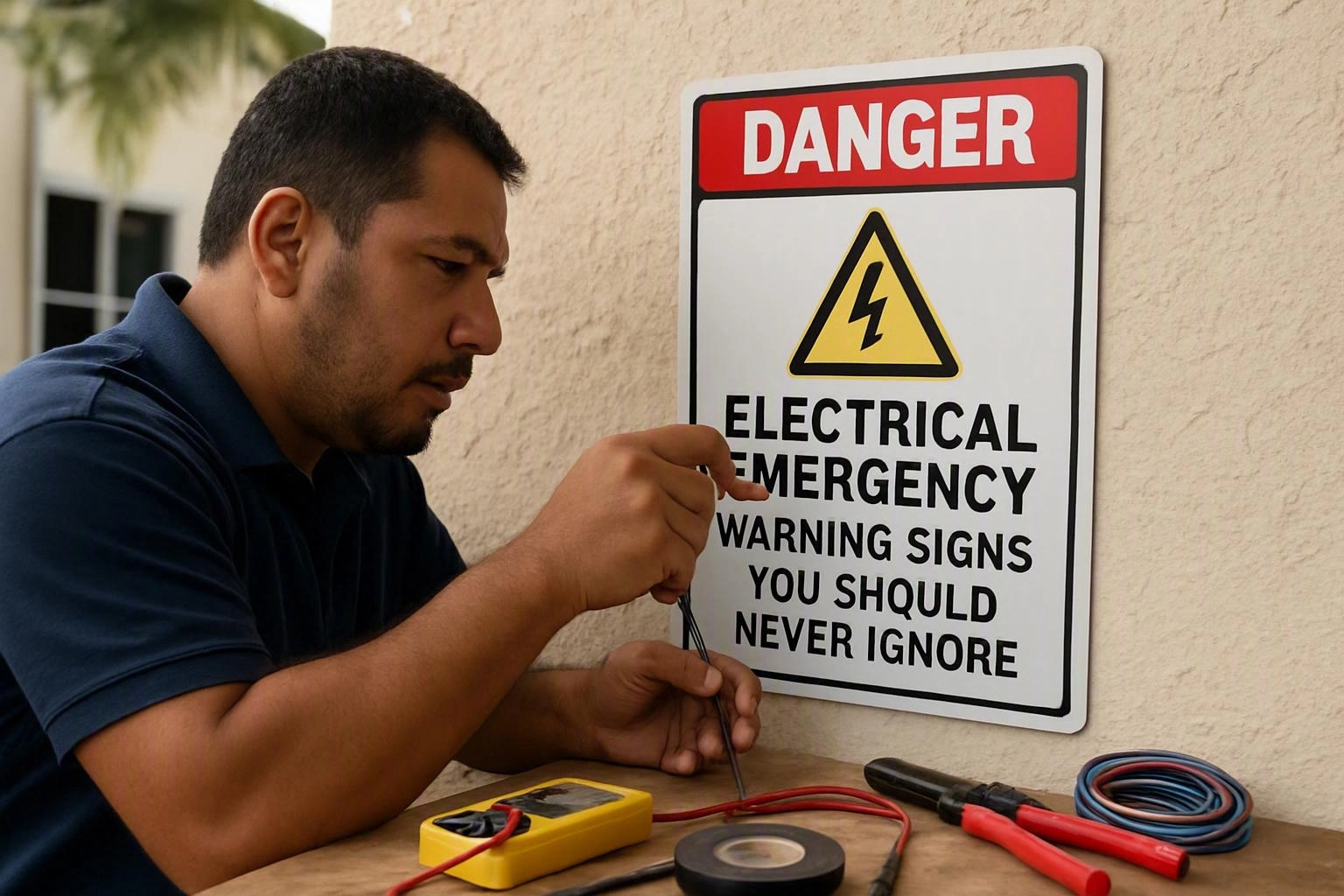
Electrical emergency signs show that a home may have a dangerous fault. Earth Electric Florida helps Miami homeowners know what to do first. This matters even more with children, pets, older wiring, or key home devices.
What Are the Signs of an Electrical Emergency?
Electrical emergency signs include burning odors, smoke, sparks, hot outlets, buzzing, exposed wires, flickering lights, and repeated breaker trips. These signs may show overheating, damaged insulation, a short circuit, or fire risk. Stop using the circuit and arrange an emergency electrical inspection.
A burning smell near an outlet, plug, light, or panel isn’t normal. It may come from an overloaded circuit or loose connection. It may also mean that wall insulation is breaking down. Smoke, black marks, melted plastic, or a hot outlet need quick action.
A sparking outlet may have a short circuit or an arc fault (an unwanted electrical spark). A small spark can happen when some devices are plugged in. Repeated sparks, crackling, heat, or a burning smell need urgent help. Don’t keep testing the outlet.
Flickering lights may come from a loose bulb. Widespread flickering may show a poor connection, an overloaded circuit, or a panel problem. Repeated breaker trips also need an inspection. The breaker stops power during an overload or fault. Resetting it again and again can keep the danger going.
Exposed wiring is an urgent hazard. Don’t touch it, tape it, move it, or cover it. Keep children and pets away. Stop using nearby equipment and request help. Older homes may also have hidden wiring damage.
A simple emergency visit often takes 30 to 90 minutes. Access, affected circuits, and hidden faults can change the time. This range isn’t a promise. Leave at once if there’s smoke or fire. Then contact emergency services.
What Should I Do if an Outlet Smells Burnt?
A burnt outlet shows a possible heat problem. Stop using the outlet and plug. Stay away from smoke and heat. Arrange an urgent inspection. Don’t remove the cover plate. Wall wires may still carry power.
Unplug the device only when the plug and outlet are cool and dry. They must also look whole and free from smoke or flames. Leave a hot, melted, stuck, or damaged plug alone. Turn off the circuit breaker only when the panel is safe to reach.
The smell may come from a loose wire, overloaded circuit, bad outlet, or damaged insulation. Bent plug blades or scorch marks can also create heat. Don’t replace the outlet yourself. Don’t use an extension cord as a quick fix. Our team can shut off the circuit and check the outlet and nearby wiring.
What Should I Do if an Outlet Sparks?
A sparking outlet needs immediate care. Stop using it and move people away. Unplug equipment only when there’s no fire, smoke, heat, or damaged wiring. Turn off the breaker if the panel is safe to reach. Leave and call emergency services if the danger continues.
Only shut off power when you can reach the panel safely. Don’t walk through smoke, water, flames, or fallen items. One adult can move children and pets away. Another adult can call for help when it doesn’t delay leaving.
Our team may face a locked panel, damaged outlet, limited access, or unsafe equipment. If the source is hidden, the circuit may stay off until testing shows it’s safe.
Is Buzzing from an Electrical Panel Dangerous?
Buzzing from an electrical panel can be dangerous. It may show a loose connection, overloaded circuit, weak breaker, arc fault, or overheating. Some equipment makes a soft hum. New, loud, crackling, or growing noise needs urgent inspection. Don’t open the panel.
A breaker may struggle with its load. A loose connection may also create an arc fault. An arc fault is an unwanted electrical spark. Heat and sound can follow. Warning signs include warm spots, dark marks, a burning smell, or melted parts.
Some transformers make a soft, steady hum. That sound is less concerning when it stays the same. New buzzing with flickering lights, breaker trips, smoke, or heat is an urgent hazard.
Don’t remove the panel cover or tighten wires. Don’t test live parts. Live parts may remain powered when one breaker is off. Keep the panel clear for the technician. Stay away if there’s smoke, flame, or a strong burning smell. Call emergency services for fire or immediate danger.
Why Do Homeowners Need 24-Hour Emergency Electrical Repairs?
Homeowners need emergency electrical repairs when a fault may harm people or property. Fast service can shut off unsafe circuits, find short circuits, repair wiring, and steady electrical panels. Help matters at night, during an outage, or when waiting could raise fire or shock risks.
Home power runs lights, air systems, fridges, medical gear, cooking tools, and phones. A power loss may seem like a utility issue. A fault inside the home may be more serious. Fire risk can grow while a family waits.
24-Hour Emergency Electrical Repairs in Miami may help with smoke, repeated breaker trips, or unsafe wires near children and pets. Evacuate for fire or heavy smoke. Shut off power only when safe. Request help for damage that isn’t an immediate life threat.
Common reasons to request urgent service include:
These problems need safe fault isolation, not guesswork. Our crews can help protect the home. They can also explain what must stay off until repairs are done.
How Does an Emergency Electrician Find the Problem?
An emergency electrician first makes the area safe. The technician then checks outlets, wires, voltage, circuits, and the panel. The technician finds the fault and plans the repair. The work may include fixing a short circuit, wiring, breaker, or panel.
The technician asks what happened and which rooms were affected. A visual check may find burn marks, melted plastic, water, loose parts, or damaged insulation. The technician also checks recent appliance changes.
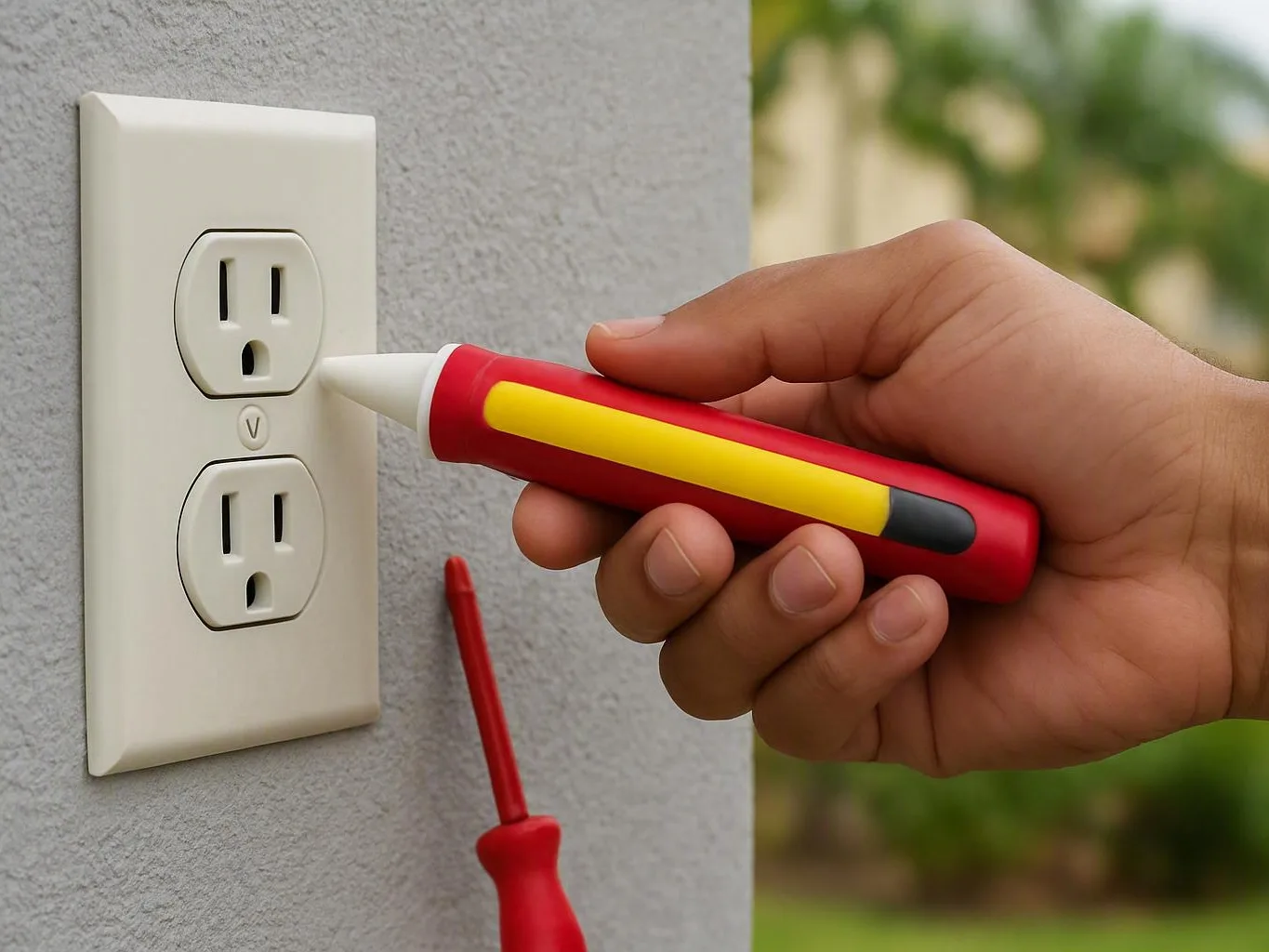
Voltage tests show where power is present. Continuity tests check wires after power is off. Circuit tracing links an outlet or light to its breaker. This helps when panel labels are missing or wrong.
Hidden wires can make the fault harder to find. The problem may be inside a wall, attic, crawl space, or junction box. The technician may inspect nearby points and keep part of the circuit off.
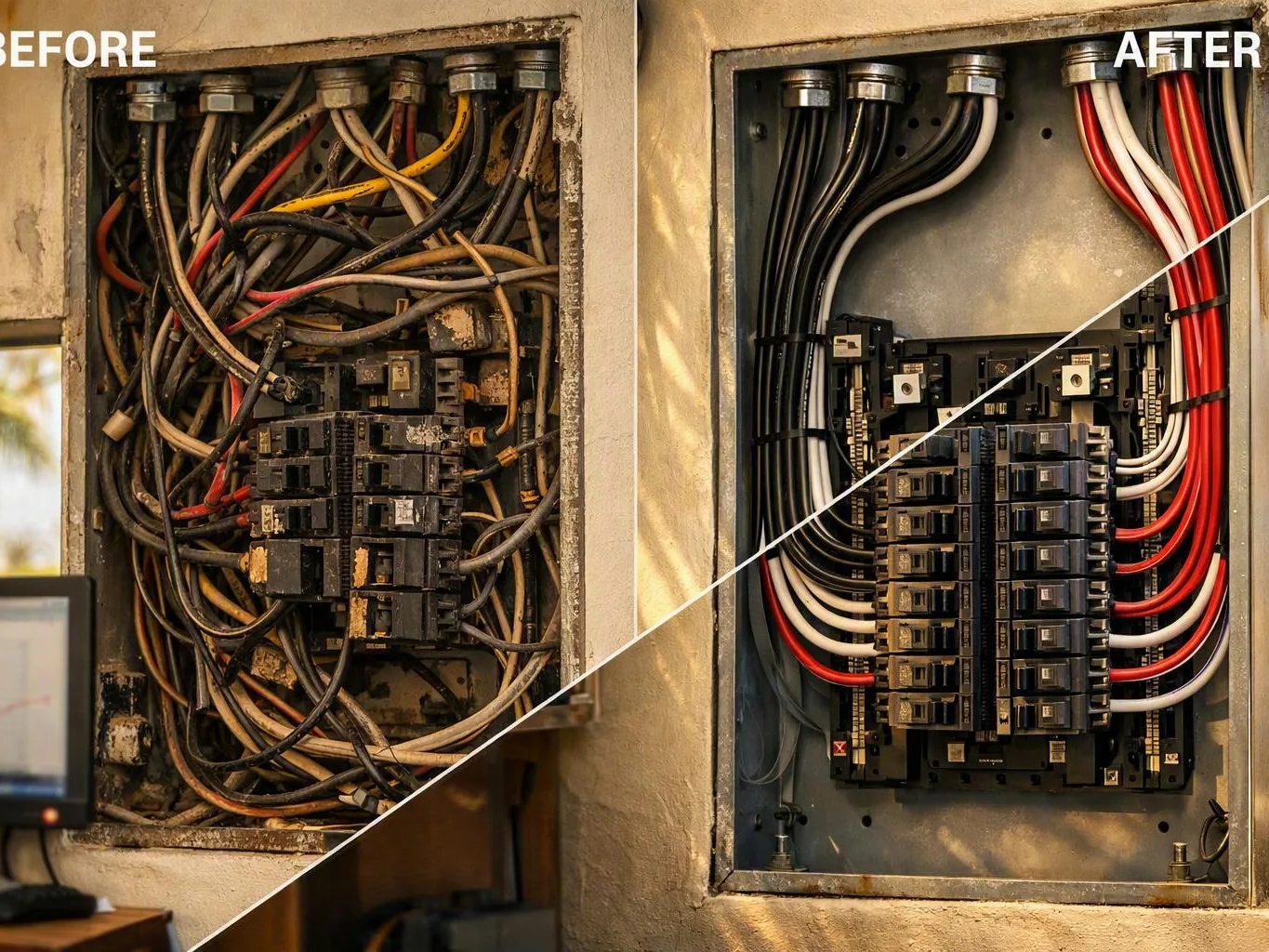
Panel checks include breakers, grounding parts, heat marks, and signs of overload. A weak or damaged breaker may need replacement. A damaged panel may need a larger repair.
Short circuit repair isn’t always a simple part change. The cause may be an appliance, pinched wire, bad outlet, moisture, or loose connection. Our team explains the finding in plain language. Power returns only after the hazard is fixed.
What Features Matter When Choosing Emergency Electrical Service?
Good emergency electrical service offers quick help, safe power shutoff, skilled testing, and clear updates. The provider should handle wiring, short circuits, outlets, breakers, and panels. Homeowners may face hidden damage, low power, or repeated breaker trips.
Choose help that starts with safety. A qualified provider should explain when to leave, call emergency services, shut off power, or request an inspection. Our team plans around rooms in use, key appliances, children, pets, and hard-to-reach panels.
Key features that matter include:
Homeowners commonly face these challenges:
When discussing 24-Hour Emergency Electrical Repairs, ask what happens if the source stays hidden. The plan may keep a circuit off, protect the area, and set follow-up wiring work.
Questions About Emergency Electrician
What Are the Signs of an Electrical Emergency?
Common signs include a burning odor, smoke, sparks, hot outlets, buzzing, exposed wiring, flickering lights, and repeated circuit breaker trips. Stop using the affected circuit and request an Emergency Electrical Inspection. Leave and call emergency services for fire, heavy smoke, or immediate danger.
What Should I Do if an Outlet Smells Burnt?
Stop using the outlet. Don’t touch it if it’s hot, melted, smoking, or damaged. Turn off the circuit only when the panel is safe to reach. Keep people and pets away. Request a professional inspection. Don’t keep testing the outlet.
Is Buzzing from an Electrical Panel Dangerous?
It can be dangerous, especially when the buzzing is new, loud, or crackling. Heat, flickering, burning smells, or breaker trips raise the concern. Causes may include a loose connection, overloaded circuit, weak breaker, arc fault, or overheating. Don’t open the panel. Arrange an urgent inspection.
What Should I Do if an Outlet Sparks?
Stop using the outlet and move people and pets away. Unplug equipment only when there’s no smoke, fire, heat, or damaged wiring. Turn off the breaker when it’s safe. Never use water on an electrical fire. Leave and call emergency services if danger continues. Then arrange professional repair.
When Should I Shut off the Main Breaker?
Shut off the main breaker only when you can reach the panel safely. Don’t pass through smoke, fire, water, heat, or exposed wires. Use it when the circuit is unclear or the whole home needs power isolation. Evacuate during an active fire and call emergency services.
Don’t wait for a warning sign to become smoke or flame. Our team can explain the safest next step and arrange an inspection. We’ll also tell you what must stay off until repairs are complete.
Request emergency electrical helpRelated Resources
Burning Smell From Outlets or Wiring in Miami, FL: When to Call an Emergency Electrician
burning smell from electrical outlet when to call electrician
When You Need ItFrequently Tripping Circuit Breakers in Miami, FL: Warning Signs You Need Electrical Repair
circuit breaker keeps tripping when to call an electrician
When You Need ItFlickering and Dimming Lights: Signs of a Dangerous Electrical Problem in Miami, FL
flickering lights when to call an electrician miami
When You Need ItSparking, Hot, or Discolored Outlets in Miami, FL: Emergency Electrical Warning Signs
sparking outlet when to call electrician