
What is Three Phase Power?
Three Phase Power is an electrical system that delivers alternating current through three conductors, with each waveform offset by 120 degrees. The arrangement provides steady power, supports efficient transmission, and runs motors smoothly. Three Phase Power commonly serves commercial buildings, industrial equipment, elevators, large pumps, and other high-demand electrical loads.
Quick Facts About Three Phase Power
Category
Electrical power distribution
Formula
P = √3 × line voltage × line current × power factor.
Used for
Motors, HVAC, pumps, elevators, and commercial equipment
Common confusion
Three phase is not the same as three separate single-phase services.
Also called
Three-Phase Power, 3-Phase Power
Often discussed with
Commercial Electrical Repairs, Electrical Service Upgrades
Key Takeaways About Three Phase Power
- Three Phase Power uses three alternating-current waveforms separated by 120 electrical degrees.
- The system gives smoother motor torque than single-phase power for many commercial and industrial machines.
- Voltage readings must name the measurement point, such as phase-to-phase or phase-to-neutral.
- Correct phase sequence matters because a reverse sequence can change a motor's rotation direction.
- A qualified electrician should check equipment ratings, protection, grounding, and available fault current.
Understanding Three Phase Power
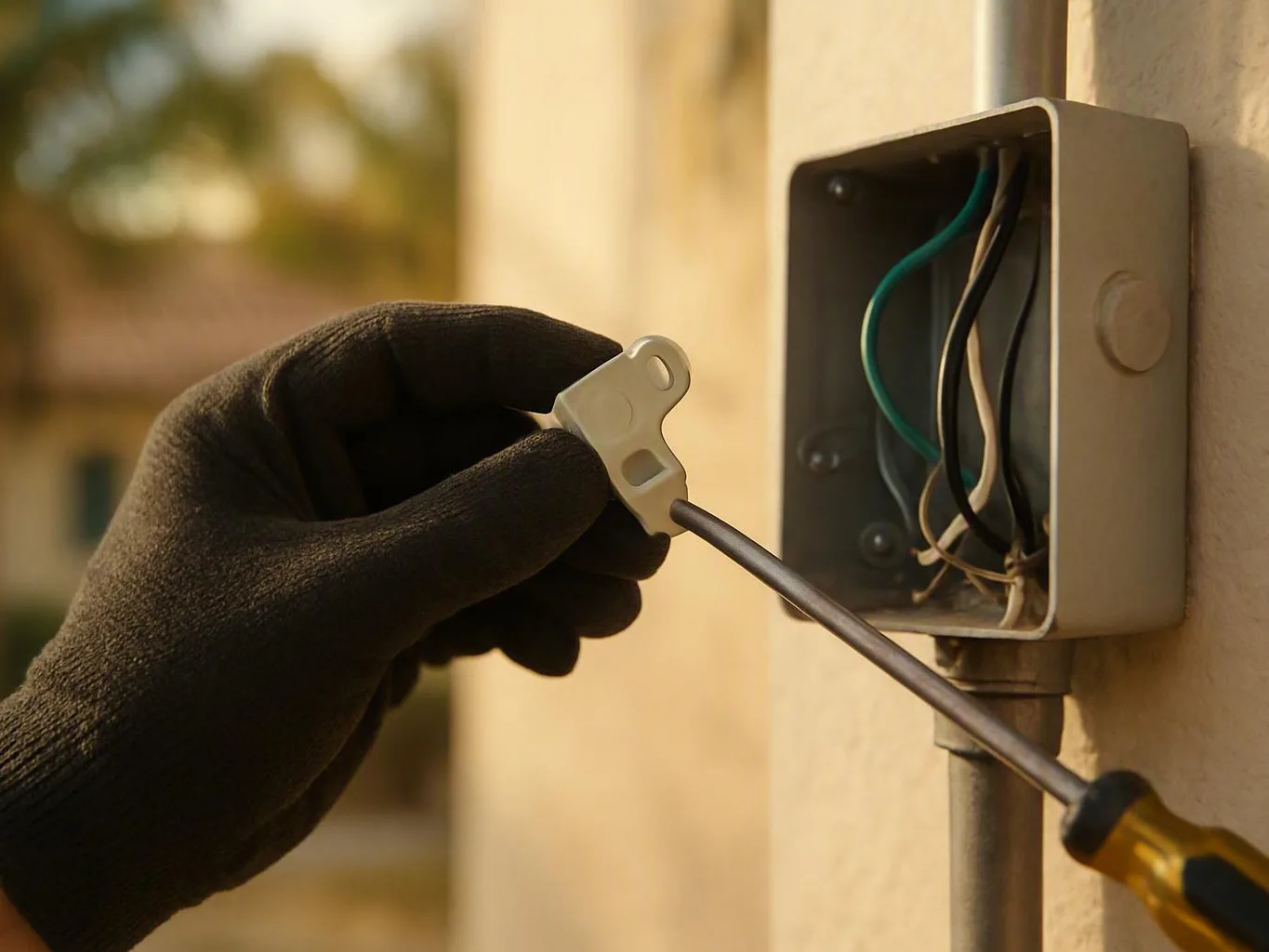
Three Phase Power delivers alternating-current electricity through three energized conductors. These conductors are called phases. Each phase reaches its voltage peak at a different time, with a 120-degree electrical separation between waveforms. This timing keeps power delivery more even than a typical single-phase system.
Related glossary terms: Load Calculation, Overcurrent Protection, Electrical Grounding.
A three-phase service may include three phase conductors, a neutral conductor, and an equipment grounding conductor. The exact arrangement depends on the utility service and equipment design. A 208Y/120-volt system, for example, can supply 120 volts from a phase to neutral. It can supply 208 volts between phases. The voltage and wiring arrangement must match the equipment nameplate.
How Three Phase Power Works, Is Measured, or Is Used?
Three-phase voltage is measured between two phase conductors or between one phase and neutral. Line-to-line voltage and line-to-neutral voltage are different readings. A meter reading has meaning only when the test points are identified. A technician also checks phase sequence, frequency, current on each phase, and the condition of connections.
For a balanced three-phase load, real power is commonly estimated with the formula P = √3 × line voltage × line current × power factor. The power factor shows how well the load converts electrical current into useful work. Three-phase motors use the rotating magnetic field created by the phase relationship. This field produces steady torque and efficient operation.
Common equipment includes induction motors, rooftop HVAC units, air compressors, water pumps, elevators, refrigeration systems, and machine tools. Some equipment connects phase to phase. Other equipment uses phase to neutral for controls or lighting. A system may so contain both three-phase loads and single-phase loads.
Why Three Phase Power Matters?

Motor speed is one of the main reasons three-phase power matters. The rotating magnetic field starts and drives many motors. It avoids the pulsing torque found in single-phase operation. Balanced loading can also reduce neutral current. It can help conductors carry power efficiently. The actual result depends on conductor size, voltage, power factor, and installation quality.
Phase imbalance creates a practical risk. A loose connection, damaged conductor, or uneven load can make one phase carry more current than the others. Motors may run hotter. Protective devices may trip. Equipment life may shorten. Testing should compare phase currents and voltages under normal operating conditions. Not only while equipment is idle.
When Three Phase Power Matters Most?
Commercial electrical service decisions often depend on a building's voltage and phase arrangement. New equipment must match this arrangement. A replacement HVAC unit may need 208 or 480 volts between phases. Its control circuit may need 120 volts. The service capacity, panelboard rating, feeder conductors, disconnect, overcurrent protection, and available fault current must all suit the installation.
Three-phase power also matters after flooding, storm damage, equipment failure, or an unexpected outage. Water intrusion and heat can damage terminals, insulation, disconnects, and motor windings. Before restoring power, a qualified professional should isolate damaged equipment. They should verify safe de-energization and inspect the system. They should confirm phase rotation and protective devices are correct. Lockout and tagout procedures help prevent unexpected energization during this work.
How to Evaluate Three Phase Power?
- Confirm the service voltage, phase configuration, frequency, and equipment nameplate requirements.
- Compare phase-to-phase and phase-to-neutral voltage readings at the correct test points.
- Measure phase current under normal load and investigate meaningful imbalance between phases.
- Check phase rotation before connecting motors, pumps, compressors, or other rotating equipment.
- Verify conductor sizes, disconnect ratings, overcurrent protection, grounding, and working clearance.
Related Concepts Compared
Three Phase Power vs. Single Phase Power
Single Phase Power uses one alternating-current waveform and commonly serves homes and smaller loads. Three Phase Power uses three offset waveforms and better supports larger motors and commercial equipment.
Three Phase Power vs. Two-Phase Power
Two-phase power is a different historical system with two waveforms separated by 90 degrees. Modern utility and commercial systems generally use three phases instead.
Three Phase Power vs. 480 Volt Power
480 volts describes a voltage level, not the number of phases. A 480-volt service is often three phase, but voltage and phase describe separate features of an electrical system.
Three Phase Power vs. Three-Phase Motor
A three-phase motor is equipment designed to operate from three-phase power. Three Phase Power is the distribution system that supplies the motor and other compatible loads.
Expert Note
A voltage reading alone does not prove that a three-phase system is healthy. Phase sequence, current balance, connection torque, insulation condition, and protective-device coordination can all affect safe operation and motor temperature.
Common Mistakes or Myths About Three Phase Power
- Treating three phase as three independent utility services.
- Confusing line-to-line voltage with line-to-neutral voltage.
- Ignoring phase sequence when connecting a motor or pump.
- Assuming equal breaker sizes prove that the load is balanced.
- Replacing a three-phase device without checking voltage, frequency, and phase requirements.
Three Phase Power in Practice: A Real-World Example
A Miami commercial building has a 208Y/120-volt service. Its air handler uses 208 volts between phases. While lights and controls use 120 volts phase-to-neutral.
Sources & Further Reading on Three Phase Power
Related Terms
Load Calculation
Load Calculation is a systematic estimate of the electrical demand a property or circuThat'll place on…
Overcurrent Protection
Overcurrent Protection is a safety system that limits current when electricity exceeds a circuit’s rated capacity…
Electrical Grounding
Electrical Grounding is a planned connection between an electrical system, equipment, or circuit and the earth…
Voltage Drop
Voltage Drop is the reduction in electrical potential that occurs as current travels through a wire…
Earth Electric Florida
Have Questions About Three Phase Power?
Contact Earth Electric Florida for practical guidance on Three Phase Power and related emergency electrician work in Miami.