
What Is Color Temperature?
Color Temperature is a visual description of the color a light source produces, ranging from warm, yellowish light to cool, bluish light. Lighting professionals express it on the Kelvin scale. The rating describes appearance, not fixture brightness, power use, or operating heat, so color temperature and light output are separate choices.
Quick Facts About Color Temperature
Category
Lighting characteristic
Used for
Selecting the appearance of light
Common confusion
Color temperature is not brightness
Also called
CCT, Correlated Color Temperature
Often discussed with
Recessed Lighting Installation
Key Takeaways About Color Temperature
- Color temperature describes light color, not brightness.
- Warm light creates a softer visual feel in many rooms.
- Kelvin rating does not show the fixture’s light output.
How Color Temperature Works
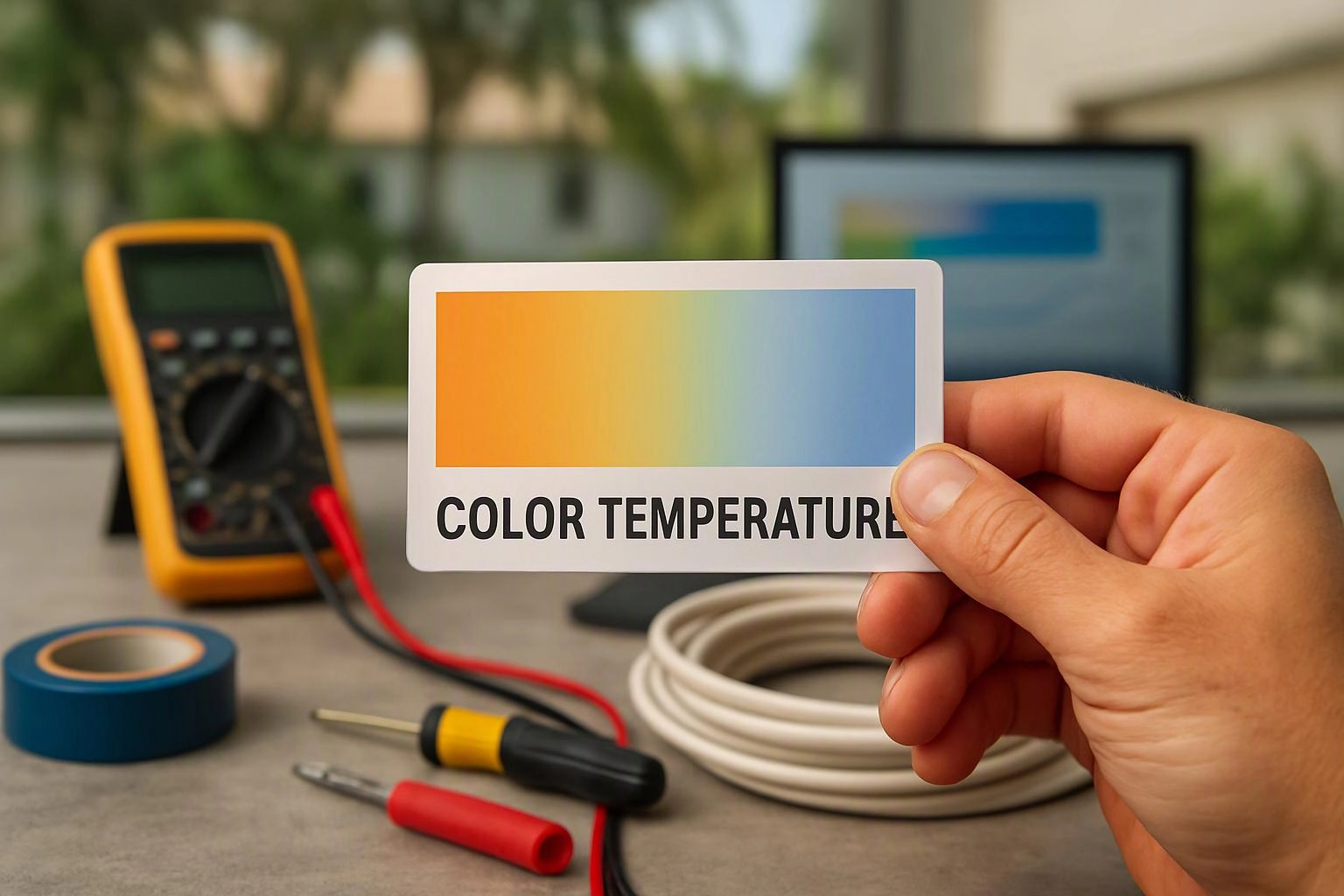
Color Temperature describes how light appears to the eye. A lower Kelvin rating gives light a warmer, more yellow tone, while a higher rating gives light a cooler, more blue tone. Neutral light sits between these visual ranges and often resembles natural daylight.
Related glossary terms: Lumens, LED Driver, Recessed Light Housing.
Recessed lighting uses color temperature as a design choice for rooms with different purposes. Warm light can support a relaxed atmosphere in living areas, while cooler light can provide a cleaner appearance in work areas. The selected LED lamp or fixture should match nearby lighting, wall colors, finishes, and the room’s intended use. Kelvin describes color appearance, while lumens describe the amount of visible light.
From the Earth Electric team
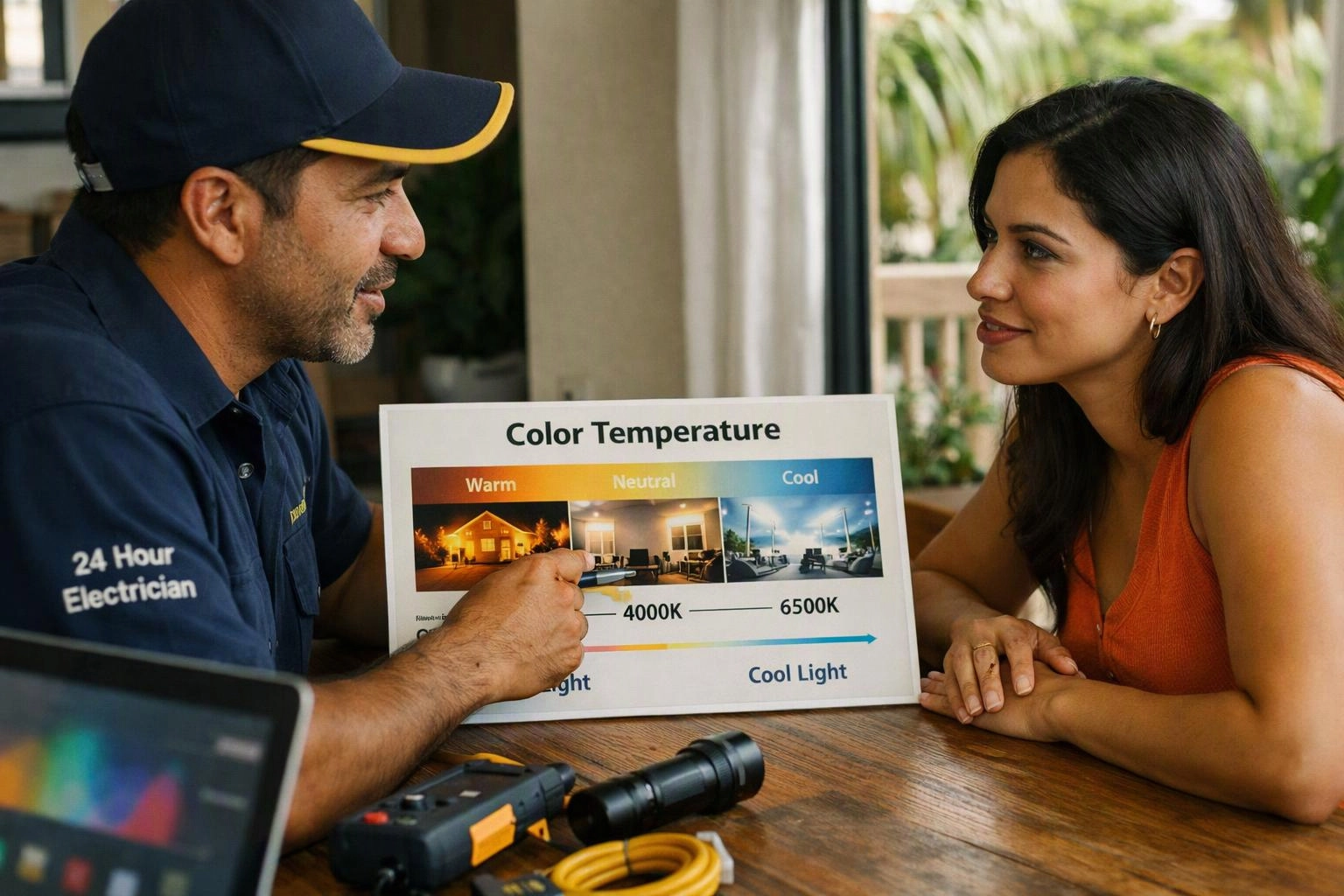
When we plan recessed lighting, we check the requested color temperature against the room’s finishes and nearby fixtures. We also review whether connected lights should match, since noticeably different light colors can make one space appear inconsistent. Our team treats color temperature as part of the lighting design, not as a substitute for brightness selection.
Color Temperature in Practice: A Real-World Example
A homeowner may choose warm recessed lighting for a living room to create a softer evening setting. The same home may use a cooler color temperature in a kitchen where surfaces and work areas need a clearer appearance.
Related Services
Related Terms
Lumens
Lumens are a unit used to describe the amount of visible light produced by a light…
LED Driver
An LED Driver is a power-control device that supplies light-emitting diodes with the electrical current and…
Recessed Light Housing
Recessed Light Housing is the concealed enclosure installed above a ceiling to support a recessed light…
Dimmer Switch
Dimmer Switch is a wall control that adjusts the electrical power supplied to compatible light fixtures…
Earth Electric
Have Questions About Color Temperature?
Contact Earth Electric for practical guidance on Color Temperature and related 24 hour electrician work in Miami.